

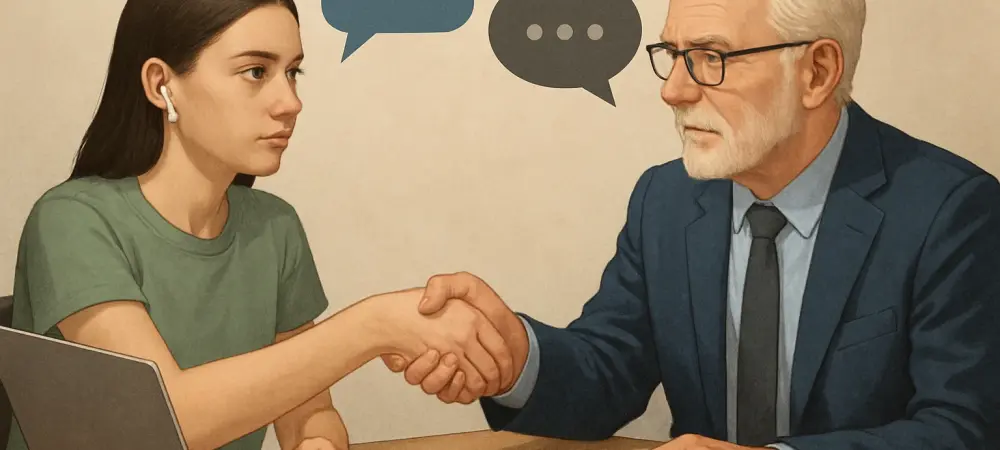
Rising friction across a four-generation workforce has created a subtle but costly communication problem that drains focus, muddies intent, and undermines trust before projects even get started, and the stakes are higher where Gen Z and older colleagues meet in hybrid or remote settings shaped by different norms. What looks like resistance or indifference often traces back to opposing defaults: digital-first habits versus call-first instincts, asynchronous updates versus live debate, message brevity versus contextual nuance. When those defaults clash without shared cues, small delays read as avoidance, quick calls feel intrusive, and tone is guessed rather than perceived. The result can be spirals of second-guessing and guarded behavior. HR now has an opening to reset expectations, clarify channel etiquette, and invest in shared experiences that rebuild confidence in how people connect.
The Scope and Roots of the Divide
Recent data captured the size of the gap. In a survey of more than 1,000 UK office workers by Team Tactics, over a quarter of Gen Z employees rated workplace relationships negatively, and communication differences ranked among the top three tension drivers for every age group. For Gen Z specifically, 74% linked negative interactions to communication gaps, marking this divide as the most pronounced in the workforce. That headline sits atop a deeper story about habits formed during and after the pandemic. Many younger employees started careers on video, instant messaging, and asynchronous tools, learning to work through a screen, not a desk pod. Older cohorts, by contrast, still view phone calls as a fast way to resolve ambiguity and gauge intent in real time.
These divergent defaults are not moral judgments; they are learned preferences. Uswitch reports that 23% of 18–34-year-olds never answer phone calls, favoring social media or voice notes, while those 35–54 and 55+ rarely choose those channels. The friction emerges when medium, cadence, and comfort diverge: phone versus digital, synchronous versus asynchronous, live conversation versus written clarity. Younger employees may draft a thoughtful message and expect a measured response; experienced colleagues may expect a call to cut through uncertainty. Neither is wrong, but the mismatch fuels misread motives. Add performance pressure, deadlines, and mixed norms, and minor misfires become mood-setters for entire teams. The cost appears in slower decisions, defensiveness, and cooling goodwill.
Hybrid Work and Organizational Risk
Hybrid work amplifies these tensions because context is thinner. In a distributed setting, tone, facial cues, and spontaneity are scarce, so people infer intent from lag times, punctuation, and word choice. An unanswered ping looks like stonewalling; a surprise phone call feels like an escalation. Without shared rules for when to message, call, or meet, teams anchor to personal preferences and then project those preferences onto others. In that vacuum, recurring misunderstandings harden into narratives—about who cares, who listens, who blocks progress. When that narrative maps to age boundaries, all parties become less likely to reach across them. The result is avoidable churn in relationships that should compound trust over time instead of eroding it.
The organizational impacts are tangible. Collaboration slows as colleagues hedge or route around one another, cross-functional planning becomes brittle, and morale dips under the weight of small but repeated frictions. HR leaders should treat the issue as both a people challenge and an operational risk, tracking signals such as cross-team responsiveness, conflict incidence, and retention within mixed-age groups. Clear norms help: agreeing on when to switch from text to voice, anchoring complex topics to scheduled live touchpoints, and documenting decisions in concise summaries. Coaching also matters. Phone confidence and etiquette can be taught; so can techniques for writing with tone in mind. Pairing these basics with explicit channel maps sets shared expectations that guard against drift.
Human-centered Bridges: Team Building and CSR
Policies alone cannot restore mutual understanding; shared experiences do the heavy lift. The Team Tactics survey points to team building as a practical lever: 62% of employees said these activities improved communication, with nearly a third reporting durable gains. Three in five linked team building to better collaboration, and more than a quarter saw lasting improvements. Participants also reported stronger recognition of colleagues’ strengths (64%), closer relationships (63%), and a better grasp of interests beyond work (62%). These outcomes matter because they convert labels—Gen Z, Gen X, Boomer—into human specifics: a colleague’s patience under pressure, a talent for structuring ambiguity, a knack for translating complexity. Once seen, those strengths are harder to dismiss. CSR initiatives amplify the effect by anchoring collaboration in purpose. Building wheelchairs for disabled dogs or running treasure hunts to collect essentials for vulnerable children are not just feel-good outings; they require planning, skill-matching, and real-time problem-solving. People who would never choose the same communication channel find themselves aligned by a shared outcome that transcends age or background. HR can turn this into a playbook: set mixed-channel norms that pair clear written updates with scheduled live touchpoints; coach for phone fluency and concise writing; map channel choices to task complexity and urgency; and schedule a recurring cadence of team building and CSR events that continues in hybrid settings. Done together, these steps steadily normalize respect for different styles.