

When Team Bonding Leaves People Behind
The office happy hour promised easy camaraderie, yet the start time, the strobe-lit venue, and the fixed menu quietly told several teammates they did not belong. A caregiver faced a hard stop at 5 p.m., a neurodivergent analyst braced for sensory overload, and a colleague using a mobility aid scanned for ramps that did not exist.
What looked like a lighthearted event became a mirror of workplace blind spots. The stated goal was connection; the outcome was selective attendance and awkward silence the next day. The gap between intention and impact set the stage for a larger question: who gets to participate, and on whose terms?
Why This Story Matters Now
Workplaces have grown more hybrid, more diverse, and more strained by burnout, placing a premium on moments that build trust. When only about half of employees say their last team event accounted for neurodivergence, disability, or religious requirements, the missed participation does more than trim headcount—it undercuts belonging and collaboration.
The stakes extend beyond etiquette. A survey of over 1,000 UK office-based employees found nearly half believed organizers could have made more careful, inclusive choices. That sentiment, coupled with public DEI commitments, sharpened legal and reputational risk when access became an afterthought rather than a baseline.
Inside the Data and the Decision Loop
The planning model often told the story. Two in five respondents said management organized the last event, while rotating planning was rare and staff votes rarer still. When few people set the agenda, narrow preferences dominated, and input arrived too late to shape outcomes. Constraints piled on. Thirty percent worried it was hard to find something everyone enjoyed; 26% struggled to ensure accessibility; 29% cited tight budgets; and time pressures—27% to plan, 22% beyond core duties—kept volunteers away. With 24% expecting weak engagement and 19% sensing thin management support, the safest route became the most familiar, not the most inclusive.
Friction Points Hiding in Plain Sight
Accessibility was not a flourish; it was the floor. Employees flagged basics—step-free entry, working elevators, seating variety, quiet spaces, clear signage, and transport details. Around half felt physical access needs were considered, leaving many to weigh attendance against discomfort or risk. Last-mile details like restrooms, captions, and transparent pre-event information often decided whether someone could contribute. Neurodiversity needed choice and control rather than surprises. Loud rooms, ambiguous rules, and forced participation made opt-outs feel inevitable. As one participant put it, “I couldn’t hear instructions—no mic, no captions, no chance to contribute.” Alcohol-centered formats compounded exclusion for faith, health, or personal reasons. “I felt pressured to drink to fit in,” another said, while others noted scheduling that ran over religious observances and menus that ignored halal, kosher, or vegetarian needs.
Designing Events That Everyone Can Enter
Solutions started with process, not polish. A rotating, cross-functional planning council with clear decision rights shared power, while a staff vote from an accessibility-vetted shortlist balanced voice and feasibility. Brief, anonymous pre-event surveys surfaced needs early, and mapping against major religious calendars prevented unforced errors.
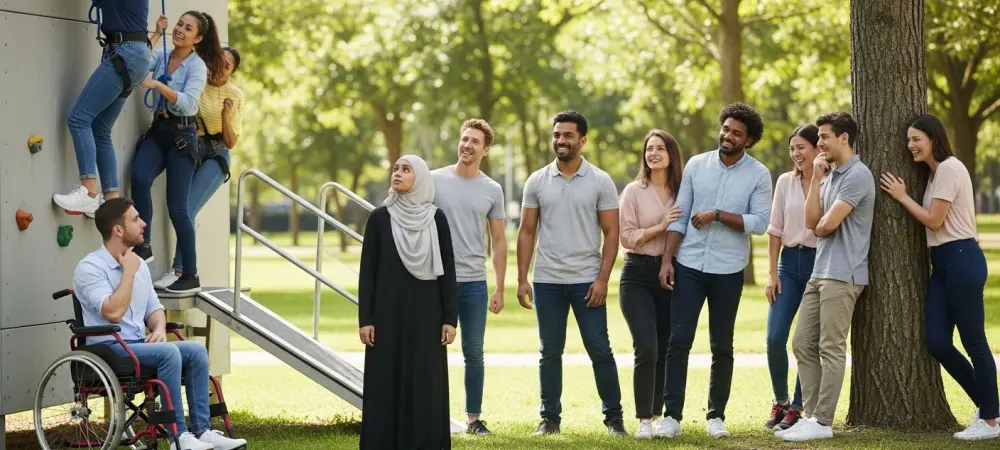
Design choices did the quiet work. Venues with ramps, elevators, and accessible restrooms set a baseline; microphones, captions, and written instructions made communication equitable; quiet zones and opt-in roles reduced sensory strain. Parallel tracks—social, creative, reflective, physical—let people move between experiences without stigma, and hybrid options with equal roles kept remote colleagues central, not peripheral.
What Changed—and What Should Come Next
Evidence and lived accounts had pointed to a design problem, not a personality problem, and a participatory approach had reframed success beyond smiles. Post-event pulses such as “Could you fully participate?” and tracking attendance equity across teams had guided iteration, while a fixed accessibility line item and protected planning hours had turned intentions into practice.
Practical steps stood out: share steering power, start with discovery, build access from the outset, and measure what mattered—psychological safety, cross-team collaboration, and reduced no-shows among historically excluded groups. When organizers treated inclusion as a craft to be learned rather than a box to be checked, team-building had stopped leaving teammates out and started building actual teams.