

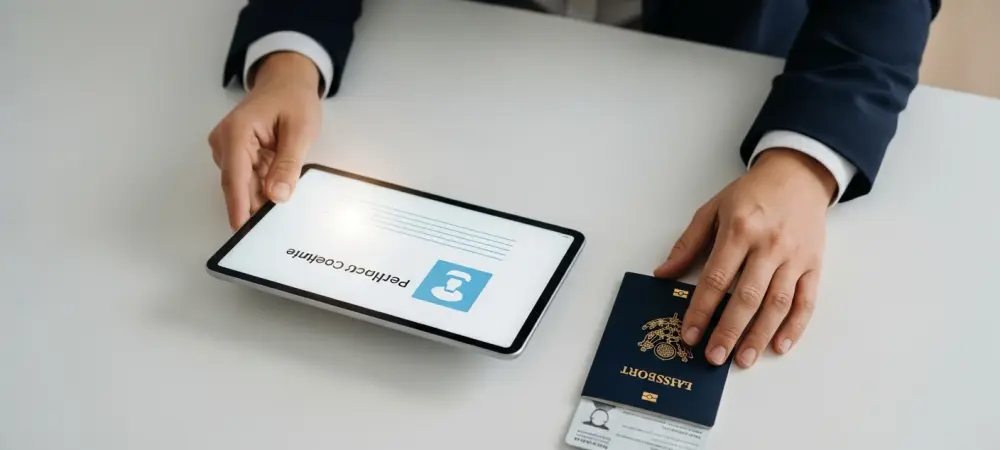
The digital landscape of the modern workplace has shifted so dramatically that a completely non-existent job candidate can now secure a high-level marketing position over hundreds of qualified human professionals. This reality was recently demonstrated through a sophisticated experiment involving the creation of a synthetic identity that successfully bypassed the rigorous hiring protocols of a contemporary corporation. As the barrier to entry for generating high-quality artificial media continues to drop, the human resources sector faces an unprecedented challenge in verifying the biological reality of the people they hire. This article explores the mechanisms behind this deception and provides a roadmap for organizations to protect themselves against the rising tide of deepfake identities.
The objective of this analysis is to answer critical questions about the current vulnerability of digital recruitment workflows and to offer guidance on maintaining institutional security. By examining a specific case study of a fictional candidate named Jackie Morris, the content will illustrate how easily current safeguards can be dismantled by a motivated actor. Readers can expect to learn about the specific AI tools used in these frauds, the broader security implications of an “insider deepfake,” and the necessary shift toward physical verification in an increasingly virtual world. The scope covers everything from the initial resume screening to the long-term risks of hardware theft and corporate espionage.
Key Questions Regarding the Integrity of Modern Recruitment
How Did a Fictional Persona Outperform Hundreds of Qualified Human Applicants?
The success of a fictional candidate like Jackie Morris is rooted in a calculated blend of psychological manipulation and technical optimization. By constructing a persona that was specifically designed to hit every desirable metric of a modern marketing professional, the creator ensured the profile stood out in a sea of generic applications. This involved more than just a polished resume; it required the creation of a believable digital history, including a fake passport and social media accounts that showcased a lifestyle including a husband and a dog. Such details are designed to satisfy the social vetting processes that hiring managers often perform to confirm a candidate is a “real” person with a relatable background.
Out of 262 total applicants for a marketing role, the deepfake persona was one of only four invited to the final stages and was eventually offered the position. This outcome was possible because the synthetic candidate was able to present a level of consistency and “perfection” that human beings often struggle to maintain under the pressure of a recruitment cycle. While real candidates might have gaps in their knowledge or moments of hesitation, the AI-augmented persona utilized real-time processing to deliver flawless answers. The human recruiters were notably impressed by the candidate’s supposed expertise and professional charisma, highlighting a significant psychological tendency to trust high-quality video interactions that align with corporate expectations.
The experiment also demonstrated that a multi-layered narrative can effectively blind-side even experienced professionals. The fictional Jackie was “married” to a previous deepfake persona, Jack Morris, which added a layer of narrative continuity that discouraged deeper suspicion. When a candidate appears to have a fully fleshed-out life and a consistent story across multiple platforms, recruiters are less likely to look for technical glitches in the video feed. This suggests that the human element of recruitment, which is usually seen as the ultimate filter for authenticity, can actually become the weakest link when faced with a well-orchestrated digital ruse.
What Specific Technologies Allow Synthetic Identities to Bypass Digital Safeguards?
The technological arsenal required to commit this type of fraud is surprisingly accessible and requires very little financial investment. Real-time face-swapping software allows a user to project a completely different visage onto their own face during a live video call, adjusting for lighting and movement with high fidelity. Furthermore, AI-driven voice modulation tools can transform the user’s speech into a totally different gender, accent, or tone in real-time. This combination creates a “digital mask” that is robust enough to endure the typical duration of a remote interview without breaking character or showing obvious signs of manipulation. Beyond the cosmetic layers, the most dangerous technological advantage comes from the use of large language models to assist the interviewee. During a live interaction, a secondary program can listen to the interviewer’s questions and instantly generate optimal, bulleted answers on a hidden screen for the actor to read. This eliminates the risk of a candidate being caught off guard by technical questions or complex scenarios. Because the actor is simply performing a script generated by an advanced AI, they appear exceptionally knowledgeable and prepared, far exceeding the performance of an unassisted human applicant who must rely on their own memory and reasoning. The cost of executing such a sophisticated deception is alarmingly low, often totaling less than fifty dollars for the necessary software subscriptions. These tools are no longer the exclusive domain of state-sponsored actors or high-level cybercriminals; they are available to anyone with a basic understanding of computer interfaces. This democratization of deepfake technology means that every remote interview is now a potential point of entry for fraud. As these tools continue to evolve toward higher resolution and lower latency, the visual and auditory cues that humans traditionally use to detect “uncanny” behavior are becoming increasingly difficult to spot.
Why Are Automated Screening Tools Frequently Deceived by Artificial Profiles?
Many modern recruitment processes begin with AI-powered screening bots that are designed to filter thousands of resumes based on keywords and professional history. Ironically, these automated systems are the most susceptible to being fooled by synthetic candidates. Because the deepfake persona is built using the same underlying logic that these bots use to evaluate success, the applicant can be “engineered” to be the statistically perfect candidate. This results in a situation where one algorithm is essentially talking to another, with the human recruiter only stepping in once the synthetic profile has already been validated as a top-tier prospect.
The reliance on digital documentation, such as scanned passports and online certifications, further compounds the problem of automated verification. Modern image generation tools can produce high-resolution copies of identification documents that appear authentic to standard digital verification software. When these fabricated documents are combined with a polished LinkedIn profile and a consistent social media presence, the automated systems “see” a high-trust individual. The systems lack the contextual intuition required to question whether a sudden, high-quality digital presence might be a sign of a manufactured identity rather than a career-focused professional.
Furthermore, the shift toward “video-first” recruitment has created a false sense of security among HR professionals. There is a pervasive assumption that seeing a person move and talk in real-time is an infallible proof of life. However, automated tools that are supposed to detect deepfakes are often engaged in an arms race they are currently losing. As generative models improve, they are trained specifically to bypass existing detection algorithms. This means that a deepfake that is “fresh” and generated with the latest models will likely pass through standard corporate security checks unnoticed, leading to a profound erosion of trust in digital onboarding.
What Are the Long-Term Security Risks of Onboarding a Deepfake Employee?
The immediate financial loss of paying a salary to a non-existent person is only the tip of the iceberg when it comes to the risks of hiring a deepfake. Once a synthetic identity is officially “onboarded,” they are typically granted access to internal communication channels, proprietary data, and sensitive customer information. This creates an “insider threat” where the malicious actor is already behind the firewall. From this position of trust, a fraudster can facilitate massive data breaches, install ransomware, or harvest corporate secrets without triggering the alarms that usually guard against external attacks.
A secondary but equally severe risk involves the physical theft of corporate hardware. In most remote-work scenarios, a company will ship high-end laptops, mobile devices, and secure tokens to the new employee’s home address. When that address belongs to a fraudster using a synthetic identity, the company is essentially providing high-level entry points to their network directly to a criminal. These devices often come pre-configured with VPN access and saved credentials, giving the actor a stable and authorized platform from which to conduct lateral movement within the company’s infrastructure for weeks or months before the deception is discovered.
Finally, the presence of a deepfake “employee” can be a stepping stone toward more complex forms of executive impersonation. If a malicious actor can successfully hold a mid-level position for a period of time, they can learn the internal culture, communication styles, and hierarchies of the organization. This knowledge can then be used to craft highly convincing “business video compromise” attacks, where the fraudster impersonates a senior executive to authorize fraudulent wire transfers or disclose highly confidential strategic plans. The long-term presence of a synthetic identity within a company acts as a persistent vulnerability that can be exploited at any time.
How Can Organizations Adapt Their Verification Processes to Counteract AI Fraud?
The most effective way to eliminate the risk of a deepfake candidate is to reintroduce physical, analog checkpoints into the hiring process. While remote work offers many benefits, it has also removed the most reliable filter for identity verification: the in-person meeting. Organizations should consider making at least one physical encounter a mandatory requirement for final-stage candidates before a formal offer is extended. Currently, there is no deepfake technology that can manifest a biological human in a physical office, making “in-real-life” interactions the gold standard for authentication in a world of digital shadows.
For organizations that operate on a global scale and cannot realistically fly every candidate to a central headquarters, the solution lies in third-party verification services. These agencies maintain networks of local representatives who can meet a candidate in their own city or country to verify government-issued identification in person. This representative can confirm that the individual appearing on the video screen is the same person standing in front of them with a valid passport. Although this adds a logistical layer and a small cost to the recruitment cycle, it is a negligible expense compared to the millions of dollars in potential losses associated with a security breach.
Beyond physical meetings, companies must foster a culture of skepticism toward digital-only proofs of identity. Training recruiters to look for specific technical artifacts—such as unnatural eye movements, blurring around the edges of the face, or slight desynchronization between audio and video—is a helpful but temporary fix. The broader strategy must involve a shift toward multi-factor identity verification that includes checking historical records that are difficult to fake overnight, such as older tax records or long-standing professional references. By combining technological detection with human intuition and physical verification, companies can build a defense that is significantly harder for AI to penetrate.
Summary of Critical Insights for Hiring Managers
The recruitment landscape is currently undergoing a profound transformation as artificial intelligence makes it possible to fabricate entirely convincing professional identities. The case of Jackie Morris proved that a synthetic candidate can not only pass initial screenings but can also outperform real humans in high-stakes interviews. This vulnerability exists because current hiring workflows rely heavily on digital interfaces and automated tools that are easily manipulated by generative AI. As a result, the traditional “face-to-face” video call can no longer be trusted as a definitive proof of a candidate’s existence or their genuine qualifications.
To maintain security, organizations must recognize that the threat is no longer theoretical; it is a practical tool used by fraudsters to gain access to corporate assets and hardware. The shift toward remote-only onboarding has opened a door that can only be closed by returning to more traditional, physical verification methods. By implementing in-person meetings or utilizing localized third-party verification services, companies can effectively neutralize the threat of deepfake identities. The future of corporate integrity depends on the ability to balance the convenience of digital recruitment with the absolute necessity of physical authentication.
Final Thoughts on the Future of Corporate Trust
The experiment with Jackie Morris highlighted a critical turning point in how society defines and verifies authenticity. As the boundaries between the real and the synthetic continued to blur, the recruitment process became a frontline for cybersecurity. Organizations that moved quickly to update their protocols recognized that technology alone was insufficient to solve a problem that technology itself had created. The shift back toward physical verification was not a regression, but rather a necessary evolution to protect the human element of the workforce from being replaced by digital ghosts.
Reflecting on these developments, it became clear that the era of taking digital interactions at face value had effectively ended. The recruitment industry was forced to re-evaluate what it meant to “know” a candidate and how to build a foundation of trust in a virtual environment. By prioritizing rigorous identity checks and physical verification, businesses successfully fortified their internal structures against a new generation of sophisticated fraud. Ultimately, the lessons learned from these digital deceptions led to a more resilient and security-conscious approach to building the teams that drive the modern economy.