

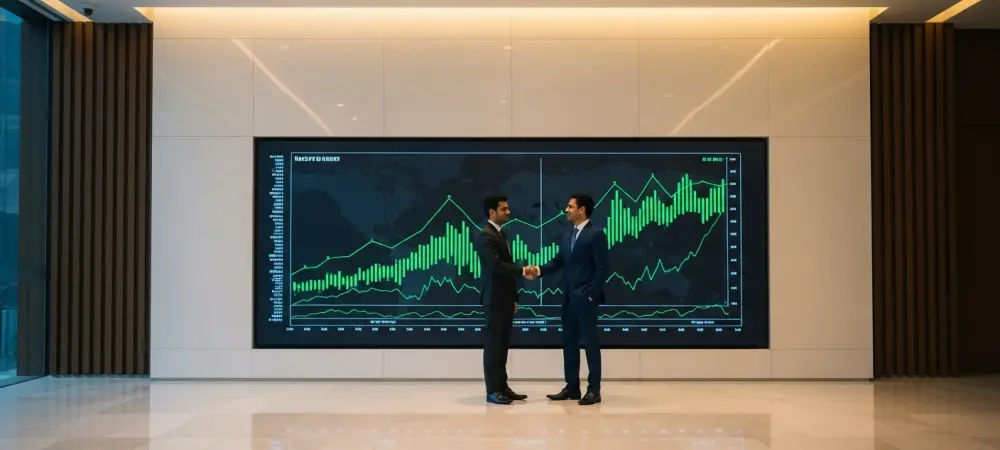
While the global economy grapples with a period of profound stagnation and cooling recruitment across major financial hubs, the Indian labor market is currently sustaining a momentum that defies the downward trends seen in Western and European territories. This unique trajectory places the nation at the forefront of the international talent landscape, even as domestic employers adopt a more cautious stance compared to the previous months. The current environment serves as a testament to the underlying strength of the regional economy, where the appetite for growth remains visible despite a wider cooling effect.
Why India Remains the Brightest Spot in a Dimming Global Talent Market
Recent data reveals a striking disparity between regional confidence and global hesitation, with India’s Net Employment Outlook standing at 48%. This figure is nearly double the global average of 26%, underscoring a level of resilience that few other major economies can currently match. While the broader international market struggles with high interest rates and sluggish demand, the Indian recruitment scene continues to be fueled by a massive internal market and an expanding middle class. The survey of over 3,100 employers indicates that 59% of organizations still plan to expand their workforce in the current quarter. Although this is a step back from the record-breaking peaks seen earlier in the year, the 22-percentage-point lead over the global average suggests that the nation is not just participating in the recovery but leading it. This sustained performance highlights the role of the region as a primary driver of global labor demand, providing a buffer against the slowdown seen in more mature markets.
From Aggressive Expansion to Strategic Consolidation
The shift from a 74% hiring intention rate to 59% marks a transition from rapid, volume-driven growth to a philosophy of “measured optimism.” Corporate leaders are moving away from the frantic talent acquisition of the post-pandemic era and toward a more disciplined, selective approach. This consolidation reflects a need to balance ambitious expansion plans with the rising costs of business and the complexities of modern supply chains. By focusing on high-value placements and operational efficiency, businesses are ensuring that their growth is grounded in solid financial foundations. This strategic pivot allows companies to remain agile, maintaining the capacity to scale up quickly once international trade conditions stabilize and global economic pressures begin to ease.
Analyzing the Widening Gap Between Thriving and Softening Industries
The hiring landscape is increasingly fragmented, with domestic-centric sectors outperforming those with high exposure to global markets. The utilities and natural resources sector is leading the way with a 61% outlook, followed by financial services and real estate. These industries benefit from the government’s focus on infrastructure and the rising demand for home ownership and modern financial products among the urban population. In contrast, the information technology and logistics sectors have seen significant retreats in hiring sentiment, dropping by 21 and 24 percentage points respectively. These sectors are highly sensitive to global trade volumes and tech spending in overseas markets. However, the hospitality sector emerged as an unexpected outlier, showing a quarterly improvement of 6 points, which points to a robust recovery in travel and consumer-facing services that continue to thrive despite inflationary concerns.
Deciphering the Impact of Geopolitics and AI on Hiring Sentiment
External pressures are weighing heavily on recruitment strategies, with 31% of organizations citing economic uncertainty and 27% pointing to geopolitical instability as major concerns. These factors have introduced a level of volatility that makes long-term workforce planning more challenging. Companies are increasingly looking at external risks, such as supply chain disruptions and shifting trade alliances, when determining their quarterly headcount needs.
Beyond traditional economic drivers, the rapid integration of Artificial Intelligence is reshaping the requirements for new talent, particularly in the tech sector. This technological shift has contributed to a softening in demand for entry-level roles as automation handles more routine tasks. Consequently, employers are prioritizing candidates with high-level technical proficiency and the ability to work alongside AI tools, marking a structural change in how work is conceived and executed.
Building a Resilient Workforce Strategy Amidst Market Moderation
To navigate this period of selective growth, forward-thinking organizations prioritized the development of internal talent through comprehensive upskilling programs. Leadership teams focused on aligning their recruitment efforts with domestic demand-led opportunities to shield the workforce from international shocks. These companies successfully implemented agile human capital frameworks that allowed for quick adjustments in response to fluctuating market conditions.
Employers also emphasized the importance of high-value placements, ensuring that every new hire contributed directly to operational efficiency and technical innovation. By fostering a culture of continuous learning, businesses prepared their employees for the AI-driven transformation that reshaped the information technology landscape. These strategic adjustments provided a stable foundation for long-term productivity and helped maintain the nation’s competitive edge on the global stage.