

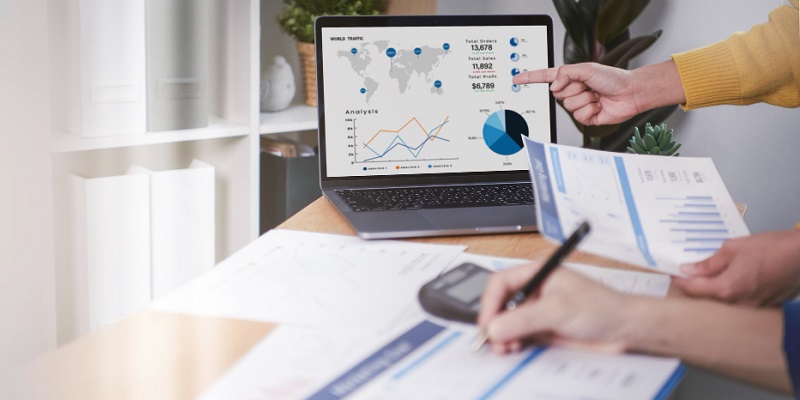
In recent years, businesses across multiple industries have begun to recognize that their employees represent one of the most significant assets they possess. As such, the role of human resources has undergone a transformation in which analytics, data-driven insights, and technology have become central to the management of the workforce. This has given rise to the era of Systemic People Analytics, in which businesses harness the power of artificial intelligence (AI) to make strategic talent management decisions.
Challenges in traditional HR data collection, cleaning, and analysis
For many years, businesses relied on traditional Human Capital Management (HCM) platforms to store and manage employee data. However, with the rise of remote work, the need for real-time insights into the workforce, and the complexity of modern organizational structures, traditional HCM systems became insufficient. The challenges that businesses face in collecting, cleaning, and analyzing data about their workforce are numerous.
Manual processes for data collection resulted in extensive amounts of raw, unstructured data that were difficult to process and understand. Data cleaning, where inconsistencies and inaccuracies are removed from datasets, proved time-consuming and labor-intensive. Additionally, traditional data analysis techniques could not provide organizations with the granularity of insights required to make strategic decisions.
Systematic People Analytics: The Need for a Unified Platform
To address these challenges, businesses have begun turning to Systemic People Analytics. This approach utilizes advanced computing technologies to mine large, complex datasets and provide relevant insights that support workforce decision-making. The cornerstone of Systemic People Analytics is the aggregation of almost all available data into a unified platform.
This platform captures data across multiple sources, from employee surveys to HR management systems, enterprise resource planning systems, and business analytics systems. Systemic People Analytics uses this data to develop predictive models that provide insights into key areas of human resources, including talent acquisition, retention, workforce planning, and leadership development.
Why traditional HCM platforms are not adequate for the complexity?
Traditional HCM platforms were designed to capture static, transactional data, and were not developed with the level of complexity that modern businesses require. The lack of flexibility in traditional HCM systems became apparent with the growing demands for real-time insights, the need for data integration, and the rise of remote workforces.
Additionally, HCM platforms rely heavily on manual data processing. This process requires extensive resources, is time-consuming, and increases the risk of human error. The inflexibility and manual nature of traditional HCM platforms mean that they limit the potential insights available from complex and diverse data sets.
Leaders in Systemic People Analytics: Visier, ChartHop, OneModel, and Crunchr
Leading the charge in the Systemic People Analytics arena is Visier, which offers a robust platform that provides a comprehensive data landscape. Its platform includes powerful analytics tools that enable businesses to uncover key insights quickly.
Charthop offers an AI-driven solution that provides in-depth analysis of employee data, including turnover and performance. OneModel provides businesses with a complete data management platform that integrates all sources of data and provides meaningful insights in real-time. CruncHR is another Systemic People Analytics provider that offers time-series analytics and enables users to analyze past trends, and pinpoint the causes of issues.
Time-series analysis: analyzing past trends and finding causes of issues
Systemic People Analytics platforms offer businesses the ability to incorporate time-series analysis, which provides insights into past trends and patterns. This information helps businesses make better decisions by understanding the root causes of issues within their workforce.
By analyzing data over time, businesses can identify patterns of behavior and understand how they develop. This approach enables companies to identify the reasons behind undesirable outcomes such as high employee turnover or talent loss. The ability to recognize these patterns helps businesses take proactive measures to address underlying issues before they become problematic.
Complementing AI-driven Talent Intelligence: Real-time Analysis of Core Transactional Data
Data-driven human resource management efforts that incorporate systemic people analytics have a significant advantage over those that do not. By encompassing real-time, core transactional data and insights, businesses can make decisions faster and with greater accuracy.
Systemic People Analytics platforms complement AI-driven Talent Intelligence systems, which focus on real-time analysis of core transactional data, including hiring patterns, time-on-task data, and performance metrics linked to individual employees.
Implementing the 4R Model: Evaluating Candidate Pipelines, Turnover Drivers, and Required Skills
To effectively implement the 4R model for talent acquisition, HR business partners must be able to evaluate candidate pipelines, turnover drivers, and required skills. Systematic People Analytics helps businesses achieve this by providing insights into the workforce’s future performance, employee engagement, and company culture.
By combining data on employee behavior, skill profiles, and performance, businesses can identify areas in which they need to focus their recruitment and talent development efforts. This approach helps HR teams create a cohesive talent strategy and execute it with greater accuracy.
Retaining Existing Talent: The Imperative of Rare and Emerging Skills
As organizations seek rare and emerging skills, the imperative of retaining existing talent will intensify. Businesses that succeed in retaining high-performing workers will have a competitive advantage.
Systemic People Analytics platforms provide businesses with the capability to identify critical skills that are scarce within their workforce. This data assists in incentivizing employees to stay and providing targeted learning and development opportunities. It also helps businesses identify where to invest resources in recruitment and development, thus maximizing their workforce’s potential.
Systemic People Analytics are rapidly becoming the future of strategic talent management. By harnessing the power of AI and data analytics, businesses can create more accurate workforce forecasts, improve talent acquisition, and increase employee engagement.
The benefits of this approach do not stop there. By integrating the systemic people analytics model, companies can drive innovation and gain a competitive edge in an increasingly complex and dynamic business landscape. The future is bright for businesses that embrace this innovative approach to workforce management.