

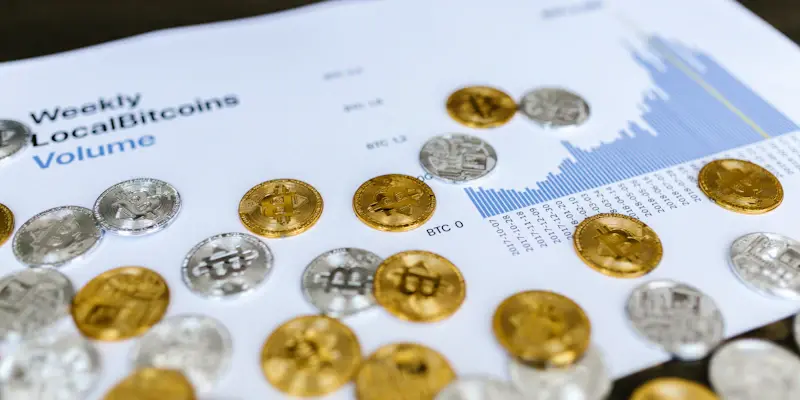
The recent surge in Bitcoin’s price has captured significant attention, with its value exceeding $87,000 and sparking renewed discussions about its role as digital gold. This remarkable increase has not only revitalized interest in Bitcoin but also created a ripple effect across the cryptocurrency market, benefiting major altcoins such as Solana, XRP, and Cardano. Such developments have fueled optimism among investors, drawing attention to the broader potential of digital assets in times of economic uncertainty.
Bitcoin’s Rise and The Digital Gold Narrative
Bitcoin’s rise to over $87,000 has reignited the digital gold narrative, positioning it as a stable store of value akin to gold. This resurgence is driven by various factors, including inflation concerns, soaring gold prices, and a weakened global currency landscape. Observers are increasingly considering Bitcoin a viable alternative to traditional safe-haven assets, precisely because it offers a hedge against economic instability. Rising gold prices, surpassing $3,380 per ounce, further underscore the attractiveness of Bitcoin as an investment.
Political uncertainty in the United States has also played a significant role in this renewed interest. Specifically, President Donald Trump’s attempts to replace Jerome Powell as Federal Reserve Chair and pressure for interest rate cuts have contributed to a climate of economic unrest. Amid these developments, investors are turning to assets perceived as more stable, such as gold, European bonds, and Bitcoin, lifting its profile even further. Consequently, as confidence in traditional financial systems wavers, Bitcoin’s appeal as a protective financial instrument strengthens.
Ripple Effect on Major Altcoins
Bitcoin’s bullish trend has cast a positive light on prominent altcoins, notably Solana, XRP, and Cardano. For instance, Solana has experienced significant gains, with its value increasing by over 5% within a week. This increase is attributed to factors such as speculation regarding the potential launch of spot Solana ETFs in Canada. The anticipation surrounding these developments has propelled Solana’s market performance, reinforcing its standing among top-tier cryptocurrencies.
Similarly, XRP has benefited from the heightened market vigor, witnessing a price rise of 2.91% to $2.12. Contributing to this uptrend is the announcement of ProShares entering the race for an XRP Futures ETF and Ripple’s strategic acquisition of Hidden Road. These events have not only boosted investor sentiment but have also underscored the growing institutional interest in XRP. The favorable news flow around XRP signifies a robust outlook for the coin, reflecting broader market enthusiasm.
Altcoin Market Momentum
Cardano has also enjoyed gains, marking a 3.35% increase in the last 24 hours and trading around $0.6457. This positive momentum is driven partly by growing investor confidence and encouraging technical indicators suggesting a continuation of this upward trend. Cardano’s progress is indicative of a broader optimism within the cryptocurrency market that extends beyond Bitcoin’s influence. The steady rise of Cardano highlights the increasing acknowledgment of its potential in various applications, further diversifying investor interest.
As Bitcoin’s relationship with traditional equity markets weakens, its alignment with gold strengthens. This decoupling from equities signifies a maturing dynamic within the cryptocurrency market, reinforcing Bitcoin’s status as a hedge against economic uncertainties. The intrinsic value proposition of altcoins like Solana, XRP, and Cardano exemplifies the diversified growth potential within the crypto sector, reassured by their individual market developments and broader acceptance.
Growing Investor Confidence in Cryptocurrencies
The current economic landscape, characterized by rising inflation rates and global currency fluctuations, is driving investors towards alternative stable investments like cryptocurrencies. This environment has benefited several altcoins, as evidenced by the substantial gains in assets such as Solana, XRP, and Cardano. Their recent performances reflect a growing investor confidence not just in the primary utility of these digital assets but also in their broader potential within the financial ecosystem.
The optimistic market sentiment surrounding these cryptocurrencies is underpinned by recent gains and positive technical outlooks. Investors are increasingly recognizing the value proposition offered by these digital assets, further strengthening the overall market sentiment. This shift in perception is encouraging more extensive institutional and retail participation in the crypto market, thereby contributing to its ongoing evolution and integration within mainstream financial practices.
Broader Market Dynamics
The recent surge in Bitcoin’s price has garnered a lot of attention, with its value surpassing $87,000. This sharp rise has reignited discussions about Bitcoin’s role as digital gold, a term used to compare its value storing capabilities to that of the precious metal. Bitcoin’s remarkable increase has not only renewed interest in itself but has also had a significant impact on the broader cryptocurrency market. Major altcoins such as Solana, XRP, and Cardano have seen substantial benefits from this trend. This rise in digital currencies is creating a ripple effect that suggests a greater potential for the whole digital asset market during uncertain economic times. Investors are increasingly optimistic about the role of cryptocurrencies as safeguards against economic instability. As traditional markets face volatility and global financial systems experience turbulence, the appeal of digital assets like Bitcoin and prominent altcoins appears to be growing. The recent developments highlight the dynamic nature of the cryptocurrency landscape and its evolving importance in modern finance.