

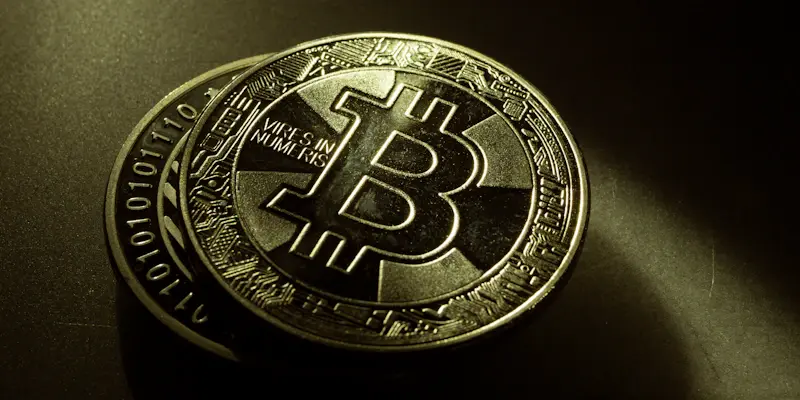
Bitcoin and other cryptocurrencies have recently demonstrated notable resilience amid escalating US-China tensions. Following a period of decline influenced by US President Donald Trump’s tariff announcements on imports, Bitcoin showed a robust recovery on both national and international platforms. On the international market, Bitcoin’s price increased by 2.61% to $87,373, while in India, it rose to $87,845, reflecting a gain of over 2%. For the past two weeks, Bitcoin faced significant challenges due to the ongoing trade tensions between the US and China.
Bitcoin’s Renewed Upward Momentum
Investor Confidence and Market Dynamics
Bitcoin’s resurgence can be largely attributed to the rising investor confidence and the macroeconomic landscape. The dollar index hit a three-year low, which spurred recession fears and prompted investors to seek safe-haven assets like Bitcoin. Additionally, an increase in institutional interest has bolstered Bitcoin’s standing. Alankar Saxena from Mudrex pointed out that surpassing the $88,700 mark could propel Bitcoin to $92,000, with strong support identified at $84,000. These price movements indicate investor optimism despite potential market volatility.
Ether and Other Cryptocurrencies
Similarly, Ether has experienced a sizable gain, trading at $1,640 internationally and $1,663 in India. Despite resistance near the $1,680 level, Ethereum remains stable above $1,500. This stability reflects a degree of investor confidence in the broader cryptocurrency market. Market sentiment remains cautious due to ongoing US-China trade talks, sticky treasury yields, and uncertainty surrounding the actions of the Federal Reserve. With only a 12% chance of a rate cut in the upcoming May FOMC meeting, market positions remain cautious.
Altcoin Performance and Market Sentiment
Sideways Trading and Gains
In the altcoin arena, most cryptocurrencies traded sideways yet showed pockets of gains. Ripple, Binance Coin, Tron, Leo, and Shiba Inu exhibited positive movements. Conversely, Solana, Dogecoin, Cardano, Avalanche, Stellar, and Polkadot recorded losses. Despite such mixed outcomes, the overall crypto market cap surged by 1.70%, reaching an impressive $2.74 trillion. This underscores the variability and potential within the altcoin market, although many of these assets remained influenced by macroeconomic conditions and investor sentiment.
Mainstream Acceptance and Caution
Avinash Shekhar from Pi42 highlighted an ongoing trend of growing confidence and improving infrastructure in the crypto market, signaling potential mainstream acceptance. However, experts remain cautious, advising thorough research before any investments due to inherent market volatility. Cryptocurrencies, being largely unregulated, come with significant risks. Investors are reminded that provided information should not be considered the financial gospel, necessitating independent research and prudent decision-making.
Conclusion: A Cautiously Optimistic Outlook
Bitcoin and other cryptocurrencies have recently shown remarkable resilience amid increased tensions between the US and China. After a period of decline that was influenced by President Donald Trump’s announcements of tariffs on imports, Bitcoin experienced a strong rebound on both national and international platforms. On the global market, the price of Bitcoin surged by 2.61%, reaching $87,373. In India, the cryptocurrency’s value also rose, hitting $87,845, which signifies a gain of over 2%. For the past two weeks, Bitcoin had been struggling due to the ongoing trade tensions between the US and China. The uncertainty and economic instability brought about by this situation had put significant pressure on the cryptocurrency market. However, Bitcoin’s recent performance indicates that it has managed to navigate through these challenges effectively. This resilience not only underscores Bitcoin’s potential as a digital asset but also highlights its ability to withstand geopolitical and economic disruptions, making it a focal point for investors worldwide.