

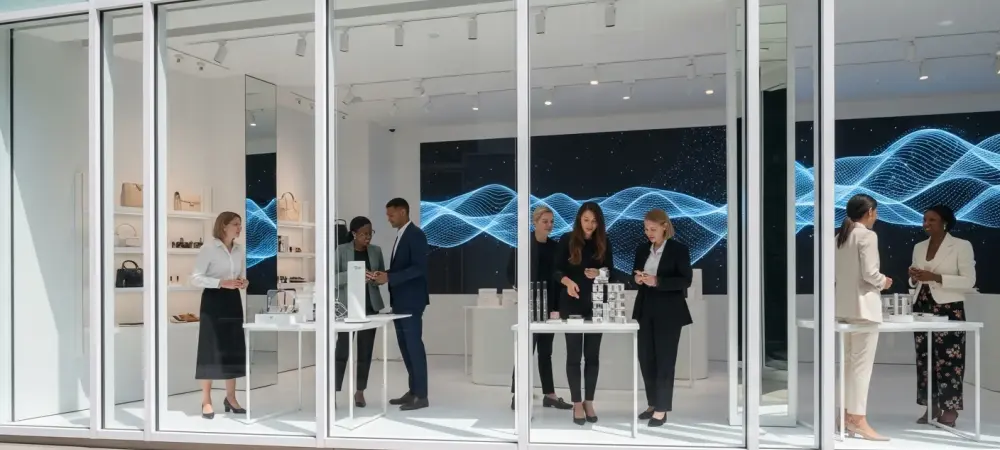
The contemporary cultural marketplace has fundamentally outgrown the cold, mechanical efficiency of traditional corporate advertising in favor of something far more visceral and community-oriented. Today, culture-driven brands—ranging from artisanal cannabis dispensaries to independent streetwear collectives—are no longer chasing the widest possible audience but are instead focusing on the deepest possible connection. This shift reflects a broader societal movement where consumers prioritize shared identity and authentic participation over the passive consumption of goods. To succeed in this climate, brands have transitioned away from polished, top-down messaging toward a decentralized model that values peer-level inclusion and aesthetic resonance.
This modern marketing nexus is defined by a sophisticated blend of tangible real-world presence and high-precision digital tools. As digital fatigue becomes a common psychological state, the simple act of existing in a physical space serves as a powerful antidote to algorithmic skepticism. Trust is now established through a “multi-touch” reality where a brand must prove its worth in the streets before it can earn a place in a consumer’s social feed. The challenge for modern creators is to maintain this human touch while leveraging the massive reach of the internet, ensuring that every digital interaction feels like a natural extension of a physical community rather than an automated intrusion.
The following exploration delves into the “Relay Framework,” a strategic philosophy where traditional marketing acts as the catalyst and digital platforms serve as the accelerator. By examining current data-driven growth trends and expert perspectives on human-centric technology, we can map out the future of these integrated brand ecosystems. This evolution signifies a departure from the “digital-only” obsession, moving toward a balanced architecture that honors both the tactile nature of culture and the analytical power of modern software.
The Convergence of Mediums: Data and Real-World Application
Statistical Evolution: The Growth of Hybrid Strategies
Current market data indicates a significant resurgence in “contextual” traditional media as a direct response to the saturation of the digital landscape. Recent adoption statistics reveal that brands are increasingly investing in localized physical assets, such as high-quality posters and immersive pop-up experiences, which have seen a marked increase in engagement rates compared to standard display ads. This trend is driven by a desire to “borrow” the existing energy of a physical location, placing a brand within the immediate lifestyle context of its target audience. Furthermore, the rise of localized digital marketing—including hyper-specific local SEO and SMS-based loyalty programs—shows that even digital strategies are becoming more grounded in geographic reality.
Beyond mere placement, the integration of AI-assisted humanizing tools is allowing these brands to scale their communication without losing their unique voice. Organizations are utilizing advanced language processing to ensure that their digital outreach mirrors the conversational tone found at a physical merch table or inside a boutique. Statistics show that culture brands using these “human-centric” digital tools report higher customer retention rates than those relying on clinical, generic automation. This suggests that the successful brand of today is one that uses technology to amplify its personality rather than replace it.
Case Studies: Cultural Resonance in Action
The cannabis industry provides a compelling model for this hybrid approach, as local dispensaries frequently use physical community events to establish “physical credibility.” By participating in local festivals or hosting educational workshops, these businesses build a foundation of trust that cannot be replicated through a screen. Once this real-world connection is forged, digital retention tools like personalized email newsletters and exclusive mobile offers are used to convert these initial impressions into long-term customer loyalty. This sequence ensures that the digital relationship is built upon a verified, tangible experience.
In the world of streetwear and art collectives, the strategy often flips but remains equally integrated. Creators frequently use digital-first content, particularly short-form video and social storytelling, to build a global base of interest. However, they quickly follow this up with traditional elements like physical “merch tables” and wild-postering campaigns to make the movement feel tangible and exclusive. Physical installations are created specifically to be captured and shared, effectively turning a traditional poster into a viral digital asset that spreads across social networks organically.
Industry Perspectives: The Expert View on Authenticity
The Relay Framework: Catalyst and Accelerator
Marketing thought leaders are increasingly advocating for a “Signal vs. Channel” philosophy, which prioritizes the core message over the specific medium used to deliver it. The consensus is that the medium should never overshadow the “signal” of the brand’s identity. Within this framework, traditional marketing serves as the catalyst—the spark that creates the initial awareness and provides the brand with cultural legitimacy. It is the physical proof that a brand exists and is invested in a specific scene or neighborhood, providing a sense of permanence that digital pixels often lack. Once that catalyst has done its work, digital marketing acts as the accelerator, taking that localized energy and scaling it to a wider audience. Experts describe this as a relay race where the physical world hands off the “baton” of trust to digital channels. This allows for a more efficient customer journey, as the digital ads are no longer trying to introduce the brand to a stranger, but are instead reminding a friend of a brand they already encountered in the real world. This synergy reduces the friction typically found in cold digital outreach and increases the likelihood of a meaningful conversion.
The Marketing Stack: Enabling Human Decisions
In the current professional landscape, the “Marketing Stack” is being reevaluated to ensure that tools enable better human decisions rather than simply generating more noise. Expert opinion suggests that for culture brands, the value of a software tool is measured by its ability to uncover existing demand and identify friction points in the user experience. Instead of over-automating every interaction, successful managers are using data to determine where a human touch is most needed. This approach ensures that the brand remains relatable and avoids the “uncanny valley” of overly clinical marketing.
Tools are now selected based on their ability to facilitate specific lifestyle-driven goals, such as managing high-traffic product drops or maintaining local reputation through review management. The goal is to create a seamless feedback loop where digital data informs physical strategy and vice versa. By focusing on tools that support the brand’s authentic voice, creators can spend less time on administrative tasks and more time on the creative work that defines their cultural standing. This human-centric application of technology is what separates enduring brands from temporary trends.
The Future of Cultural Engagement: Evolution and Implications
Predicting the Next Phase: Blurring Boundaries
The boundaries between offline and online worlds will continue to dissolve as technology becomes more integrated into the physical environment. We are moving toward a reality where augmented reality overlays and advanced, non-intrusive QR integrations will make every physical poster a portal to a deeper digital experience. This transition will allow brands to maintain the aesthetic beauty of traditional media while gaining the tracking capabilities of digital platforms. The result is a more immersive brand ecosystem where the transition from a street corner to a digital checkout is nearly instantaneous and completely fluid.
Benefits, Risks, and Broader Implications
The shift toward this integrated model offers profound opportunities for deeper community loyalty and more efficient marketing spend. By focusing on high-impact physical moments and following up with precision digital retargeting, brands can achieve higher resonance with smaller, more dedicated audiences. However, this path is not without risks. Over-automation remains a constant threat; if a brand becomes too digitally clinical, it risks losing its “subcultural cool” and alienating the very community it seeks to represent. Maintaining a balance between data-driven efficiency and raw, unpolished creativity is the central challenge for the coming years.
This hybrid model is rapidly becoming the standard for any brand that aims to represent a specific lifestyle or identity. The broader implication is that the “corporate” style of marketing is becoming obsolete for any business that relies on cultural relevance. As consumers become more adept at filtering out generic noise, the only way to capture attention is to exist authentically in both the spaces people inhabit and the devices they carry. This requires a constant commitment to human-centric content, which remains the ultimate competitive advantage in a world increasingly influenced by artificial intelligence.
The path forward for culture brands involved a mandatory integration of traditional “moments” and digital “growth” strategies. The most successful creators recognized that while digital tools provided the necessary scale, the physical world provided the necessary soul. They focused on being present where their audience gathered, using every physical touchpoint as an opportunity to spark a digital conversation. This holistic approach ensured that their marketing was not just a series of ads, but a continuous narrative that respected the intelligence and the environment of the consumer. By prioritizing authenticity and human connection, these brands secured their place in the cultural fabric, proving that resonance is achieved when technology serves the community rather than the other way around.