

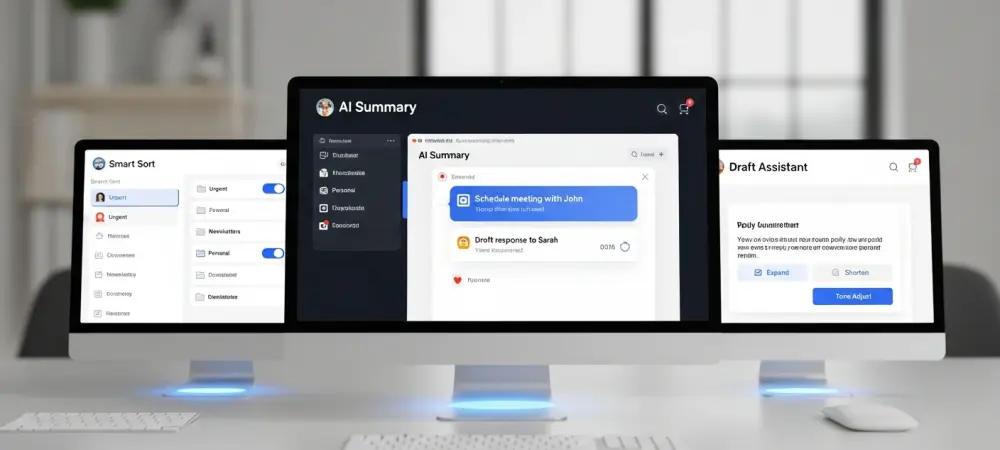
The relentless influx of digital correspondence has transformed the modern professional inbox into a complex landscape that requires constant navigation and significant cognitive resources. While email remains the cornerstone of professional communication, the sheer volume of incoming messages creates a persistent productivity bottleneck that often derails high-level strategic work. The average professional currently dedicates approximately twelve hours every week to managing their inbox, effectively surrendering a third of their productive life to administrative drift. This burden is not static; recent data suggests the volume of digital noise is expanding, yet a small subset of individuals has begun to claw back this lost time by delegating the heavy lifting to intelligent, adaptive systems.
The psychological toll of a cluttered inbox extends beyond mere time loss, often manifesting as a form of digital anxiety known as inbox fatigue. Professionals frequently find themselves in a reactive state, prioritizing the latest message over the most important task, which leads to a fragmented workday. This phenomenon creates a cycle where deep work becomes nearly impossible, as the constant ping of notifications demands immediate attention. By implementing advanced assistants, workers are shifting from a defensive posture to a proactive one, allowing technology to act as a buffer between the noise and the meaningful work that drives organizational growth.
The Administrative Weight of the Modern Inbox
The current state of digital communication has reached a tipping point where the manual sorting of messages is no longer a viable long-term strategy for success. As organizations scale, the frequency of interaction increases exponentially, leading to a state where a significant portion of the workforce feels perpetually behind. The weight of this administrative burden is felt most acutely by those in leadership or client-facing roles, where a missed email can translate directly into lost revenue or damaged reputation. This environment has necessitated a shift away from traditional folder management toward systems that can anticipate needs and automate routine responses before they require human intervention.
Moreover, the hidden cost of email management lies in the cognitive switching cost associated with jumping between different communication threads. Every time a professional pivots from a complex project to answer a routine scheduling request, they lose minutes of focus that are difficult to regain. This cumulative loss of momentum is what truly erodes corporate efficiency in the modern era. Early adopters of AI-driven tools are reporting a significant reduction in this mental friction, as the systems handle the categorization and drafting of routine messages, preserving the user’s mental energy for tasks that require genuine human creativity and judgment.
Moving Beyond Basic Filtering to Adaptive Systems
The evolution from traditional email automation to sophisticated AI assistance represents a fundamental shift in how people interact with technology. Traditional systems relied on rigid if-then rules that required constant manual updates and often failed to capture the nuance of a changing business environment. In contrast, modern adaptive systems leverage natural language processing to understand the underlying context and emotional tone of a conversation. With 80% of marketers now utilizing artificial intelligence for content creation, the technology has transitioned from a fringe novelty to a core necessity for maintaining competitive speed in a fast-paced market.
These adaptive systems do more than just move messages into folders; they learn from a user’s specific habits and preferences over time. By analyzing past interactions, the software can predict which emails require immediate attention and which can be summarized for later review. This intelligence allows for a more fluid interaction with the inbox, where the software acts as a partner rather than just a tool. This transition is essential for managing the modern influx of data, as it allows professionals to move past the limitations of human processing speed and into an era of assisted intelligence that mirrors a dedicated human assistant’s intuition.
Postcards by Designmodo: Merging Design with Generative AI
Postcards addresses a specific hurdle that many general-purpose assistants overlook by focusing on the visual and structural integrity of the email itself. It serves as a sophisticated HTML builder where users can generate high-quality, professional templates through conversational prompts rather than manual coding or rigid drag-and-drop interfaces. Within the editor, a simple click of the pencil icon opens an AI Suite that allows the user to restructure layouts, add specific feature blocks, or even translate entire campaigns into multiple languages instantly. This capability bridges the critical gap between raw text generation and professional-grade marketing, making it the ideal solution for teams that refuse to compromise on design standards. The integration of generative AI within Postcards allows for rapid iteration that was previously impossible without a dedicated design team. A user might command the system to convert a standard newsletter into a password reset email or request a red call-to-action button, and the AI executes the change within the existing design framework. This ensures that every generated element remains cohesive and brand-compliant. Furthermore, the tool’s ability to export directly to major platforms like Mailchimp, HubSpot, and Klaviyo ensures that the transition from design to delivery is seamless, removing the technical barriers that often slow down marketing departments.
Superhuman: Accelerating Inbox Triage and Precision
For professionals whose primary focus is speed and the management of high-volume client interactions, Superhuman operates as a premium performance layer over existing Gmail or Outlook accounts. It is designed with the philosophy that the inbox should be a tool for action rather than a repository for storage. One of its standout features, Auto Drafts, mimics the user’s specific professional voice to prepare responses before the message is even opened. Following its acquisition by Grammarly in mid-2025, the platform has further refined its ability to ensure that every communication is not only fast but also grammatically perfect and tonally appropriate for the intended recipient.
The platform excels at triage, utilizing advanced algorithms to categorize incoming messages by urgency and providing one-line summaries of long, exhausting email threads. This allows users to grasp the essence of a conversation without having to read through dozens of individual replies. By flagging missed follow-ups and prioritizing critical client messages, Superhuman prevents important details from falling through the cracks of a crowded day. Although it requires a subscription, starting at $33 per month for the Business plan, the return on investment is often measured in the hours saved daily and the increased responsiveness that defines high-level sales and service roles.
Google Gemini: Consolidating Intelligence within Workspace
Gemini offers a friction-free experience for users who are already deeply entrenched in the Google Workspace ecosystem. Because it is natively integrated into Gmail, it eliminates the inefficiencies of jumping between different browser tabs or separate software platforms to generate content. The assistant can draft complex marketing copy, suggest high-conversion subject lines, and rewrite existing drafts to match a specific professional tone directly within the compose window. For organizations that prioritize data consolidation and simplicity, Gemini provides a robust set of intelligent tools without the steep learning curve typically associated with adopting new enterprise software.
Beyond simple drafting, Gemini leverages the full context of a user’s Workspace data to provide more relevant suggestions. It can pull information from Docs, Sheets, and Calendar to ensure that email replies are grounded in factual accuracy and up-to-date scheduling. This level of integration makes it a powerful ally for project management, as the AI can summarize project updates and draft progress reports for stakeholders with minimal input. By keeping the AI where the work actually happens, Google has created a system that feels like a natural extension of the user’s own workflow, rather than an external add-on that requires constant management.
Analyzing the ROI of AI-Driven Inbox Management
The shift toward corporate AI adoption is backed by compelling data, with industry experts predicting that 40% of enterprise applications will feature task-specific AI agents by the end of the year. This trend is driven by the tangible return on investment observed when automated drafting and advanced analytics reduce the time spent on routine replies. Organizations are finding that the implementation of these tools leads to a more engaged workforce, as employees are freed from the drudgery of administrative tasks and allowed to focus on higher-value initiatives. However, there is a recognized risk known as the generic trap, where over-reliance on technology can lead to a loss of personal touch and brand personality. The most successful professional implementations involve a hybrid approach where the artificial intelligence handles the bulk of the drafting while the human professional provides final verification. This ensures that the speed of the AI is balanced by the nuance and emotional intelligence of a human reviewer. This collaborative model maximizes efficiency without sacrificing the quality of the relationship. As these systems continue to evolve, the focus is shifting from simple automation to the refinement of voice and intent, allowing for a future where digital communication is both instantaneous and deeply personal.
Strategies for Seamless Tool Adoption and Data Security
Selecting the appropriate assistant required more than a simple comparison of feature lists; it demanded a strategic evaluation of specific workflow needs and internal security requirements. Teams began the process by auditing their communication patterns to determine whether they needed design-heavy marketing templates or high-speed sales outreach. It was essential to verify that any tool granted access to a corporate inbox complied with GDPR standards and aligned with internal privacy policies. This rigorous vetting process ensured that the benefits of automation did not come at the cost of data integrity or client confidentiality. The transition toward these systems was most successful when it involved a structured trial period that allowed the AI to learn the user’s habits and tone before full deployment. Managers observed that providing employees with clear guidelines on how to interact with AI-generated drafts helped maintain a consistent brand voice across all departments. Ultimately, the adoption of these tools was not merely a technical update but a strategic decision to prioritize human creativity over administrative maintenance. By establishing clear protocols and choosing platforms that integrated smoothly with existing software, organizations effectively reclaimed their time and redefined the boundaries of the modern workday.