

Market Introduction: Context, Purpose, and Stakes
Bulls found a spark in Salesforce’s weekly bounce, yet the market’s verdict sharpened at familiar ceilings as rallies faded beneath layered moving averages and momentum signaled more caution than confidence. The aim here is to frame the week’s setup with a trader’s lens while anchoring it to Salesforce’s evolving AI roadmap and shareholder-return posture. That combination matters because sentiment can improve on narrative, but price still demands confirmation.
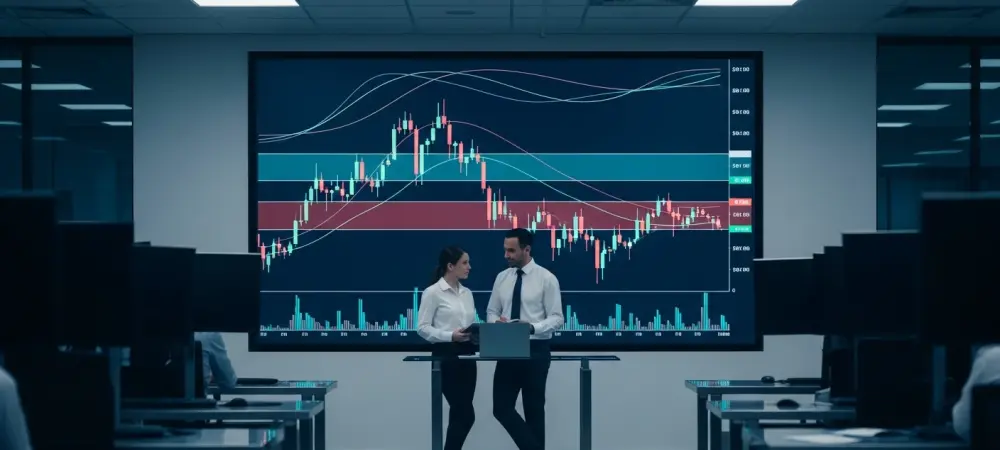
This analysis centers on a projected five-session range of $181.00–$199.00 with a downside lean. It examines why resistance near $199.00 is likely to blunt strength absent better trend signals, and what would need to change for a move to sustain. It also places tactical views against a broader strategic arc: AI adoption, ecosystem optionality, and capital allocation as potential—yet not immediate—drivers of base-building. In short, the question is durability. A modest rebound has appeared, but with price trapped beneath the 20-, 50-, and 200-day moving averages, the burden of proof still sits with buyers. The following sections break down the tape, the indicators, and the catalysts that could bend the curve.
Body: Current Patterns and Near-Term Projections
Price Structure and Moving Averages
The structure is doing the heavy lifting. Trading below the 20-, 50-, and 200-day moving averages keeps medium- to long-term pressure intact, and it turns each test higher into an encounter with supply. The $199.00 area, which aligns with the top of the expected five-day band, has behaved as a functional cap because it meets sellers before the nearest moving average is reclaimed.
That dynamic has repeated: rebounds invite supply, follow-through stalls, and price drifts back into the middle of the range. Until the 20-day is taken and held, attempts to stretch above $199.00 are more likely to exhaust than to expand. In other words, architecture favors selling strength over chasing it.
Oscillators, Divergences, and Breadth
Momentum paints a similar picture. Weekly MACD and ADX remain weak, flagging a trend without positive impulse. RSI and CCI sit mildly oversold, which often seeds countertrend lifts, but the Stochastic RSI has flipped overbought—an internal divergence that explains shallow bounces and quick rollovers. Breadth corroborates the caution. Up days have not shown the kind of strong participation that characterizes durable turns, and without improvement in the MACD slope or ADX trend strength, momentum remains a headwind. Translation for traders: expect tactical pops within a larger down-bias rather than a clean trend reversal.
Scenarios, Triggers, and Risk
Base case calls for rangebound action between $181.00 and $199.00 with a bearish tilt. A decisive break above $199.00 looks low probability near term; if it happens without a simultaneous momentum shift, gains may be fleeting. Conversely, a push below $181.00 could reopen a path toward recent lows, particularly if volume expands on the break and breadth deteriorates. Monitoring triggers matters more than headlines. Confirmation for upside includes a reclaim and hold of the 20-day, then the 50-day, alongside a positive weekly MACD crossover or a rising ADX with price above those averages. On tests of $199.00 and $181.00, watch intraday breadth and volume quality—those often foreshadow durability better than narrative alone.
Strategic Context: AI, Partnerships, and Capital Returns
Fundamentals set the backdrop for the next leg. Salesforce’s AI stack is taking shape: Agentforce has reportedly reached 23,000 customers and processed 2.4 billion Agentic Work Units last quarter; Agent Albert points to deeper autonomy; Agent Fabric aims to orchestrate multiple models with governance and cost control. The Anthropic partnership widens model choice within enterprise guardrails. Capital returns add ballast. A larger buyback and higher dividends can absorb supply and telegraph confidence during product transitions, which can bolster floors over time. Still, these positives have not yet shifted the weekly technical profile. For that, investors will want to see AI monetization per seat or workflow improve, attach rates rise across clouds, and margins hold as inference and data costs scale.
Conclusion: Strategic Takeaways and Next Moves
This week’s rebound met overhead pressure, and the market rewarded patience over aggression as price stayed below the 20-, 50-, and 200-day moving averages. The $181.00–$199.00 band defined the tactical arena, with oscillators mixed and momentum weak enough to favor fading strength rather than pressing breakouts. Against that, AI momentum and capital returns formed a constructive, medium-term narrative that could underpin a base if adoption, pricing power, and margins firm. Actionable next steps leaned on verification: prioritize a 20-day reclaim, then a 50-day hold, paired with a weekly MACD turn or rising ADX before upgrading conviction. Inside the band, fading rallies toward $199.00 and staging risk-defined longs closer to $181.00 made sense only with tight risk controls and careful read of participation. Longer term, the focus shifted to whether “agentic” workflows produce recurring, high-margin revenue that can translate into improving breadth and trend strength. If those elements aligned, the range would have given way to a sturdier advance; until then, discipline and respect for resistance remained the edge.