

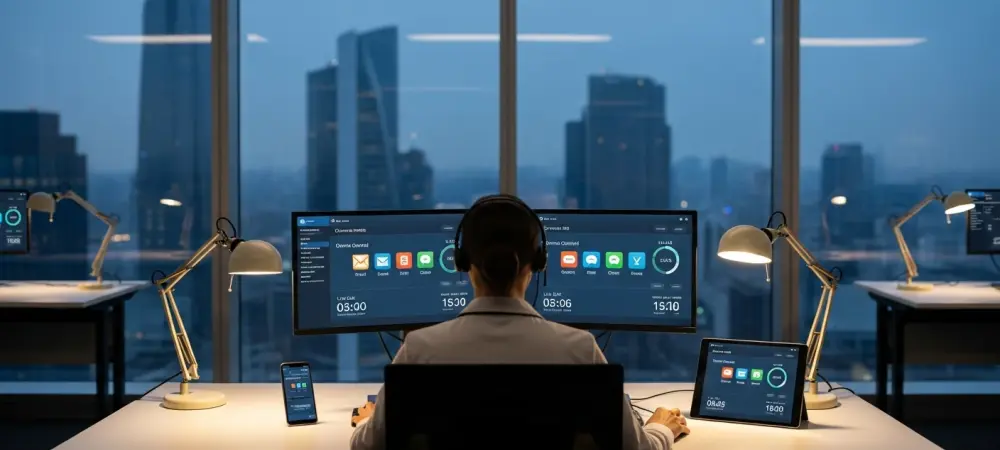
What Omnichannel CRM Orchestration Means for Hospitality
Guests do not think in systems, yet their journeys throw off a blizzard of signals across email, SMS, chat, phone, and web, and omnichannel CRM orchestration promises to catch those signals in one place, interpret intent, and respond with the next right action before momentum fades. In hospitality, that means tying every touch to a unified guest profile so speed and relevance rise together rather than trade off.
This shift emerged as API-enabled stacks replaced islands of tools and as travelers demanded immediate, accurate answers that a siloed inbox could never deliver. The competitive angle is stark: mid-funnel intent is plentiful but perishable, and orchestrated nurturing turns that fleeting curiosity into bookings and lifetime value.
Then-versus-now comparisons are not nostalgia; they explain the economic delta. Handwritten notes and one-off emails could not scale judgment, but unified profiles, behavioral triggers, and humanized automations now make lead nurturing a primary revenue engine aligned across sales, marketing, and operations.
Core System Architecture and Components
Unified Data Layer and CDP
The data layer ingests PMS, POS, spa, loyalty, web, and call data to create a living profile that updates in near real time, with identity resolution collapsing duplicates and consent rules gating what can be used. This constant refresh enables minute-scale segment changes that keep outreach relevant rather than reactive. The uniqueness here is suppression logic as a first-class citizen: knowing when not to message is as valuable as a perfect pitch. Hotels that get this right avoid fatigue, protect sender reputation, and reserve offers for moments that actually convert.
CRM as the System of Engagement
The CRM operationalizes the profile, routing inquiries, enforcing SLAs, assigning tasks, and surfacing context so agents stop guessing. Pipeline views for quotes and group leads reveal bottlenecks, and response routing matches skills to intent to protect close rates. What differentiates strong implementations is governance baked into workflows; message logic, approvals, and playbooks live in the same system that tracks outcomes, turning process from paperwork into performance.
Marketing Automation and Journey Orchestration
Automation watches for triggers—abandoned searches, proposal views, event inquiries—and launches journeys that pace messages, tailor content, and fail over to a new channel if one stalls. Frequency caps and quiet hours keep automation from sounding like a metronome. The value is not volume but precision: dynamic offers and content blocks shift with profile signals, so two guests with the same dates can receive very different, brand-safe paths that reflect their price sensitivity, party size, or past spend.
API-First Integrations and Data Portability
Bidirectional integrations move events and updates via webhooks and streams, keeping profiles fresh and decisions current. Standardized schemas reduce custom glue code and slash the likelihood of stale attributes steering the wrong action. Portability matters strategically: open ecosystems prevent lock-in and support ongoing innovation, so a hotel can swap a messaging tool or booking engine without derailing its nurture logic.
Analytics, Testing, and Revenue Attribution
Dashboards track open and click rates, response times, conversion by segment and channel, revenue per lead, and CAC, while cohort analysis distinguishes seasonal swings from true lift. Multi-touch attribution assigns credit across emails, texts, calls, and agent actions to expose which combinations actually close.
Testing is the engine of progress here; cadence, creative, and offer tests inform audience-level playbooks, and losing variants are retired quickly, turning analytics from reporting into product development for revenue.
Omnichannel Communications and Agent Handoffs
A unified inbox brings email, SMS, WhatsApp, chat, and voice into one console with full history, so agents pick up mid-stream without asking guests to repeat themselves. Click-to-call or chat from context-rich screens preserves continuity and shortens time to resolution. The system’s judgment shows in its restraint: it keeps routine threads automated and flags high-intent or high-value moments for human outreach, protecting service levels while controlling labor costs.
AI Assistance and Decisioning
AI handles triage, identifies intent, drafts replies, and proposes next-best offers based on profile attributes and session behavior, then summarizes calls for records and coaching. Agent assist surfaces talking points, policy guardrails, and likely objections in real time. The differentiator is guardrailed personalization: models tune to brand tone and compliance constraints, privileging safe, consistent outcomes over maximal creativity, which is exactly what regulated hospitality workflows require.
Operational Flow: From Signal to Booking
Signals hit the CDP, profiles refresh, and segments update; the CRM reads those changes and triggers a journey tied to an intent score. Channels are chosen by preference, offers align with availability, and frequency is capped to protect trust.
When a human touch will lift conversion, the system alerts an agent with full context and a suggested path; afterward, analytics fold results back into scoring and rules so the next cycle starts smarter.
Latest Developments and Market Dynamics
CDP and CRM functions have converged into shared, real-time profiles that marketing, sales, and operations trust, shrinking handoff friction. First-party data moved from aspiration to asset as privacy rules throttled third-party tracking; consent capture and value exchange became competitive capabilities, not box checks.
Real-time orchestration within minutes of key behaviors shifted from differentiator to baseline, while mobile messaging and in-app notifications expanded the canvas for timely nudges. Voice transcripts entered profiles, seeding segments with stated preferences rather than inferred guesses, and multi-property groups standardized core playbooks while localizing content to preserve market nuance. Consensus has hardened: personalization beats volume, API-first stacks win durability, and the highest returns come from automation blended with human service. The market is rewarding speed with relevance, not just speed.
Applications and Implementation Patterns in Hotels
Direct booking nurture now covers abandoned searches, rate alerts, and integrity messaging that explains price differences without racing to discounts. Group and event workflows coordinate multiple stakeholders, issuing proposal reminders and surfacing concessions most likely to close based on past wins. High-value stays trigger VIP flags, concierge outreach, and tailored packages; upsell engines match room upgrades, spa, and dining to stated interests and spend history. Pre-arrival nudges shape itineraries, mobile messaging handles on-property moments and recovery, and post-stay flows drive reviews and re-engagement, especially into direct channels for the next trip. Portfolios operate with shared data layers and playbooks but allow market-level adaptation, protecting brand consistency while letting local teams adjust cadence, channels, and offers to demand patterns.
Adoption Barriers, Risks, and Practical Mitigations
The biggest technical drag remains brittle, slow integrations and data trapped in legacy systems; the practical cure is API-first vendors, phased unification, and early focus on identity resolution. Tool bloat also hurts—lean cores that prove one revenue win at a time beat sprawling stacks that nobody uses.
Change management is the human hurdle, often rooted in training gaps and mistrust of data; role-based enablement tied to daily workflows lifts adoption, while governance and automated quality checks tackle duplicates and consent decay. Projects slip when timelines ignore sequencing, so sprint plans with exit criteria and cross-functional sponsorship matter as much as software choice.
Measurement frequently goes sideways; clear SLAs, conversion definitions, and revenue-per-lead as north stars keep teams aligned and make attribution debates productive rather than political.
Roadmap and Near-Term Outlook Through 2026
Real-time profiles became the default, enabling sub-hour response and action across teams. AI deepened from scripted bots to intent scoring, brand-safe content generation, and agent assist that trimmed handle times without flattening service.
Voice-of-customer signals were auto-structured into segments and offers; channel mix tilted further toward messaging apps while email kept its seat as a precise, lower-volume workhorse. Tighter links to revenue management unlocked availability-aware nurturing and dynamic offers, and portfolio-level data layers made experimentation scalable with local personalization.
The gap widened between connected journeys and manual follow-ups on speed, accuracy, and relevance, and the market rewarded those differences in both conversion and loyalty.
Summary Assessment and Key Takeaways
Lead nurturing proved to be an underused but high-leverage revenue driver, especially for mid-funnel intent that once went cold. The decisive enabler was unified, near-real-time data feeding a capable CRM and automation stack, with analytics closing the loop and humans stepping in where persuasion mattered most.
Compared with alternatives, the winning approach favored a small, interoperable toolkit—CRM, CDP or data layer, journey automation, analytics, and omnichannel comms—over bloated suites that promised breadth but delivered latency and lock-in. Outcomes showed up in faster responses, higher conversion, greater revenue per lead, lower acquisition costs, and sturdier loyalty.
The verdict landed on disciplined orchestration over heroic effort: start lean, integrate cleanly, train by role, measure relentlessly, and keep humans in the loop for the moments that move revenue. Hotels ready to do that work had set themselves apart and turned intent into durable, compounding value.