

Modern enterprise software has spent decades functioning as little more than a digital filing cabinet where human employees laboriously enter data and wait for a manual prompt to trigger any significant action. This dynamic is undergoing a radical transformation as the relationship between businesses and their technology stacks shifts from passive observation toward active participation. For years, organizations viewed Customer Experience (CX) tools as static repositories for information, requiring constant human oversight to extract value. Oracle is now disrupting this legacy model by introducing a suite of applications designed not just to store data, but to think, reason, and act upon it with unprecedented independence.
The introduction of Fusion Agentic Applications marks a departure from the traditional software philosophy that prioritizes human-led inputs. By shifting the focus to software that operates autonomously, businesses are beginning to move beyond the limitations of manual data entry and reactive decision-making. This move represents a fundamental pivot in how organizations interact with their customers and manage internal workflows. Instead of waiting for a user to click a button or generate a report, these specialized agents are programmed to monitor environments, identify anomalies, and execute complex sequences of tasks without needing a constant human pilot to steer every turn.
The End of the “Passive Tool” Era in Customer Experience
The era of navigating through dense, static dashboards and manually inputting every individual data point is rapidly fading into obsolescence. Historically, businesses have relied on software as a digital storage unit—a place to house customer interactions while waiting for a human agent to take the next step. Oracle is challenging this established norm by reengineering the purpose of enterprise applications. The goal is no longer to provide a ledger of what happened, but to provide an engine for what should happen next. This evolution transforms software from a secondary support tool into a primary driver of business logic and operational execution.
By deploying autonomous agents capable of reasoning, Oracle is essentially bridging the gap between raw information and strategic action. These agents do not merely display data; they interpret it within the context of specific business goals and customer needs. This transition is crucial for modern enterprises struggling to keep up with the sheer volume of digital interactions. When the software takes responsibility for the routine and the predictable, the human workforce is liberated from the “drudgery” of administrative upkeep, allowing for a more focused approach to high-value strategy and creative problem-solving.
Moving From Assistant-Based AI to Autonomous Execution
The transition from assistance-oriented AI to true autonomy represents a significant leap in the capability of enterprise technology. For the past several years, the “copilot” model has dominated the landscape, offering users helpful suggestions, email templates, or summaries of long meetings. While these tools undoubtedly save time, they still require a human to initiate the process and approve every incremental step. Oracle’s agentic approach fundamentally changes this hierarchy by allowing the AI to take the lead on routine, data-intensive tasks while operating within a set of predefined corporate guardrails.
These agentic applications are woven directly into the Fusion Cloud environment, which provides them with a distinct advantage over third-party plugins. Because they have native access to unified enterprise data, security protocols, and complex approval hierarchies, they can navigate internal processes with the same level of authority as a trained employee. This deep integration allows the AI to execute multi-step workflows independently, only surfacing the most critical or high-stakes decisions for human intervention. This shift is specifically designed to bridge the widening gap between the increasing complexity of global operations and the limited capacity of human teams to manage every detail manually.
A Breakdown of the Five Fusion Agentic CX Workspaces
Oracle has launched five specialized workspaces within the Fusion Cloud CX suite, each functioning as a highly specialized autonomous command center. These workspaces are designed to target specific friction points in the customer lifecycle, from initial marketing outreach to long-term service retention. By deploying specialized agents into these environments, businesses can ensure that no lead is dropped and no contract risk goes unnoticed. The Contract Compliance Workspace uses advanced semantic analysis to monitor an entire portfolio of legal agreements, identifying deviations from corporate standards. Instead of merely flagging an error for a lawyer to find later, the agent prioritizes risks and proposes specific adjustments to move deals forward, significantly reducing sales friction. Similarly, the Cross-Sell Program Workspace focuses on driving predictable revenue by creating an “always-on” environment. It identifies the most lucrative growth opportunities within an existing customer base, lowering acquisition costs through timely, data-driven interventions that happen automatically.
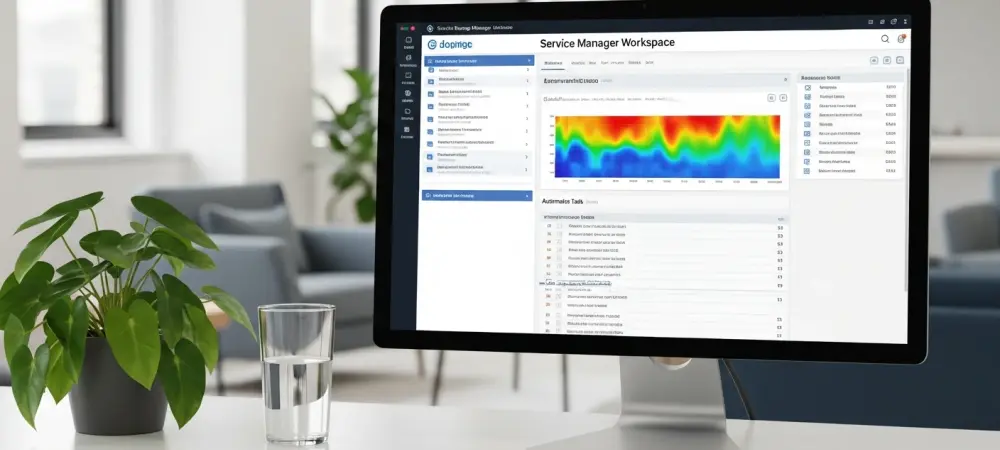
For teams focused on the broader market, the Marketing Command Center acts as a centralized hub that monitors unified signals across the enterprise to identify new revenue streams. It allows marketing professionals to launch precision programs without the traditional burden of manual data manipulation. Parallel to this, the Sales Command Center provides continuous monitoring of the pipeline, performing ongoing risk analysis on leads to reduce churn. Finally, the Service Manager Workspace transforms support operations by surfacing escalations and customer risks in real-time. It acts as a proactive assistant that addresses performance issues before they can negatively impact long-term customer loyalty.
The Technological Foundation: Security, OCI, and LLMs
The underlying effectiveness of agentic AI is rooted in a robust infrastructure that balances processing power with enterprise-grade security. Oracle leverages the Oracle Cloud Infrastructure (OCI) and advanced Large Language Models (LLMs) to provide the cognitive power required for these agents to reason. However, raw power is a liability in a corporate setting without strict controls. To mitigate this, Oracle ensures that every autonomous agent operates within the existing Fusion Applications security framework, respecting established user permissions and data privacy policies.
By keeping the AI “within the guardrails,” Oracle creates a symbiotic relationship where the machine handles the sheer volume of data while the human maintains strategic oversight. The security architecture ensures that autonomous execution does not lead to unmanaged risk or compliance violations. This framework allows the agents to operate across the entire suite of Fusion applications, drawing context from finance, human resources, and supply chain data to make better-informed decisions. This cross-pillar context is what separates a simple chatbot from a sophisticated enterprise agent capable of navigating the nuances of a global business.
Strategies for Implementing a Human-Agent Workforce
To successfully integrate agentic AI into a broader CX strategy, organizations must prioritize the customization and scalability of their digital workforce. The use of the Oracle AI Agent Studio provides a platform for businesses to build, connect, and deploy agents that are tailored to their specific operational needs. By leveraging low-code tools, companies can deploy reusable agents provided by Oracle or its partners without requiring an extensive team of software engineers. This democratization of AI technology allows smaller teams to compete with much larger organizations by maximizing their operational efficiency through automation. A unified data strategy serves as the final prerequisite for a successful agentic deployment. Ensuring that data flows seamlessly across ERP, HCM, and SCM pillars provides the agents with the comprehensive context they need to make intelligent decisions. Furthermore, organizations must define clear approval hierarchies to ensure that the AI operates within the bounds of corporate policy. By utilizing built-in observability tools, managers can monitor the real-time performance of their agents, ensuring that autonomous execution translates directly into measurable revenue growth and cost savings.
The transition toward a coordinated human-agent workforce moved forward as organizations adopted strategies that prioritized autonomous execution over simple assistance. Leaders recognized that the path to increased efficiency required a fundamental reassessment of how data was utilized across different departments. Strategic investments in low-code development platforms enabled teams to customize their AI agents to fit unique regional requirements and industry standards. This adoption period highlighted the importance of maintaining rigorous security protocols while allowing the software to handle the bulk of routine administrative tasks. Ultimately, the integration of these technologies provided the clarity needed to navigate increasingly complex market demands with agility.