

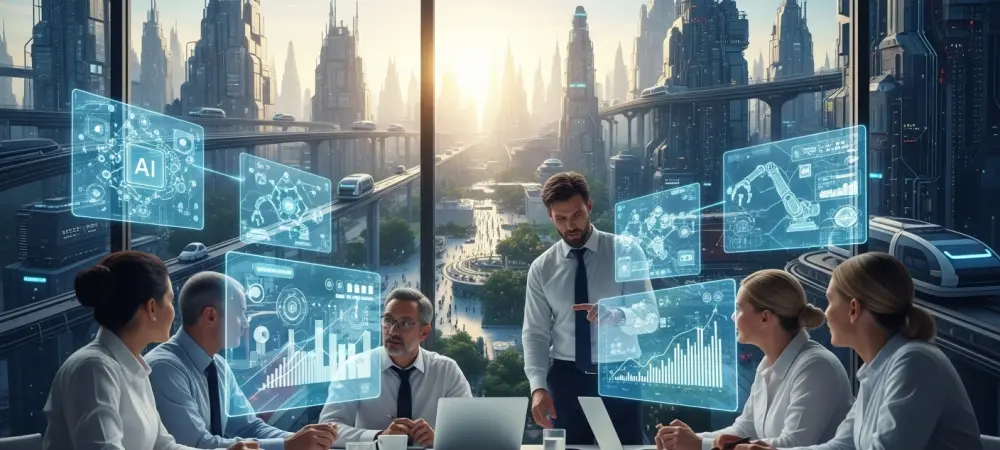
The Shift: Why B2B Sales Must Move Beyond Human Persuasion
The traditional foundation of business-to-business commerce is currently undergoing a radical structural collapse as automated reasoning engines begin to intercept trillions of dollars in global procurement spending. This phenomenon is not merely an incremental change in how software assists buyers; it is a fundamental reconfiguration of the economic engine itself. As the global market marches toward 2028, a staggering amount of capital is being directed by autonomous agents rather than human procurement officers. This evolution requires a total departure from the legacy tactics that have defined the industry for decades.
The objective of this exploration is to dissect the mechanics of this shift and provide a comprehensive roadmap for organizations seeking to remain visible in an increasingly automated world. By examining the transition from a browser-first journey to a reasoning-engine-first reality, the following analysis identifies the technical and strategic adjustments necessary for survival. Readers can expect to learn how information density and systemic trust have replaced brand poetry and personal rapport as the primary drivers of commercial success. The scope of this discussion covers everything from architectural data requirements to the evolving role of the human professional within a machine-dominated ecosystem.
Critical Inquiries: Architecting Sales for the Algorithmic Age
What Is the Primary Catalyst for the Transition to Machine-Led Procurement?
The migration toward machine-led procurement is driven by the sheer complexity and volume of data that modern enterprises must process to make optimal purchasing decisions. Human stakeholders are increasingly overwhelmed by the fragmentation of information across global supply chains and digital marketplaces. Consequently, businesses are offloading the heavy lifting of vendor evaluation to AI agents that can analyze thousands of technical specifications and pricing variables in milliseconds. This shift moves the focus of a sale away from emotional connection and toward deterministic logic, where a brand is judged solely on its ability to satisfy a set of predefined algorithmic criteria.
Beyond simple efficiency, this transition is fueled by the need for zero-latency responses in a globalized economy. When a machine customer identifies a supply chain gap, it does not have the luxury of waiting for a forty-eight-hour human response cycle. It requires immediate access to high-fidelity, machine-readable data that can be integrated into its decision-making matrix. As a result, the B2B landscape is bifurcating into two tracks: one that still relies on slow, human-centric processes and a high-velocity track where autonomous systems negotiate and execute contracts without direct human intervention.
How Does Agent Engine Optimization Change the Visibility of a Brand?
Traditional search engine optimization was designed to cater to human curiosity and the way people browse websites. However, in an economy where reasoning engines like ChatGPT and specialized procurement bots are the primary researchers, the old rules no longer apply. These agents do not browse; they parse and verify entities based on structured data. Agent Engine Optimization involves moving beyond keywords to focus on the technical integrity of a brand’s digital footprint. Every specification, case study, and pricing tier must be exposed through standardized schemas so that an AI can instantly ingest and validate the information.
If a company’s critical data remains trapped in legacy formats or behind unstructured paywalls, the machine customer will effectively treat that organization as non-existent. The goal is to maximize information density, ensuring that when an agent queries the market for a solution, the brand’s data is the most accurate, accessible, and verifiable option available. This requires a shift in marketing departments from being creators of narrative content to being architects of structured data environments that prioritize clarity over cleverness.
Why Is the Concept of a Digital Twin Essential for Sales Forecasting?
The use of a Digital Twin of the Customer allows sales organizations to move away from static personas and toward dynamic, predictive simulations. By creating a virtual replica of a client account fueled by real-time telemetry and historical data, a seller can test different pricing models and messaging strategies in a risk-free environment. This mirror world provides insights into how a procurement agent might react to specific contract terms, allowing the sales team to optimize their proposal before it ever reaches the actual customer. It transforms forecasting from a guessing game into a repeatable, data-driven science.
Furthermore, these digital twins enable a level of personalization that was previously impossible at scale. When a company can simulate thousands of permutations of a deal, it can identify the exact configuration that offers the highest probability of acceptance for a specific machine buyer. This predictive capability is becoming a prerequisite for managing multi-million-dollar contracts where the margin for error is razor-thin. It allows organizations to anticipate market shifts and adjust their go-to-market strategies in real time, ensuring they stay aligned with the evolving needs of their digital counterparts.
Can Machine-to-Machine Protocols Effectively Replace Human Negotiation?
The emergence of standardized communication frameworks is enabling a new era of collaborative negotiation between selling agents and procurement bots. These protocols allow for the millisecond-long exchange of terms, where variables like volume discounts, delivery timelines, and liability clauses are settled through algorithmic trade-offs. This does not mean that human oversight disappears, but rather that the routine friction of the negotiation process is automated. The result is a dramatic collapse of the sales cycle, turning what used to be a months-long process into a near-instantaneous transaction.
As these systems become more sophisticated, they are capable of handling increasingly complex commercial logic that would exhaust a human negotiator. By operating within predefined guardrails, these agents can find mutually beneficial outcomes that a human might overlook due to cognitive bias or fatigue. This shift toward automated negotiation creates a more level playing field where the focus is on the actual value and compatibility of the offering rather than the charisma of the salesperson. It demands that businesses define their commercial boundaries with absolute precision, as the machine will execute exactly what it is programmed to deliver.
How Does Data Sovereignty Impact the Trust Between Machine Agents?
In the current B2B environment, trust has evolved from a social contract into a technical requirement rooted in data sovereignty. For a procurement agent to engage with a seller, it must be able to verify that the data being shared is secure and compliant with regional jurisdictional laws. Sovereign AI frameworks ensure that the models processing sensitive contract information operate within specific boundaries, such as those defined by privacy regulations. If a seller cannot provide technical proof of data residency and security, the buyer’s agent will simply bypass the offer to mitigate legal risk.
This technical layer of trust is the new gatekeeper of the global revenue engine. Organizations must now treat data governance not just as a compliance task, but as a core component of their sales strategy. By providing transparent, verifiable evidence of how data is handled, a brand can build a level of systemic trust that machines can recognize and act upon. This transparency becomes a competitive advantage, particularly in highly regulated industries where the cost of a data breach or a compliance failure is catastrophic.
What Is the Role of Morphic Adaptive Experiences in Modern Interfaces?
As the users of B2B portals shift between human executives and AI agents, the user interface must become fluid and adaptive. A morphic experience is one that detects the nature of the entity accessing the system and reconfigures itself to provide the most relevant data density. For an AI agent, the interface might strip away all visual elements to provide a high-speed data stream. For a human stakeholder, the same portal would morph to present a high-level strategic overview, focusing on ROI and long-term business impact. This ensures that both types of “customers” receive the information they need in the format they prefer.
This level of UI flexibility is essential for maintaining engagement across the entire buying committee. While the machine handles the initial data gathering and logical filtering, the human still needs to be brought into the loop for final approval or strategic alignment. By providing a generative interface that adapts in real time to the user’s intent, companies can reduce friction and speed up the decision-making process. It moves the digital experience away from a “one size fits all” website and toward a dynamic environment that serves the unique needs of every stakeholder, whether biological or silicon-based.
Can Autonomous Value Restoration Redefine the Post-Sale Relationship?
The future of customer experience lies in moving from reactive support to proactive, autonomous value restoration. In a machine-led economy, AI systems monitor performance telemetry in real time to identify and correct issues before the customer even notices a problem. For example, if a logistics bottleneck is detected, the system can automatically reroute a shipment or adjust a production schedule without waiting for a human to file a support ticket. This self-healing approach to the customer relationship ensures that the promised value of a contract is always maintained.
This shift effectively eliminates the concept of support deflection, where companies try to minimize human interaction to save costs. Instead, the focus is on total value preservation. When a brand’s systems are seen to be actively protecting the customer’s interests through autonomous intervention, it builds a deep, structural loyalty that is difficult for competitors to break. It changes the narrative from “calling for help” to “trusting the system to perform,” which is the ultimate goal in a high-stakes B2B partnership.
What Is the Necessary Evolution for the Human Sales Professional?
As machines take over the logical and data-intensive aspects of the sales process, the human role is being elevated to that of a high-value account orchestrator. These professionals are now responsible for the emotionally complex and ethically nuanced parts of a deal that require human judgment. They focus on the strategic 10% of a transaction where empathy, creativity, and long-term relationship building remain irreplaceable. The salesperson of the future is less of a cold-caller and more of a business translator, mapping complex client needs into the automated workflows that the machines will execute.
This evolution requires a significant upskilling of the workforce. Sales teams must become comfortable working alongside AI agents, understanding how to set the parameters for machine negotiation while intervening when a situation requires a uniquely human touch. In this new model, human empathy is not a replacement for data; it is the final differentiator that clinches a deal once all the logical variables have been satisfied. The most successful organizations will be those that find the perfect balance between algorithmic efficiency and human ingenuity.
Summary: The New Foundations of B2B Commerce
The transition to a machine-centric economy is fundamentally altering the requirements for B2B success. Success now depends on the ability to provide high-fidelity, structured data that reasoning engines can easily digest and verify. Organizations are finding that traditional marketing and sales tactics are becoming less effective as AI agents take over the primary roles of research and negotiation. Instead, the emphasis has shifted toward technical trust, data sovereignty, and the creation of adaptive digital environments that cater to both machines and humans.
The adoption of digital twins and autonomous negotiation protocols is streamlining the sales cycle, making it more efficient and predictable. Meanwhile, the role of the human professional is being refined to focus on high-level orchestration and strategic alignment. These changes represent a holistic redesign of the go-to-market strategy, moving away from persuasion-based models and toward a system of algorithmic orchestration. Companies that prioritize these technical and structural adjustments are positioning themselves to capture a significant share of the trillions of dollars flowing through the machine economy.
Final Considerations: Orchestrating the Total Experience
The rise of the machine customer has fundamentally reshaped the landscape of commerce, moving the industry toward a model of Total Experience orchestration. This new reality demanded that businesses move beyond siloed departments and instead create a unified digital architecture where data flowed seamlessly between selling and buying agents. It was not enough to simply adopt new software; the most successful leaders were those who fundamentally re-engineered their organizational culture to value data integrity as much as relationship management. They realized that in a world of algorithms, transparency and accuracy were the most valuable currencies.
Looking forward, the focus must remain on the continuous refinement of these automated systems to ensure they align with human values and strategic business goals. The integration of sovereign AI and proactive value restoration has set a new standard for what a B2B partnership should look like. As organizations continue to navigate this transition, they should consider how their internal data structures and sales processes would hold up under the scrutiny of an autonomous procurement agent. The journey toward a fully realized machine economy is ongoing, and those who remain agile and data-ready will be the ones to lead the next era of global trade.