

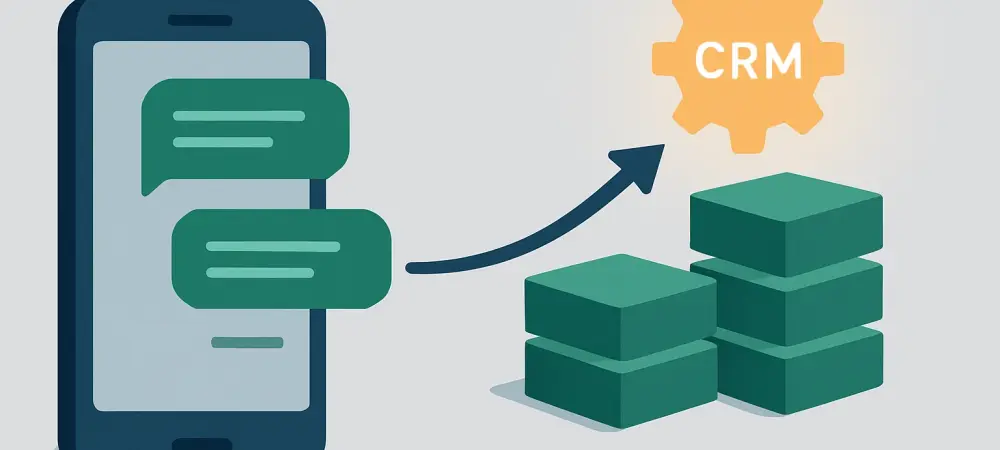
The daily deluge of customer interactions flowing through messaging apps represents a critical turning point for modern enterprises, forcing a decision between harnessing this data for unprecedented growth or allowing it to become a significant operational and reputational risk. In this landscape, the integration of Artificial Intelligence with Customer Relationship Management (CRM) systems and WhatsApp is not merely an upgrade; it is a fundamental re-imagining of the customer journey. This strategic alignment addresses the modern consumer’s demand for immediate, personalized, and context-aware communication, transforming a popular messaging app into an intelligent engine for customer engagement and conversion.
Are Your Customer Conversations an Untapped Goldmine or a Growing Liability
Every WhatsApp message a business receives is a data point rich with intent, sentiment, and opportunity. When managed correctly, this stream of communication becomes a valuable asset, revealing insights into customer needs and market trends. These conversations can drive product development, refine marketing strategies, and build lasting loyalty. However, without a structured system to capture and analyze this information, the same conversations become a liability. Disorganized chats lead to slow response times, frustrated customers, and lost sales opportunities. The potential for a brand-damaging experience grows with every unlogged interaction, turning a channel meant for connection into a source of friction.
The New Customer Service Battleground Your Customers Are Already on WhatsApp
The paradigm of customer service has irrevocably shifted toward instant, conversational platforms where consumers expect real-time answers and effortless support. Businesses are no longer in control of the communication channels; customers are, and they have overwhelmingly chosen messaging apps for their convenience and immediacy.
WhatsApp, with its massive global user base, has emerged as the de facto platform for this new era of engagement. Companies that fail to meet their customers on this preferred channel risk appearing outdated and unresponsive. Adapting is not just about staying competitive—it is about remaining relevant in a marketplace dictated by consumer preference for seamless, on-demand interaction.
From Siloed Chats to a Unified Strategy Bridging the WhatsApp CRM Gap
Using WhatsApp as a standalone application creates information silos, where valuable conversation data remains disconnected from the central CRM. This fragmentation forces agents to constantly switch between systems, manually searching for customer history and context, which wastes time and increases the likelihood of error. This operational drain also creates an intelligence gap, as insights from conversations are lost and key performance metrics become impossible to track effectively. The strategic solution is the direct integration of WhatsApp with a CRM like Dynamics 365. This transforms the messaging app from an isolated tool into a fully embedded and strategic communication channel. With this approach, every message, attachment, and interaction is automatically logged and contextualized within the customer’s profile, providing a single, unified view of the entire relationship.
The Quantifiable Cost of a Disconnected Customer Experience
The negative impact of a fragmented customer journey is not merely anecdotal; it has a measurable effect on business outcomes. Industry research from Gartner validates this problem, revealing that a disconnected experience, where agents lack complete context about a customer’s history and prior interactions, can reduce customer satisfaction by up to 30%. This erosion of satisfaction directly correlates with decreased loyalty and higher churn rates, demonstrating the tangible financial cost of operational silos.
Activating Your Data How AI Turns Conversations into Conversions
While CRM integration provides the foundation by centralizing data, AI is the catalyst that unlocks its true potential. Moving beyond simple data logging, AI actively analyzes conversational history to empower agents and automate routine processes, turning a repository of information into a dynamic tool for driving conversions.
This transformation is built on two core principles. First, AI delivers context-aware support by providing agents with real-time summaries of past interactions and intelligent, next-best-action suggestions. This empowers them to deliver faster and more personalized responses. Second, intelligent automation handles repetitive tasks, such as sending welcome messages or order updates, while also performing sentiment analysis to help agents adjust their tone. This dual approach reduced the manual workload, allowing agents to focus their expertise on complex, high-value interactions that demand human empathy.
The organizations that successfully navigated this technological shift discovered a profound competitive advantage. They transformed their customer service from a reactive cost center into a proactive engine for growth. By unifying their communication channels and empowering them with intelligence, these businesses built stronger, more profitable relationships, which ultimately solidified their position in an increasingly demanding market.