

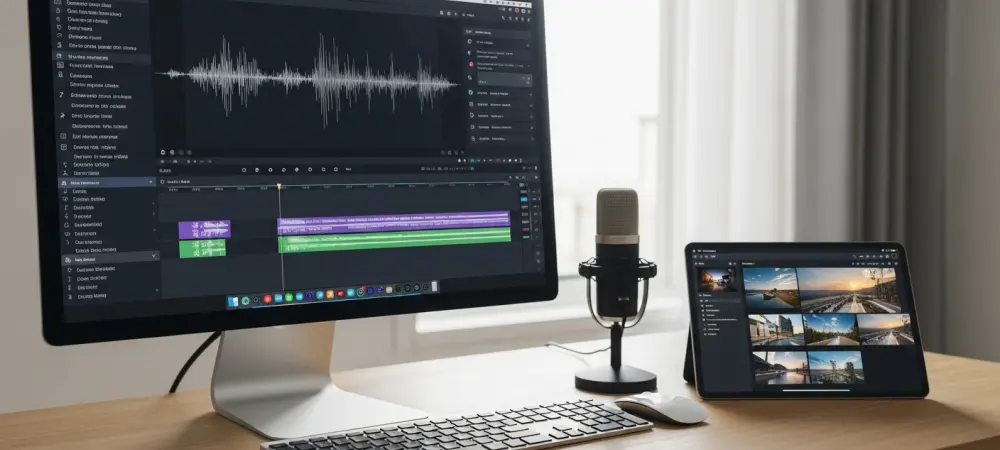
The digital landscape recently reached a tipping point where the barrier to entry for high-quality video production effectively collapsed under the weight of generative technologies. Historically, creating a professional-grade video clip required a significant investment of time and resources, often involving a full day for scriptwriting, lighting setup, and multiple takes. These technical hurdles frequently led to widespread burnout among independent creators who struggled to maintain the demanding pace of daily social media uploads. The primary obstacle was rarely a lack of creative ideas but rather the sheer volume of manual labor required to bring those ideas to life. In this environment, technical skills like color grading and audio engineering acted as gatekeepers, preventing many talented individuals from reaching their full potential. However, the emergence of artificial intelligence has fundamentally shifted this dynamic by bridging the gap between imagination and execution. Production is no longer a resource-heavy team effort but a streamlined task for a single person.
1. The Generative Shift: Transforming Content Production
Artificial intelligence has fundamentally altered the financial and temporal costs associated with making high-quality content by introducing tools that handle complex creative tasks. One of the most significant advancements lies in the drafting and conceptualization phase, where AI assistants now help brainstorm viral hooks and create highly structured script outlines. This innovation removes the common fear of the blank page, allowing creators to move from an initial concept to a workable script in a matter of seconds. Furthermore, these systems analyze current trends to suggest topics that are most likely to resonate with specific demographics, ensuring that the content is both relevant and engaging. By automating the research and outlining process, creators can dedicate more energy to the core message of their work rather than getting bogged down in the early stages of planning. This shift represents a move toward a more analytical and data-driven approach to storytelling.
Beyond the conceptual phase, AI tools have revolutionized the audio and post-processing aspects of video production, making high-end results accessible without expensive gear. Realistic text-to-speech software now provides studio-quality narration in dozens of languages, which eliminates the need for soundproof rooms or high-end microphones. Additionally, automated editing software handles the tedious heavy lifting by instantly removing awkward silences, syncing background music to the visual rhythm, and generating accurate subtitles. This globalization of content is further enhanced by tools that can translate speech while matching the lip movements of the speaker to the new language. This capability allows a single video to reach a worldwide audience without the necessity of refilming the entire project for different regions. These technologies combined have created an environment where the technical barriers of the past no longer dictate the reach or professional quality of a creator’s digital output.
2. Visual Synchronicity: The Power of Lip Syncing
Traditional dubbing has long suffered from a lack of realism because the speaker’s mouth movements rarely matched the translated audio, creating a distracting experience. Modern AI has resolved this issue by utilizing advanced neural networks that alter facial movements frame by frame to ensure perfect synchronicity with the soundtrack. This technology goes beyond simple overlays; it recreates the subtle muscular movements of the face to maintain the emotional integrity of the performance. As a result, the viewer remains fully immersed in the content, regardless of the language being spoken. This development is particularly crucial for educational and narrative content where clarity and expression are paramount. By achieving this level of visual fidelity, AI has turned what was once a clunky and obvious dubbing process into a seamless, professional experience. This leap in technology allows for the creation of truly global media assets that feel native to every viewer, no matter where they are.
The beneficiaries of this advanced lip-syncing technology range from individual influencers to massive corporate media entities looking to expand their global presence. Global video creators now have the ability to turn a single English-language production into several localized versions, significantly increasing their return on investment. Short-form influencers on platforms like TikTok utilize these tools to perform better in local algorithms by speaking the native language of their target audience with perfect visual accuracy. Similarly, corporate media teams leverage these systems to push consistent brand messages across dozens of countries simultaneously, ensuring that the internal communication remains personal and direct. This technology reduces the friction of international expansion, allowing brands to maintain a high level of quality without the prohibitive costs of local production crews. The ability to localize at scale has become a vital component of modern media strategy, enabling deeper connections with diverse audiences worldwide.
3. Static to Cinematic: Animating Images with AI
One of the most impressive feats of modern artificial intelligence is the ability to transform a flat, static photograph into a moving scene with depth and motion. This image-to-video technology allows creators to generate dynamic clips from simple assets, adding camera pans, zooms, and environmental movements to otherwise still frames. By utilizing these tools, a creator can maintain a high production value without always needing to be on location or having access to a high-end cinema camera. This process effectively expands the visual vocabulary of a project, allowing for the inclusion of cinematic b-roll that would have previously been impossible to capture. The AI analyzes the textures and light within a photo to predict how they should behave in a three-dimensional space, creating a realistic sense of immersion. This capability is particularly useful for historical documentaries, marketing materials, and social media posts that require constant visual stimulation to maintain viewer attention.
The operational benefits of animating still images extend far beyond mere aesthetics, as they directly impact the efficiency and volume of content production. By generating multiple video clips from a single set of images, creators can significantly increase their output without a corresponding increase in effort. This approach minimizes the time-consuming search for relevant stock footage, as custom visuals can be generated instantly to fit the specific needs of the narrative. Furthermore, this technology ensures a constant production flow, maintaining the ability to create content even when a live filming crew is unavailable or when weather conditions prevent outdoor shooting. It empowers solo creators to produce visually rich stories that rival the capabilities of larger studios, all while keeping overhead costs at a minimum. The integration of image animation into the standard workflow has made it possible to sustain a high-frequency posting schedule without sacrificing the visual variety that keeps audiences engaged over the long term.
4. Efficiency Metrics: Traditional Versus Modern Workflows
To understand the true impact of artificial intelligence, one must compare the previous production methods with the streamlined workflows used in the current era. In the traditional model, a single video project often consumed approximately five hours of manual labor, beginning with the difficult task of drafting dialogue. This was followed by the physical preparation of the set, including the arrangement of cameras, lights, and backdrops. Recording several versions of the script was necessary to ensure at least one usable take, often leading to hours of footage that required careful sorting. The editing phase was even more grueling, as the creator spent significant time cutting clips, fixing color imbalances, and manually typing out every word for subtitles. The final stages of processing and exporting further added to the temporal load, making it nearly impossible for a single person to produce professional content on a daily basis. This older method relied heavily on endurance and technical patience. In contrast, the modern AI-enhanced method has reduced the total production time to approximately ninety minutes while often yielding a higher quality result. This new workflow begins with a software-generated AI draft that outlines the script and suggests key talking points, followed by much shorter recording sessions. Because AI can fix minor errors and visual inconsistencies later, the need for multiple takes is drastically reduced. Automated editing and subtitling tools then handle the bulk of the post-production work, performing cuts and adding captions in a fraction of the time. Creators also use AI to turn photos into background footage, filling in visual gaps without the need for additional filming. Finally, the ability to adapt languages with lip-syncing technology makes the video instantly accessible to a global audience during the export phase. This radical reduction in labor hours allows creators to focus on the high-level creative strategy rather than the repetitive technical tasks that once dominated their schedules.
5. Implementation Strategy: Developing a Sustainable AI Routine
Creators who successfully integrated these systems found that a structured three-week implementation plan provided the most effective path toward mastery. During the first week, the initial focus remained on exploring various cost-free or browser-based options to determine which specific interfaces and features aligned most closely with their unique artistic styles. This low-risk exploratory period allowed for extensive experimentation without the burden of a financial commitment or complex software installations. In the second week, the strategy shifted toward applying a specific tool to the most tedious task in their existing workflow, such as automated subtitle generation or initial script drafting. By focusing on solving a single major bottleneck, they were able to clearly observe the tangible benefits of the technology in a high-pressure, real-world setting. Finally, during the third week, the most successful methods were expanded and made a permanent part of the daily production process to ensure sustained efficiency.
Those who successfully adopted these advanced systems moved beyond the limitations of manual editing to embrace a more scalable production model. They utilized the three-week transition period to identify specific bottlenecks and replaced them with automated solutions that ensured consistent quality across every upload. By the end of this transition, the distinction between solo operators and large media houses became nearly invisible to the average viewer. The next logical step involved investigating how these tools could be synchronized with real-time analytics to adjust visual content based on shifting audience retention patterns. Strategic users focused on mastering the interface between human creativity and machine efficiency, ensuring that the personal brand remained distinct despite the automated backend. These early adopters achieved a competitive advantage that redefined the standard for professional media, proving that the tools were no longer optional for those seeking growth in 2026.