

In a world where artificial intelligence is reshaping industries at an unprecedented pace, the demand for cutting-edge infrastructure to support complex computational workloads has never been more critical, especially in tech-forward regions like Taiwan. As AI applications grow increasingly power-hungry, data centers must evolve to handle the intense heat and energy requirements of modern hardware. A groundbreaking collaboration between Zettabyte, a leading GPU Infrastructure-as-a-Service provider, and Chief Telecom, a prominent data center operator, has set a new benchmark in this space. Their recent project to retrofit a legacy facility into an AI-ready hub showcases Taiwan’s commitment to staying at the forefront of technological innovation. This partnership not only addresses the urgent needs of high-performance computing but also highlights a scalable model for global infrastructure upgrades, ensuring that the region remains a key player in the AI revolution with sustainable and efficient solutions.
Revolutionizing Data Centers with Liquid Cooling
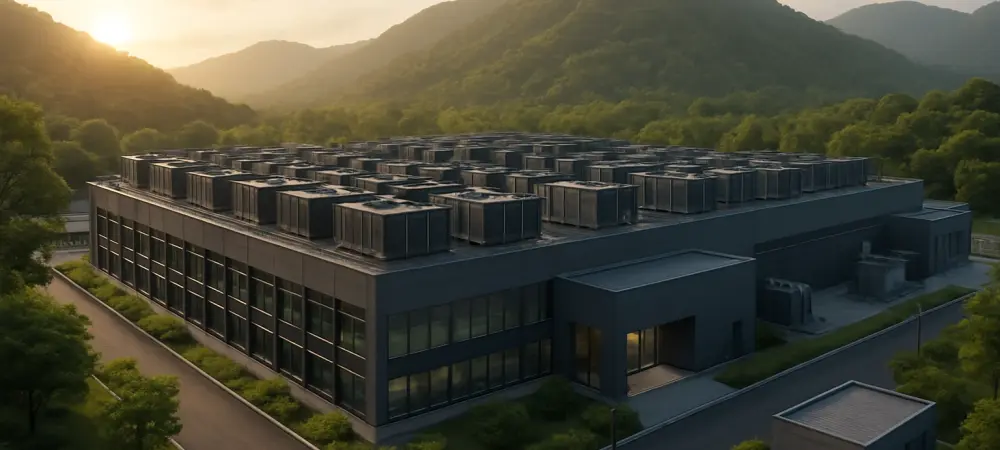
The core of this collaboration lies in the remarkable transformation of a Chief Telecom data center, originally built to support 20kW racks, into a powerhouse capable of handling over 100kW racks equipped with direct-to-chip liquid cooling technology. This advanced cooling method is essential for managing the immense heat generated by next-generation Nvidia GPUs, including models like Blackwell, ##00, and #00, which are pivotal for AI workloads. What stands out is the speed of this retrofit—completed in just 45 days—demonstrating Zettabyte’s expertise in scalable, rapid deployment. This upgrade positions the facility as a critical asset for power-dense AI platforms, catering to the escalating demands of machine learning and deep learning applications. Beyond immediate impact, the project serves as a proof of concept for modernizing older infrastructure worldwide, showing that legacy systems can be adapted to meet contemporary needs without the lengthy timelines or prohibitive costs often associated with such overhauls.
Pioneering AI Infrastructure for Global Impact
Looking at the broader implications, this partnership reflects a shared vision between Zettabyte and Chief Telecom to lead the charge in AI infrastructure development, not just in Taiwan but on a global scale. Initiatives like the Zettabyte Titan project, backed by significant investment from BRV Capital, underscore the ambition to expand the data center supply chain to support intense computational needs. Meanwhile, Chief Telecom’s recent expansion with facilities like the Liyuan 2 site, designed for both air and liquid cooling, reinforces its pivotal role in the region’s tech ecosystem. The success of the retrofitted data center, achieved with such efficiency, sets a precedent for sustainable innovation in the industry. It was a milestone that proved rapid adaptation could balance speed with environmental considerations, offering a blueprint for others to follow. As AI continues to drive technological progress, such collaborations will likely inspire further advancements, ensuring that infrastructure keeps pace with the relentless growth of computational demands.