

The long-standing frustration of the modern smartwatch user has rarely been about the lack of features, but rather the constant, nagging anxiety of a dying battery before the second day even begins. For years, the Wear OS ecosystem has been defined by a binary choice: enjoy a brilliant, app-rich interface and charge it every night, or settle for a “dumb” fitness tracker that lasts weeks but lacks intelligence. The Xiaomi Watch 5 enters this arena not merely as another iterative update, but as a direct challenge to the power constraints that have limited Google’s wearable platform since its inception.
This shift in strategy represents a critical turning point for consumers who have grown weary of “daily-charge” fatigue. By integrating high-density battery technology with a dual-operating system architecture, Xiaomi seeks to bridge the gap between endurance and high-end functionality. The importance of this development cannot be overstated; it marks a move toward a future where a wearable can finally be a reliable companion for a five-day work week or a long mountain trek without requiring a proprietary charging puck in your backpack.
Can a Smartwatch Finally Last a Working Week Without a Charger?
For the average professional or fitness enthusiast, the ritual of removing a watch every night to juice up is more than a minor inconvenience; it is a fundamental break in the data stream of health and sleep tracking. The Xiaomi Watch 5 addresses this by offering nearly six days of heavy usage on a single charge while maintaining a full suite of smart features. This is achieved through a massive 930mAh silicon-carbon battery, a technology that packs more energy into a smaller footprint than traditional lithium-ion alternatives.
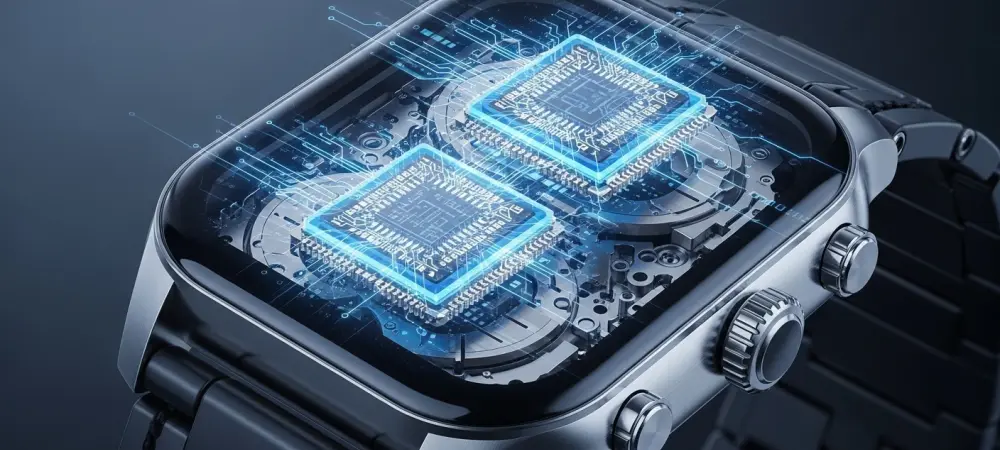
Moreover, the device manages its power consumption through a clever “dual-engine” internal setup. By using a primary processor for heavy lifting and a secondary co-processor for background tasks, the watch ensures that the screen and sensors remain active without draining the cell unnecessarily. This endurance effectively transforms the user experience from one of maintenance to one of utility, allowing the wearer to focus on their metrics and notifications rather than the percentage remaining in the corner of the display.
Bridging the Gap Between Endurance and Intelligence
The wearable market has historically been polarized between high-functioning devices that perish quickly and basic trackers that lack an ecosystem. Xiaomi attempts to dismantle this wall by providing a full Wear OS experience—complete with Google Wallet, the Play Store, and sophisticated navigation—while maintaining the stamina typically reserved for much simpler devices. This balance is vital because modern users no longer want to choose between checking their emails and tracking a four-hour hike; they expect a single device to handle both with equal proficiency.
In contrast to competitors who often strip away features to save power, the Watch 5 leans into its versatility. It offers a “Power Saver Mode” that switches the interface to a lightweight, proprietary operating system called Vela OS. While this mode disables third-party apps, it keeps health tracking and basic notifications active for up to 18 days. This flexibility allows the user to tailor the watch’s performance to their specific environment, whether they are navigating a dense urban center or camping in the wilderness.
A Technical Deep Dive into Design, Software, and Innovation
The physical build of the Xiaomi Watch 5 reflects a commitment to rugged sophistication that borders on traditional horology. Featuring a 47mm casing forged from 316L stainless steel, the watch carries a weight of 56 grams, providing a substantial, premium presence on the wrist. The display is shielded by a sapphire crystal with a Mohs hardness level of 9, ensuring that the glass remains pristine even after accidental scrapes against granite or metal.
Rugged Sophistication: The 316L Stainless Steel and Sapphire Build
The tactile experience of the watch is further enhanced by a textured rotating crown that provides precise haptic feedback when scrolling through menus. This mechanical interaction feels deliberate and high-end, distinguishing it from the often-mushy buttons found on lower-tier wearables. While the 47mm size is undeniably large, the curved lugs help it sit comfortably on most wrists, though those with smaller frames might find it a bit dominant.
Visual Excellence: The 1,500-Nit AMOLED Display
Interacting with the software is a visual treat thanks to the 1.54-inch AMOLED display, which boasts a crisp 480 x 480 resolution and a fluid 60Hz refresh rate. The peak brightness of 1,500 nits is a standout specification, as it ensures that text and maps remain perfectly legible even under the harsh glare of direct midday sun. Whether you are glancing at a heart rate zone during a sprint or checking a notification in a bright office, the clarity is consistently impressive.
The Dual-Engine Strategy: Wear OS 6 Meets Vela OS
Under the hood, the Snapdragon W5 Gen 1 processor handles the complexities of Wear OS 6 with ease, ensuring that app launches are snappy and transitions are smooth. When the watch detects that intensive processing is not required, the BES2800 co-processor takes over to handle the “Always-On Display” and background sensor polling. This seamless handoff between the two chips is the secret sauce behind the device’s ability to outlast its peers without sacrificing the richness of the Google ecosystem.
Future-Forward Control: The Electromyography (EMG) Sensor
Perhaps the most experimental feature is the inclusion of an Electromyography (EMG) sensor, which detects the electrical signals generated by your muscles. This technology allows for hands-free gestures; for instance, a user can snap their fingers to answer a phone call or pinch their fingers together to dismiss an alert. While it requires a bit of practice to master the timing and arm positioning, it provides a fascinating glimpse into how we might interact with technology when our hands are full.
Expert Analysis of Health Tracking and Navigation Performance
Beyond the flashy hardware, the Xiaomi Watch 5 proves to be a highly competent health companion. It utilizes an advanced multi-channel sensor array to monitor heart rate and blood oxygen levels with high frequency. One of the most practical additions is the “one-tap health check,” which runs a consolidated 60-second scan of all vital signs, providing a quick snapshot of one’s physiological state without needing to navigate through multiple separate apps.
Precision Wellness: Sleep Coaching and One-Tap Checks
Sleep tracking has been significantly refined through a partnership with the World Sleep Society, resulting in a system that does more than just record hours in bed. The watch analyzes sleep stages and consistency over a 21-day period to provide a personalized “sleep animal” profile and actionable advice for improvement. This longitudinal approach to wellness turns raw data into a narrative, helping users understand the long-term impact of their habits on their recovery and daily energy levels.
Navigational Accuracy via Dual-Band GNSS
For outdoor explorers, the inclusion of dual-band L1+L5 GNSS ensures that location tracking remains accurate even in challenging environments like dense forests or high-altitude trails. The watch also supports offline map storage within its 32GB of internal memory, allowing users to navigate remote areas without needing a cellular connection. However, some analysts have noted that in “urban canyons” with towering skyscrapers, the signal can still occasionally drift, though it remains among the most reliable in the current market.
Strategies for Maximizing the Xiaomi Watch 5 Experience
To truly unlock the potential of this device, users should look past the factory settings and customize the experience to their routine. The watch is highly modular, and the ability to map physical buttons to specific apps or functions can save significant time during workouts. Moreover, managing the transition between the full “Smart Mode” and the “Power Saver Mode” is key to getting the most out of the silicon-carbon battery during travel.
Balancing Power Modes for Peak Efficiency
Users who find themselves away from a charger for several days should proactively use the scheduled power-saving feature. For example, setting the watch to enter Vela OS during sleeping hours can preserve a significant amount of energy while still maintaining full sleep and heart rate tracking. This hybrid approach allows the watch to function as a high-powered computer during the day and a focused health tracker at night, extending the total runtime well beyond the advertised six days.
Customizing Gesture Controls for Accessibility
The EMG-based gesture controls are most effective when calibrated to the user’s specific muscle movements. Taking ten minutes to run through the calibration process in the companion app ensures that “snaps” and “pinches” are recognized accurately. These gestures are particularly useful for cyclists or weightlifters who may not have a free hand to tap a screen, making the watch a more seamless part of the physical activity rather than a distraction from it.
The arrival of the Xiaomi Watch 5 signaled a shift in expectations for the wearable industry, proving that high-performance software did not have to be synonymous with poor battery life. By prioritizing energy density and a versatile dual-OS architecture, the device offered a blueprint for how future smartwatches might function as true multi-day tools. Moving forward, the focus likely shifted toward refining these gesture-based interfaces and integrating even more sophisticated medical sensors into these durable frames. Ultimately, the success of such devices depended on their ability to fade into the background of a user’s life, providing intelligence and insights without the constant demand for a power outlet.