

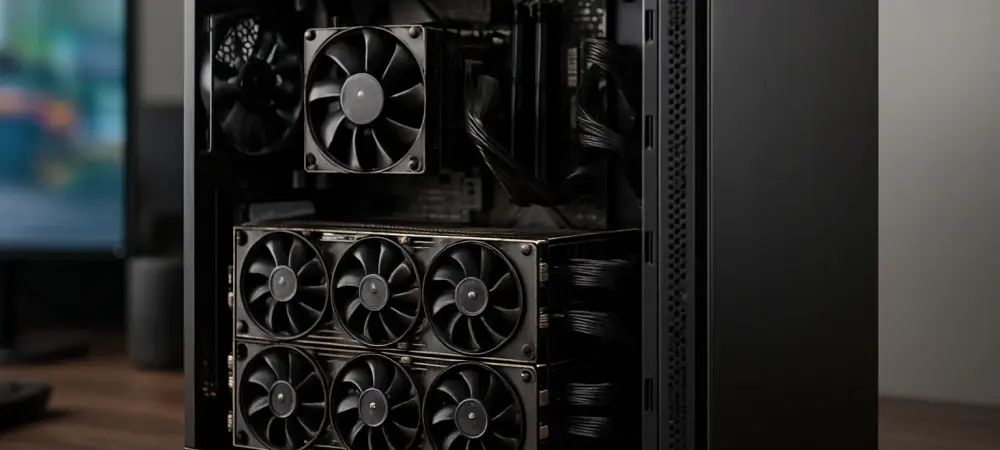
Imagine a professional graphics card so powerful that it redefines AI-driven workloads, yet so elusive that only a select few can access it through specialized channels, marking a significant moment in the tech industry. This is the reality for the latest offering from AMD and XFX, a GPU tailored for high-end workstations with groundbreaking specs. This roundup dives into the buzz surrounding the launch of this cutting-edge hardware, gathering opinions, analyses, and tips from various industry perspectives. The purpose is to unpack the implications of its debut, understand its limited availability, and assess what it means for professionals and enterprise users seeking next-gen performance.
Diving into the Next-Gen Powerhouse for AI Workstations
The debut of this professional-grade GPU, built on AMD’s RDNA 4 architecture, has sparked significant interest among tech analysts for its focus on AI workloads. Many industry observers highlight its standout specification of 32 GB of GDDR6 VRAM, which doubles the capacity of its consumer-grade counterpart. This positions the card as a potential game-changer for workstation users who demand robust performance in machine learning and data-intensive tasks.
Beyond raw specs, discussions in tech forums emphasize the card’s second-generation AI accelerators, which promise unparalleled efficiency. Some commentators argue that this hardware sets a new benchmark in the professional GPU market, outpacing previous AMD offerings like the PRO W7700 in memory capacity. However, there’s curiosity about how this release fits into broader market trends and whether its capabilities will meet the hype.
A recurring theme among hardware blogs is the anticipation of how this GPU will influence future workstation designs. Analysts suggest that its architecture could inspire a wave of innovation in AI-optimized systems over the coming years. This roundup aims to explore not just the technical prowess but also the strategic decisions behind its launch that are shaping industry conversations.
Unpacking the Unique Launch Dynamics
Impressive Specs Tailored for AI and Beyond
Tech reviewers across multiple platforms have lauded the GPU’s robust capabilities, particularly its memory capacity and AI-focused design. Compared to consumer models like the RX 9070 XT, the doubled VRAM offers a clear edge for professionals handling complex simulations. Many note that this spec aligns with the growing demand for high-performance computing in enterprise settings.
Built on the NAVI 48 die, akin to the RX 9070 series, the card also surpasses older professional models in raw power, according to early breakdowns shared by hardware enthusiasts. Some tech analysts point out that while the specs are impressive, the 256-bit memory bus might pose a bottleneck for bandwidth-intensive tasks. This has led to debates about whether it fully meets expectations for a top-tier professional solution.
Concerns aside, several industry voices stress that the second-gen AI accelerators could offset any limitations by optimizing performance for specific workloads. Discussions on tech podcasts suggest that this balance of innovation and potential constraints will likely define user experiences. Such mixed feedback highlights the need for real-world testing to validate the card’s capabilities.
Restricted Rollout: Challenges of Limited Availability
A major talking point in tech communities is the exclusive distribution model adopted by AMD and XFX, limiting the GPU to select system integrators. Many DIY enthusiasts and individual buyers express frustration over this decision, as shared in online forums, since it blocks direct retail access. This approach appears to prioritize enterprise clients over the broader market.
Reports from system builders indicate that while the launch coincided with AMD’s Threadripper 9000 CPUs in late July, the card has been slow to appear in pre-built system listings. Industry watchers speculate that logistical delays or strict allocation strategies might be at play. Some argue that this scarcity could build hype, while others see it as a barrier to adoption among smaller businesses.
Opinions vary on the impact of this restricted rollout, with enterprise-focused analysts praising the tailored integration for pre-built workstations. Conversely, consumer advocates in tech blogs caution that alienating the DIY segment might harm brand loyalty. This divide underscores a critical tension between accessibility and specialized deployment in the professional hardware space.
Pricing Puzzle and Market Positioning Dilemmas
The undisclosed MSRP of the GPU has left many industry commentators puzzled, as the integrator-only model obscures its true cost. Unlike past AMD releases where retail availability provided pricing transparency, this approach has sparked speculation across review platforms. Some suggest that costs could vary widely depending on regional system builders and custom configurations.
Analysts in hardware discussion groups note that this pricing mystery complicates value assessments for potential buyers. A few voices propose that the lack of a reference design for direct sale might reflect a deliberate shift toward premium, bundled offerings. However, others warn that without clear benchmarks, professionals might hesitate to commit to untested systems.
There’s also debate about whether limited availability ensures better quality control or simply frustrates users seeking transparency. Tech newsletter contributors argue that AMD risks alienating segments of its audience if pricing remains opaque. This uncertainty has fueled calls for more open communication from the manufacturer to clarify market positioning.
AMD’s Strategic Vision for Professional GPUs
AMD’s apparent pivot toward niche, controlled markets has drawn varied reactions from industry experts. Many hardware strategists view the focus on system integrators as a sign of intent to dominate enterprise spaces, ensuring optimized compatibility in professional environments. This direction is seen as a calculated move to strengthen its foothold among large-scale clients.
Comparisons to previous RDNA generations, which offered higher-tier PRO GPUs with up to 48 GB VRAM, reveal a more conservative approach with the current RDNA 4 lineup. Some tech columnists speculate that the absence of plans for a more powerful die beyond NAVI 48 might signal resource constraints or a redefined focus. Others believe this could pave the way for targeted innovations in future releases.
Perspectives from enterprise tech panels suggest that while this strategy might bolster AMD’s reputation in specialized sectors, it risks ceding ground to competitors in broader markets. There’s a split opinion on whether controlled distribution enhances long-term stability or limits growth potential. Such discussions point to a pivotal moment for AMD’s trajectory in professional graphics.
Key Takeaways from Diverse Industry Voices
Synthesizing insights from across the tech landscape, the GPU’s strengths lie in its 32 GB VRAM and AI optimization, which many reviewers see as transformative for workstation tasks. However, the integrator-only availability remains a critical limitation, as highlighted by both consumer and enterprise commentators. This restriction has shaped much of the discourse around accessibility and market reach. For professionals and businesses eyeing this hardware, researching trusted system integrators becomes essential, as availability hinges on these partnerships. Industry tips also include preparing for potential cost variability due to undisclosed pricing structures. Staying informed through builder listings or manufacturer updates is frequently recommended to navigate the rollout challenges.
Alternative GPUs might be worth exploring if direct access proves elusive, according to suggestions from hardware blogs. Some analysts advise keeping an eye on competitor offerings for comparable performance without distribution barriers. These practical steps aim to help users adapt to the unique circumstances of this launch while maximizing their options.
Reflecting on the Broader Implications
Looking back, the launch of this professional GPU stirred a complex mix of admiration and critique across the tech sphere. The impressive specs captivated industry watchers, while the restricted distribution model sparked heated debates about accessibility. These contrasting reactions painted a vivid picture of a product caught between innovation and exclusivity. Moving forward, stakeholders are encouraged to monitor how AMD and XFX will address the feedback on pricing transparency and availability constraints. Exploring partnerships with system integrators offers a pathway for those determined to leverage the card’s capabilities. Additionally, keeping tabs on emerging competitors provides a strategic edge in navigating this evolving market landscape.