

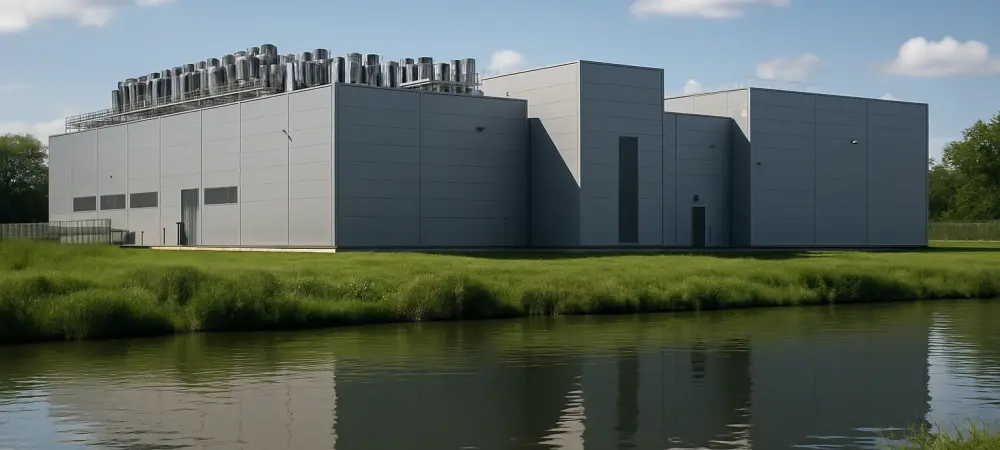
In an era where digital infrastructure underpins nearly every aspect of modern life, concerns about the environmental toll of data centers have surged, particularly regarding their water consumption for cooling systems. Imagine a sprawling facility humming with servers that power cloud services and AI innovations, guzzling vast amounts of water daily—or so the public perception goes. Contrary to this alarming image, recent research in England reveals a surprising reality: these hubs of digital activity are far less thirsty than assumed, prompting a reevaluation of their sustainability footprint. This finding challenges long-held assumptions and sets the stage for a deeper exploration into how technology and environmental responsibility can coexist.
Unveiling the Truth About Data Center Water Usage
Data centers have often been painted as environmental heavyweights, with their cooling needs presumed to drain significant water resources. However, a comprehensive reassessment in England turns this narrative on its head, suggesting that their water usage is much lower than public perception indicates. This shift in understanding calls for a closer look at how these facilities operate and whether their impact has been overstated compared to other sectors.
The central question revolves around sustainability: how do data centers stack up against industries like agriculture or manufacturing in terms of water consumption? Emerging evidence points to a more favorable comparison than expected, with many facilities using amounts akin to smaller-scale operations rather than industrial giants. This insight not only reframes the environmental debate but also highlights the need for accurate data to guide policy and public opinion.
Context and Importance of the Study
The reliance on data centers has skyrocketed in the UK, driven by the exponential growth of cloud computing, artificial intelligence tools, and digital innovation. These facilities form the backbone of a connected society, supporting everything from remote work platforms to cutting-edge research. As their presence expands, so does scrutiny over their resource demands, particularly in a nation increasingly focused on sustainable development.
Understanding the environmental footprint of data centers, especially water usage, holds critical importance amid growing concerns about resource scarcity. Water stress in certain regions amplifies the urgency to assess whether these tech hubs contribute to local challenges or if their impact is negligible. Balancing this with their economic contributions—worth billions annually to the UK—underscores the need for precise, evidence-based evaluations.
This study arrives at a pivotal moment, offering clarity on a sector often misunderstood. It serves as a foundation for informed decision-making, ensuring that environmental policies align with both economic priorities and ecological goals. The findings could reshape how stakeholders view the trade-offs between technological advancement and conservation.
Research Methodology, Findings, and Implications
Methodology
To uncover the reality of water consumption in data centers, a detailed survey was conducted across England through a collaboration between a prominent technology trade body and a national environmental authority. The scope encompassed a wide range of commercial facilities, capturing data on direct water usage for cooling and operational needs. This effort focused on establishing a baseline for consumption patterns across diverse setups.
The analysis employed standardized metrics to ensure consistency, collecting self-reported figures from operators while cross-referencing with industry benchmarks. Methods included categorizing facilities by size, technology type, and regional water availability to identify variations in usage. Such a structured approach aimed to provide a reliable snapshot of current practices within the sector.
Findings
The results paint a striking picture: approximately 64% of surveyed data centers consume less than 10,000 cubic meters of water each year, a volume comparable to that of a typical leisure center. In contrast, only a minimal 4% exceed 100,000 cubic meters annually, a threshold more associated with heavy industrial operations. This distribution challenges the notion of widespread high water dependency.
A key driver behind these modest figures is the adoption of advanced cooling technologies. Over half of the facilities utilize waterless systems, while others implement closed-loop or direct-to-chip cooling methods that drastically cut water needs. Additionally, a remarkable 89% of operators no longer track water usage actively, as their systems require negligible amounts beyond basic building functions.
Implications
These findings carry significant weight for public perception, dispelling myths about data centers as major water consumers. They signal a shift toward sustainability within the industry, driven by technological innovation that reduces reliance on natural resources. This could encourage other sectors to follow suit, adopting similar strategies to minimize environmental impact.
From a policy perspective, the insights advocate for tailored regional approaches to resource management. Proposals for a “water exploitation index” aim to monitor stress levels in specific areas, ensuring that data center expansion aligns with local capacities. Economically, affirming the sector’s lower-than-expected footprint supports continued investment in digital infrastructure without compromising ecological priorities.
Reflection and Future Directions
Reflection
The study offers valuable clarity on direct water usage, highlighting the industry’s progress in adopting efficient practices. However, it also reveals limitations, particularly in addressing indirect consumption linked to energy production for powering these facilities. This gap raises questions about the completeness of the environmental picture presented.
Skepticism persists among some stakeholders regarding whether the full lifecycle impact has been captured. While direct usage data is compelling, the broader implications of supporting infrastructure remain less understood. This duality of achievement and uncertainty underscores the complexity of assessing true sustainability.
Future Directions
Further research is essential to bridge existing knowledge gaps, especially concerning indirect water usage tied to electricity generation. A deeper dive into these upstream impacts could provide a more holistic view of the sector’s environmental footprint. Such studies would benefit from interdisciplinary approaches, combining expertise from technology and resource management fields.
Developing comprehensive monitoring tools stands as a priority to track both direct and indirect effects over time. These tools could inform dynamic policies that adapt to regional conditions and technological advancements. Encouraging transparency among operators will also be crucial to build trust and ensure data accuracy in future assessments.
Summarizing Progress and Ongoing Challenges
The research conclusively demonstrates that data centers in England consume less water than widely believed, thanks to innovative cooling solutions and a strong commitment to sustainable practices. This revelation counters negative stereotypes, positioning the industry as a leader in balancing operational needs with environmental stewardship. It emphasizes the role of technology in addressing resource challenges effectively.
Nevertheless, unresolved issues around indirect water usage persist, casting a shadow over the completeness of current findings. Striking a balance between economic growth—fueled by a sector vital to digital progress—and environmental responsibility remains a nuanced task. This duality reflects the ongoing journey toward truly sustainable operations in a rapidly evolving field.
In reflecting on what unfolded, actionable steps emerged as critical for the road ahead. Prioritizing the development of advanced tracking systems to capture indirect impacts became a focal point, alongside fostering collaboration between policymakers and industry leaders to refine regional strategies. Pushing for global benchmarks on water efficiency in data centers also surfaced as a forward-thinking measure to ensure that England’s progress inspires broader change.