

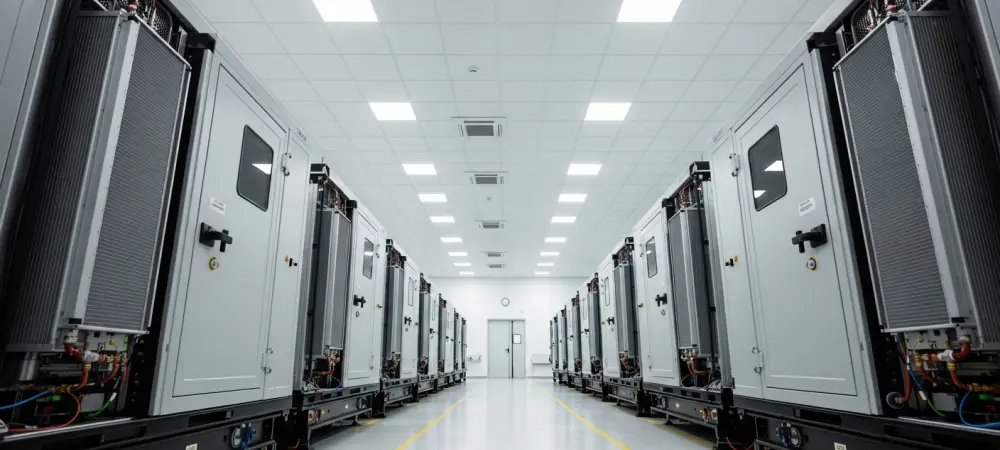
The sudden transformation of the American industrial landscape has forced many traditional automotive manufacturers to rethink their core competencies in light of the explosive growth of artificial intelligence. Workhorse Group, a company long recognized for its pioneering efforts in electric delivery vehicles and drone integration, has officially announced a radical strategic shift toward the production of mobile AI data centers. This decision comes at a time when the demand for localized high-performance computing power has completely outpaced the construction of traditional brick-and-mortar facilities. By leveraging its existing expertise in chassis design and thermal management systems, the organization intends to deliver self-contained, modular computing units that can be deployed at the edge of the network within hours. This move represents a significant departure from the competitive last-mile delivery market, targeting instead the high-margin infrastructure needs of cloud providers.
The Infrastructure Shift: From Delivery Vans to High-Performance Computing
Transitioning from the manufacturing of medium-duty electric trucks to sophisticated mobile data centers requires a fundamental reconfiguration of assembly lines and engineering priorities. The primary challenge for most enterprises today involves the latency associated with centralized processing, which is why mobile units are becoming an essential component of the global tech stack. Workhorse is utilizing its proprietary heavy-duty chassis to support the immense weight of specialized GPU racks and the associated cooling hardware required for intensive AI training tasks. Unlike static installations, these mobile units are designed to withstand vibration and environmental stress while maintaining the precise climate control necessary for high-density silicon. This structural integrity allows for the rapid relocation of compute power to areas with high seasonal demand or specific localized processing needs. Such flexibility is proving vital for municipal smart city projects.
Thermal efficiency remains a cornerstone of this new product line, as the heat generated by modern AI chips necessitates advanced liquid-cooling solutions that are far more complex than those used in standard electric vehicle batteries. Engineers at the firm have integrated closed-loop cooling systems that dissipate heat through the exterior skin of the vehicle, optimizing space within the modular interior. This approach ensures that the high-density hardware can operate at peak performance without the risk of thermal throttling, even in harsh outdoor environments. Furthermore, these mobile data centers are equipped with onboard energy storage systems that provide a buffer against grid instability, ensuring continuous uptime for critical operations. The rollout of these units is scheduled to scale significantly from 2026 to 2029 as production capacity increases to meet the rising demand for edge computing in various metropolitan centers across the country.
Organizations that recognized the limitations of traditional infrastructure early on moved to adopt these modular solutions to maintain their competitive edge in a rapidly evolving market. The shift toward mobile compute units provided a practical answer to the problem of localized data processing and power distribution. In retrospect, the decision to abandon the low-margin logistics sector for high-density tech manufacturing proved to be a necessary step for long-term viability. Actionable next steps for the industry involved the standardization of modular interconnects to allow for even faster scaling of these mobile networks across different geographic regions. It was also determined that further investment in autonomous relocation technology reduced the operational costs associated with moving these centers between high-demand hubs. Stakeholders prioritized the development of sustainable energy inputs, such as integrated hydrogen fuel cells, to power units in remote areas.