

Dominic Jainy has spent his career at the pulse of technological shifts, navigating the complex worlds of artificial intelligence and high-scale infrastructure. Today, we discuss a monumental pivot for the American landscape: the transformation of the Department of Energy’s Paducah site in Kentucky. This $100 billion project represents a massive shift from 20th-century nuclear enrichment to the compute-heavy future of AI. Our conversation explores how legacy industrial sites are being reborn as gigawatt-scale data hubs, the intricate energy solutions required to power them, and the socio-economic implications for the local community as the nation looks toward a new era of digital sovereignty.
The Paducah site is transitioning from a Cold War-era nuclear enrichment facility into a massive 1.8GW data center campus; how do you view the symbolic and technical significance of repurposing such a historic site for modern AI infrastructure?
It is a profound evolution to see a 3,556-acre site once dedicated to uranium enrichment for weapons now being designated as the seed for a $100 billion AI infrastructure plan. Technically, the site is a goldmine because it already possesses the foundational bones—transmission capacity, fiber connectivity, and water infrastructure—that are increasingly rare to find at this scale. By the time it reaches full build-out in 2032, it will support more than 1.2GW of compute capacity, turning a place that once produced atomic fuel into a powerhouse of digital innovation. There is a certain poetic justice in taking a facility that stood at the front lines of the Cold War since its construction in 1952 and using it to secure the nation’s position as a global leader in the next technological frontier.
With a projected 4.6GW of dedicated generation resources, including massive battery storage and natural gas, how does this energy strategy differentiate itself from typical large-scale data center developments?
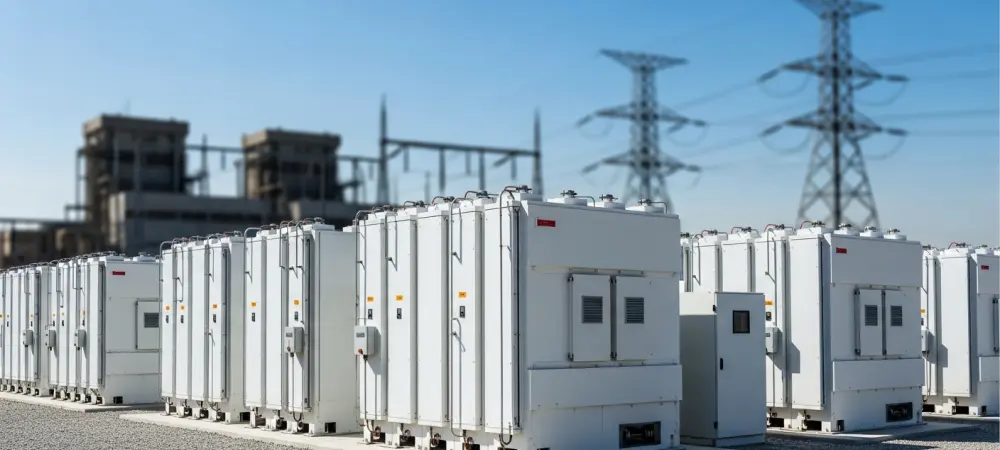
This project sets a new standard by ensuring that the developers, rather than the local residents, foot the bill for the massive energy and transmission infrastructure. The inclusion of 2.6GW of battery energy storage alongside 2GW of natural gas capacity creates a resilient, stage-based ramp-up that aligns perfectly with the Ratepayer Protection Pledge. Typically, such huge draws on the grid can strain local utilities, but here, the coalition is building its own generation specifically for the project to keep innovation and affordability hand in hand. It serves as a crucial roadmap because it reveals the ability to build world-leading infrastructure without passing the costs onto the surrounding communities who have lived near the plant for decades.
This is being hailed as the largest economic development project in Kentucky’s history, but beyond the $100 billion investment, what does a project of this magnitude mean for the long-term technological trajectory of the United States?
A project of this scale effectively signals that the U.S. is doubling down on its domestic AI capabilities by leveraging federal-owned land in ways we haven’t seen before. When you consider that this site alone covers 750 acres of the larger plot, it provides the physical room for the kind of gigawatt-scale thinking that is required for the next generation of machine learning models. This isn’t just about a single campus; it’s about a broader trend where massive capital and development capabilities are used to create high-quality jobs and attract long-term stewardship. It acts as a blueprint for other states, much like the 10GW project planned in Ohio, showing that the path to AI supremacy is paved with integrated energy and compute campuses that revitalize the local economy.
What is your forecast for the future of AI-integrated industrial sites across the country?
I expect a rapid acceleration in the repurposing of retired or underutilized federal and industrial land into dedicated high-compute zones. The Department of Energy’s move to offer up land for data center development is just the beginning of a nationwide strategy to marry legacy infrastructure with green and reliable energy generation. We will likely see more energy-plus-compute partnerships where investment firms and power utilities co-develop sites to handle the 1.2GW to 10GW demands of future intelligence systems. Ultimately, these campuses will become the new industrial heartlands of America, where the processing of data becomes as vital to our national security and economy as the production of steel or electricity once was.