

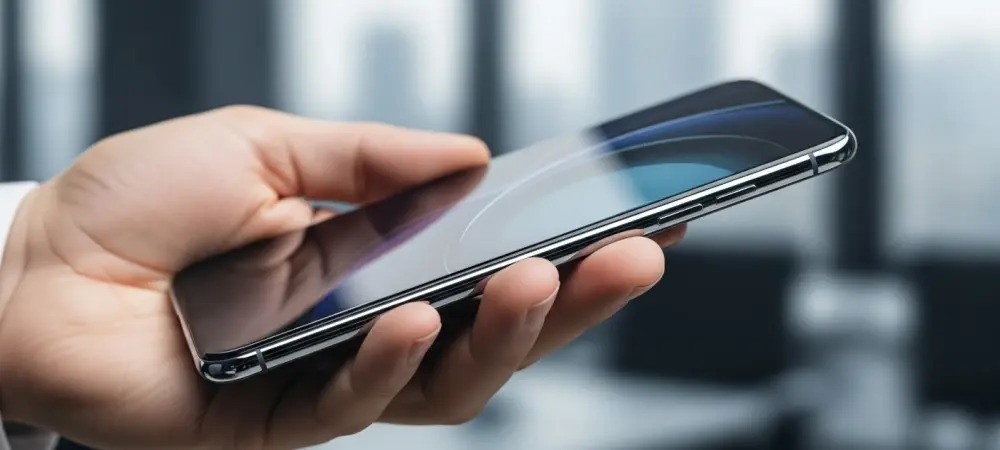
The boundary between a physical handheld device and a floating digital window has never been more indistinguishable than in the latest engineering marvel from OnePlus. As the mobile industry shifts its focus from raw processing power to the sheer elegance of industrial design, the upcoming OnePlus 15T is emerging as a pioneer in the quest for the invisible border. This device represents more than just a seasonal update; it is a calculated attempt to redefine how users interact with their screens by eliminating the black margins that have traditionally framed our digital lives.
The Pursuit: The Invisible Border in Modern Flagships
The race for the ultimate screen-to-body ratio has reached a fever pitch, with OnePlus now positioning its latest hardware as the definitive answer to the “borderless” dream. While competitors have shaved fractions of a millimeter off their displays for years, the OnePlus 15T aims to disrupt the status quo by introducing a level of symmetry and thinness that challenges the engineering limits of modern glass. This design isn’t just about aesthetics; it is a statement of intent from a brand looking to outshine the industry’s most established giants in pure industrial design.
Manufacturers have historically struggled to maintain structural integrity while reducing the perimeter of the display. However, the shift toward hyper-minimalism suggests that the bezel is no longer just a frame but a hurdle to be cleared. By focusing on a seamless transition from glass to metal, OnePlus is prioritizing a sensory experience where the hardware disappears, leaving only the content in the user’s hand.
Why Bezels: The New Benchmark for Innovation
In an era where internal hardware often hits a plateau, the physical footprint and visual immersion of a device have become critical differentiators for consumers. The shift toward compact flagships has forced manufacturers to maximize screen real estate without increasing the overall size of the phone. By focusing on ultra-thin bezels, OnePlus is addressing a growing demand for “small-screen” devices that do not sacrifice the expansive viewing experience typically reserved for much larger, more cumbersome handsets.
The psychological impact of a truly edge-to-edge display cannot be overstated, as it creates a more intimate connection between the user and the interface. As the market moves toward 2027, the ability to pack a massive screen into a pocketable form factor has become the primary metric of luxury. This evolution reflects a broader consumer desire for efficiency where every square millimeter of the device serves a functional purpose.
Engineering Breakthrough: The 1.xx mm Edge
OnePlus China President Li Jie Louis recently confirmed that the upcoming flagship will achieve a symmetrical 1.xx mm border across all four sides of the display. This uniform thickness is a significant technical milestone, as it eliminates the “chin” that often plagues even high-end Android devices. By comparison, the OnePlus 15T is poised to undercut the iPhone 17 Pro’s reported 1.44 mm bezels, offering a visual profile that feels significantly more advanced and immersive.
Achieving this required a complete overhaul of the assembly process within the company’s dedicated display production lines. Utilizing chip-level packaging and proprietary screen-binding technologies, engineers successfully minimized the space required for display drivers and sensors. This 6.3-inch form factor provides a one-handed grip that feels modern, ensuring that the reduction in size does not lead to a reduction in visual impact.
Powering the Experience: Beyond the Glass
Beneath this striking exterior lies the rumored Snapdragon 8 Elite Gen 5 chipset, which provides the computational muscle needed to drive high-refresh-rate visuals without stutter. The challenge of housing a massive battery—rumored to exceed 7,000mAh—within such a slim, bezel-less chassis demonstrates a remarkable feat of spatial management. This “battery paradox” is solved through high-density silicon-carbon materials that allow for greater energy storage without increasing physical volume.
The device also integrates a sophisticated 50MP dual-camera system that fits naturally into the streamlined industrial design. Industry experts suggest that the shift toward sub-1 mm bezels is the inevitable trajectory for the future OnePlus 16 series, but the 15T serves as the essential bridge to that future. By balancing thermal efficiency with such a tight internal layout, the company is proving that “compact” does not have to mean “compromised.”
Evaluating Impact: Ultra-Thin Displays in Daily Use
While the visual appeal is undeniable, the move toward edge-to-edge glass raises questions about durability and palm rejection. Advanced packaging technologies have been implemented to reinforce the corners, protecting the fragile display from the impact of accidental drops. Furthermore, sophisticated software algorithms are required to ensure that the user’s grip does not trigger unintended touches on a screen that effectively has no margins.
This compact strategy creates a new framework for high-end Android hardware, where the cinematic experience of a 15T can rival that of much larger tablets. Users transitioned toward a new standard where ergonomics and immersion were no longer at odds. The focus shifted toward sustainable manufacturing processes that allowed these intricate designs to be produced at scale, ensuring that the next generation of smartphones felt less like tools and more like seamless extensions of the human hand.