

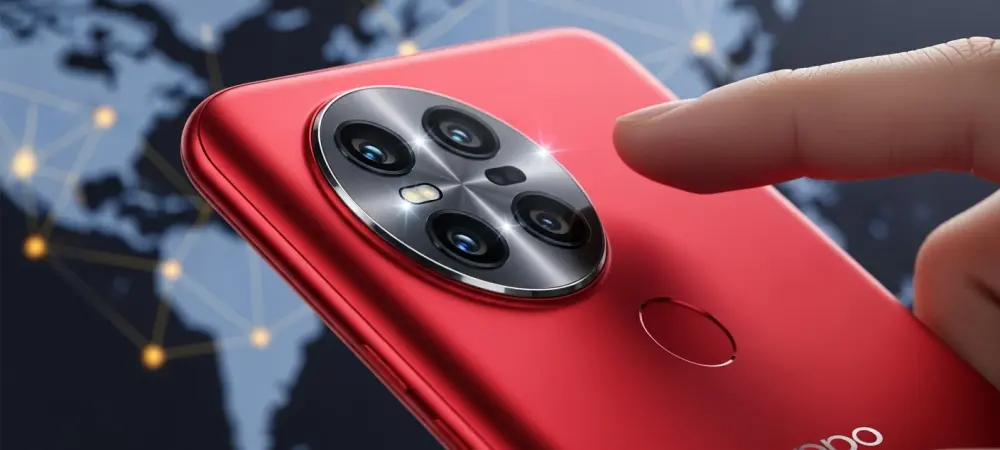
The Dawn of a New Photography Powerhouse
The global smartphone market is bracing for a seismic shift as Oppo officially prepares to bring its most ambitious flagship, the Find X9 Ultra, to the international stage. Announced with confidence at MWC by Elvis Zhou, this move signals a direct challenge to the established “Ultra” hierarchy. This analysis explores whether Oppo’s uncompromising approach to hardware can disrupt a market currently dominated by select titans, marking a pivotal transition in mobile photography.
From Regional Excellence to Global Ambition
Oppo’s journey to the premium tier followed a calculated progression. Historically, the most sophisticated models remained confined to domestic markets, leaving a void for competitors to fill. However, past industry shifts and a maturing European market paved the way for more aggressive expansion. Understanding this background explains why the upcoming release in the second quarter is a pivotal moment for the brand identity on a worldwide scale.
Engineering the Ultimate Visual Experience
Massive Sensors: The Philosophy of Real Hardware
Oppo’s central argument is that the “Ultra” title must be earned through tangible hardware superiority. At the heart of this philosophy is a 50 MP 1.12-inch main sensor, which approaches the physical limits of modern handsets. By prioritizing light intake, the device addresses the primary bottleneck of mobile quality, offering an organic look that appeals to serious photographers demanding natural depth.
Redefining Reach: High-Resolution Periscope Optics
The inclusion of a 200 MP 3x zoom lens coupled with a 50 MP 10x periscope lens represents a formidable array. This dual-telephoto strategy allows for seamless transitions across focal lengths, minimizing the loss of detail that plagues digital cropping. By integrating high-resolution sensors across the range, Oppo sets a new standard for capturing distant subjects without sacrificing resolution.
Navigating Global Competition: Market Misconceptions
Entering the global arena involves overcoming consumer inertia and regional brand perceptions. In Western markets, there is often a misconception that high-end imaging is a solved problem. The brand must dismantle this narrative by demonstrating that its sophisticated optics provide a distinct aesthetic that others lack, requiring a robust strategy to match its technical innovation.
The Future of Mobile Cinematography and AI Integration
As the industry moves forward, the trajectory points toward a fusion of high-end glass and generative processing. The Find X9 Ultra sits at the forefront of a trend where hardware provides raw data for specialized neural units to refine. Future iterations will likely focus on video capabilities, forcing a “spec war” that eventually benefits the consumer by democratizing professional-grade tools.
Navigating the High-End Smartphone Landscape
For consumers, the arrival of this device offers a reason to look beyond traditional brand loyalty. Buyers should focus on “optical parity,” ensuring every lens on a phone is high-quality. Professionals should prioritize devices offering extensive manual controls and RAW capture. As the market diversifies, the best strategy is to value hardware longevity and sensor quality over brand recognition alone.
A Decisive Moment for Mobile Innovation
The Find X9 Ultra stood as a testament to the belief that hardware innovation still had room to grow. By bringing its most powerful technology to the global stage, the company challenged the status quo. The success of this device redefined what users expected from a premium smartphone, pushing boundaries of technical excellence. The competition for the best camera phone became more intense, and the ultimate winner was the user.