

Dominic Jainy brings a wealth of knowledge from the cutting edge of mobile architecture and software integration. Having closely followed the evolution of foldable technology from its experimental roots to the high-performance powerhouses we see today, he offers a unique perspective on the intersection of hardware engineering and user experience. We discuss the strategic implications of Motorola’s high-stakes entry into the premium market, the technical mastery required to balance massive batteries with slim folding frames, and the software challenges of a next-generation operating system.
The Indian market is set to receive several distinct visual options on May 13, including Pantone-branded colors and a FIFA World Cup edition. How does this visual variety influence consumer demographics, and what logistical steps are required to manage specialized design elements across both online and physical retail channels?
The introduction of Pantone Blackened Blue and Pantone Lily White allows the brand to move beyond the traditional “tech-enthusiast” circle and tap into the lifestyle and fashion-conscious demographics. By offering a FIFA World Cup 26 Edition, they are making a bold emotional play for sports fans, which creates a sense of exclusivity and collector value. Logistically, managing these specialized SKUs is a complex dance between digital platforms like Flipkart and physical retail partners who must ensure that the tactile experience of these finishes is preserved. Inventory management becomes critical when you have different storage tiers, like the 12GB and 16GB variants, and retailers must be prepared for a surge in demand for the more unique football-inspired designs. It is not just about moving boxes; it is about ensuring the brand’s premium identity remains consistent across every touchpoint, from the digital microsite to the physical shelf.
This device features a Snapdragon 8 Gen 5 chipset and a 6,000mAh battery capable of 80W charging. Considering the compact nature of book-style foldables, what engineering hurdles occur when managing heat from such a high-performance processor, and how does this battery capacity redefine the standard for foldable longevity?
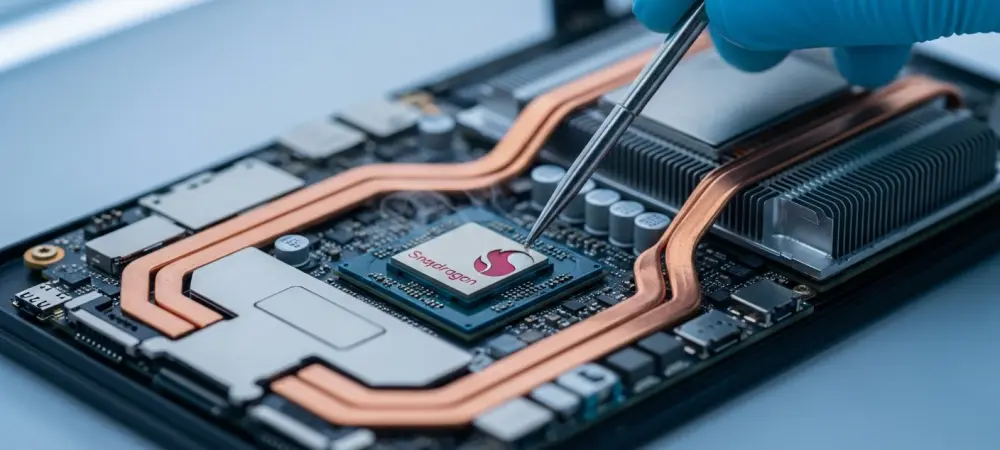
Fitting a Snapdragon 8 Gen 5 into a folding chassis is an incredible feat because these processors generate intense heat that typically requires expansive cooling surfaces. In a book-style device, engineers have to split components across two halves, which complicates the thermal pathway and necessitates highly efficient vapor chambers. The inclusion of a 6,000mAh battery is truly a game-changer, as most foldables have historically struggled to cross the 5,000mAh mark due to the hinge mechanism taking up vital internal volume. When you pair that capacity with 80W wired and 50W wireless charging, you are effectively eliminating the “range anxiety” that has long plagued the foldable category. It feels like a turning point where users no longer have to compromise on endurance just to enjoy the novelty of a larger 8.1-inch screen.
The external display achieves a peak brightness of 6,000 nits, while the internal 8.1-inch screen uses Ultra Thin Glass. What are the practical implications for outdoor visibility at these levels, and what step-by-step durability tests ensure that the 120Hz inner panel maintains its integrity over thousands of folds?
A peak brightness of 6,000 nits on the 6.6-inch cover display is essentially a superpower, allowing the screen to remain perfectly legible even under the harsh, direct glare of the afternoon sun. On the inside, the 8.1-inch pOLED panel relies on Ultra Thin Glass (UTG) to provide that glass-like feel while maintaining the flexibility needed for a 120Hz refresh rate. To ensure this doesn’t fail, the device undergoes rigorous stress testing where mechanical arms fold and unfold the unit hundreds of thousands of times in varying temperatures. They also test for “crease fatigue,” ensuring that the 2K resolution remains crisp and free of distortion even after years of daily use. It is a sensory experience where the smoothness of the hinge meets the visual brilliance of a screen that rivals high-end televisions.
Incorporating a triple 50-megapixel rear system with a Sony LYTIA main sensor marks a significant shift in mobile photography. How do periscope telephoto lenses change the internal layout of a hinged device, and what specific software optimizations are necessary to process high-resolution data across multiple lenses effectively?
The Sony LYTIA 1/1.28-inch sensor is a massive piece of hardware that demands significant physical depth, which is a rare commodity in a folding phone. To integrate a 50-megapixel periscope telephoto lens, Motorola’s engineers had to rethink the stacking of the motherboard to allow the light path to travel horizontally before being reflected. On the software side, the Android 16-based My UX must handle a tremendous amount of data throughput to ensure that switching between the ultra-wide and the periscope lens is instantaneous. This requires sophisticated image signal processing to maintain color consistency across all three 50-megapixel sensors so the user doesn’t see a “jump” in quality. The result is a professional-grade camera system that finally puts foldables on equal footing with the best traditional flagship “slabs” on the market.
With an IP49 rating for resistance and an Android 16-based operating system, this hardware emphasizes both physical and digital longevity. What are the primary challenges in adapting a user interface for 8.1-inch displays, and what maintenance routines would you suggest to help users protect the hinge and screen coatings over several years of use?
Adapting an interface for an 8.1-inch display is all about managing the transition from the 6.6-inch cover screen to the tablet-sized interior without breaking the user’s flow. Android 16 provides the backbone for improved multitasking, but the real challenge is ensuring that third-party apps scale beautifully to that 2K resolution without looking stretched. For physical longevity, the IP49 rating offers great peace of mind against dust, but users should still be diligent about keeping the hinge area clear of fine debris. I recommend a simple routine of using a microfiber cloth to gently wipe the UTG inner screen and avoiding any pressurized air near the hinge gaps. These small habits, combined with the Corning Gorilla Glass Ceramic 3 on the exterior, will keep the device looking as pristine as the day it was unboxed from Flipkart.
What is your forecast for the Motorola Razr Fold?
My forecast is that the Motorola Razr Fold will disrupt the luxury segment by offering a rare combination of extreme battery life and top-tier optics that competitors have yet to match. At a price point of approximately EUR 1,999, it is clearly positioned as a premium statement piece, but the raw specifications like the Snapdragon 8 Gen 5 and the 16GB RAM variant make it a legitimate workstation. I expect this device to set a new benchmark for “no-compromise” foldables, forcing other manufacturers to finally move away from the small batteries and mediocre zoom lenses that have limited the category’s growth. In the long run, this model will likely be remembered as the moment when folding phones transitioned from expensive toys to the definitive standard for high-performance mobile computing.