

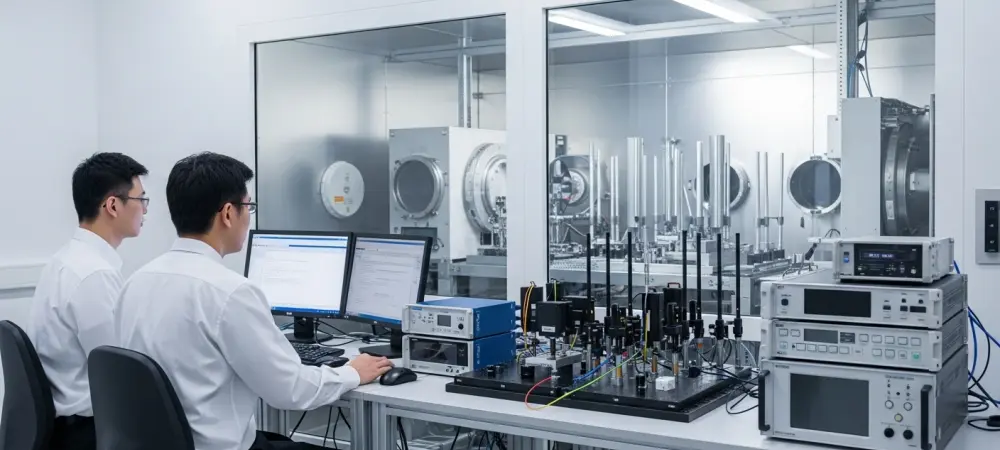
The global telecommunications landscape is currently undergoing a radical transformation as the industry pivots from the established foundations of 5G toward the ambitious frontiers of 6G connectivity. This transition represents more than a simple increase in data transmission rates; it is a fundamental redesign of how wireless signals interact with the physical world, necessitating a complete overhaul of validation methodologies. At the heart of this shift lies the Over-The-Air (OTA) test chamber, a specialized, shielded, and anechoic environment designed to measure the performance of wireless devices without the interference of external noise or the restrictive nature of physical cables. As the industry moves deeper into the 2026–2035 development cycle, these chambers are evolving from optional laboratory assets into the primary gatekeepers of network reliability and device certification. The sheer physics of high-frequency communication makes traditional testing methods obsolete, positioning OTA infrastructure as the critical bridge between theoretical research and commercial reality.
The reliance on OTA testing is dictated by the extreme characteristics of the sub-terahertz (sub-THz) and millimeter-wave (mmWave) frequencies that define the 6G experience. At these ranges, signals are so delicate that even a few centimeters of physical cabling can introduce enough loss and distortion to render measurement data useless. Consequently, engineers must rely on wireless testing within controlled environments where every variable—from atmospheric reflection to spatial interference—can be precisely managed. This market, which encompasses high-performance hardware, sophisticated signal analysis software, and rigorous calibration services, is now the cornerstone for any organization attempting to build the next generation of wireless hardware. As 6G moves from the whiteboard to the production line, the ability to validate these complex systems in a repeatable, standardized manner will determine which players lead the market and which fall behind due to technical failure.
The Technological Evolution of Wireless Testing
Adapting to Sub-THz Frequencies and Spatial Complexity
The leap to 6G introduces unprecedented bandwidths and operating frequencies ranging from 100 GHz to 3 THz, marking a significant departure from the lower-frequency bands that characterized earlier generations of mobile technology. At these sub-THz levels, radio waves behave more like light than traditional radio signals, demonstrating extreme sensitivity to atmospheric conditions, humidity, and physical obstacles. To accurately capture and analyze these signals, OTA chambers must be outfitted with a new generation of high-precision probes and specialized low-loss absorbers that prevent internal reflections from skewing results. This technical evolution ensures that the incredibly short wavelengths of 6G can be isolated and measured with the surgical precision required for high-stakes commercial deployment. Without these advancements in chamber design, the signals would be swallowed by the very environment intended to measure them, leading to catastrophic errors in device tuning and performance validation.
Beyond the challenge of raw frequency, 6G relies heavily on advanced beamforming and massive MIMO (Multiple Input, Multiple Output) configurations that introduce a high degree of spatial complexity. Testing is no longer a linear process of checking signal strength at a fixed point; it now involves verifying the accuracy and stability of a “spatial beam” as it moves through a three-dimensional environment. This requires the integration of multi-probe arrays and near-field scanning systems capable of mapping a device’s radiation pattern in real time. The transition toward testing the “spatial beam” instead of just the radio signal represents a paradigm shift for engineers, who must now simulate complex, real-world interactions within the confines of a shielded room. By perfecting these spatial validation techniques, manufacturers can ensure that 6G devices will maintain connectivity in dense urban environments where signals must bounce off buildings and navigate around moving obstacles with millisecond precision.
Integrating Sensing and Artificial Intelligence
One of the most profound innovations of 6G is the concept of Integrated Sensing and Communication (ISAC), a technology that allows radio signals to perform double duty as both data carriers and radar-like sensors. This capability enables devices to “see” their surroundings, detecting objects, gestures, and environmental changes through the reflection of high-frequency waves. For OTA test chambers, this adds a massive layer of complexity, as the environment must now simulate reflective surfaces and moving targets to test the device’s sensing accuracy while it simultaneously transmits high-speed data. This dual-purpose testing environment is essential for the development of autonomous systems and advanced gesture-controlled interfaces, requiring a level of environmental emulation that was never necessary for previous cellular generations. The chamber becomes a digital twin of the outside world, providing a sandbox where sensing and communication can be refined in tandem.
To manage the overwhelming volume of data generated by these multi-faceted tests, the integration of Artificial Intelligence (AI) and machine learning into the testing workflow has become a necessity. Modern 6G OTA chambers are increasingly governed by AI-driven automation systems that can autonomously adjust probe positions, analyze complex interference patterns, and identify performance anomalies that would be invisible to human operators. This automation is not merely a convenience but a vital tool for handling the massive data loads and complex scenario modeling required for 6G validation. By employing AI to manage the testing process, companies can significantly reduce the time required to bring a new chipset or device to market while maintaining a higher standard of quality control. This fusion of physical shielding and intelligent software creates a testing ecosystem capable of keeping pace with the rapid innovation cycles typical of the modern telecommunications industry.
Market Dynamics and Economic Realities
Growth Projections and Development Phases
The global market for OTA test chambers is entering a period of sustained expansion, with a projected compound annual growth rate (CAGR) of 12.8% through 2035. This growth is not uniform but rather structured into distinct phases that follow the maturation of 6G technology. The current phase is dominated by research and development, characterized by high-end, custom-built chambers designed for the early-stage validation of experimental chipsets and prototype antennas. During this period, the primary buyers are academic institutions, government labs, and the R&D departments of major semiconductor firms who need the most precise instruments available to explore the theoretical limits of sub-THz communication. This era of exploration is critical for establishing the baseline performance metrics that will eventually be codified into global industry standards, ensuring that early 6G hardware is robust enough for commercial use.
Following this initial R&D surge, the market is expected to transition into a mass-market adoption phase as global 6G standards are finalized toward the end of the decade. At this point, the demand will shift away from bespoke laboratory setups toward standardized, high-throughput OTA chambers that can be integrated directly into manufacturing lines. These production-grade chambers must balance measurement accuracy with speed, allowing manufacturers to test thousands of units per day without creating a bottleneck in the supply chain. This shift represents the democratization of 6G technology, as testing infrastructure becomes more accessible and optimized for scale. The evolution from high-cost, specialized tools to essential industrial machinery will be the defining trend of the 2030s, reflecting the broader transition of 6G from an experimental curiosity to a ubiquitous global utility.
Regulatory Milestones and New Industry Verticals
The trajectory of the OTA testing market is deeply intertwined with the regulatory milestones set by global governing bodies like the FCC and ETSI. As these organizations finalize the technical benchmarks for 6G, OTA compliance testing will move from a voluntary quality-assurance step to a mandatory requirement for market entry. History has shown that once regulatory bodies mandate specific performance thresholds—particularly regarding interference and radiation patterns—the demand for certified testing equipment spikes almost overnight. This regulatory pressure ensures that all devices on the network operate within safe and efficient parameters, preventing a “wild west” scenario of signal interference that could cripple regional connectivity. For chamber manufacturers, these regulatory shifts represent guaranteed revenue streams, as every device maker must utilize certified OTA environments to gain the “stamp of approval” necessary for commercial sale.
Furthermore, the 6G era is expanding the reach of OTA testing into entirely new industry verticals, far beyond the traditional smartphone and tablet markets. The rise of 6G-enabled automotive systems, particularly for Vehicle-to-Everything (V2X) communication, requires specialized chambers that can simulate the high-speed movement and extreme environmental conditions of the open road. Similarly, the proliferation of Low-Earth Orbit (LEO) satellite constellations is driving demand for OTA solutions capable of validating satellite-to-ground and satellite-to-satellite links. These new applications bring unique challenges, such as the need for thermal and vibration testing integrated within the RF-shielded environment. As 6G becomes the backbone of autonomous transportation and global satellite internet, the OTA test chamber market will find itself servicing a much broader and more diverse array of clients, each with specific technical needs and safety requirements.
Sector-Specific Demand and Regional Influence
Diverse Requirements Across End-Use Industries
Demand for 6G OTA chambers is highly fragmented, with different sectors requiring wildly different specifications to meet their unique operational goals. The consumer electronics sector remains the largest volume driver, with manufacturers like Samsung and Apple leading the charge in developing ultra-compact antennas that can fit into increasingly thin device form factors. For these companies, the priority is high-throughput testing that can validate antenna performance in real-world hand-grip scenarios and varying device orientations. This requires chambers that can automate thousands of measurements in minutes, ensuring that every device leaving the factory meets the rigorous connectivity standards expected by consumers. The integration of AI-driven robotics into these chambers allows for the rapid testing of different “use cases,” such as how a signal behaves when the phone is held against the ear versus when it is lying on a flat surface.
In contrast, the industrial IoT and infrastructure sectors are focused on reliability and massive scale. Network equipment providers require enormous anechoic chambers—some the size of small warehouses—to test the massive MIMO arrays and Open RAN architectures that will power 6G base stations. These chambers must be capable of simulating the signal load of thousands of simultaneous connections to ensure that the infrastructure won’t buckle under heavy urban traffic. Meanwhile, the specialized IoT segment is pushing the development of compact, benchtop OTA chambers designed for validating small, low-power sensors used in smart cities and industrial automation. These “mini-chambers” allow developers to test 6G connectivity in a cost-effective manner, lowering the barrier to entry for smaller startups and academic researchers. This diversity in chamber size and capability ensures that the OTA market can support everything from a tiny smart-sensor to a nationwide cellular tower.
Geopolitical Competition in the 6G Race
The geography of the OTA test chamber market is a direct reflection of the global race for 6G supremacy, with the Asia-Pacific region currently asserting its dominance as the center of gravity for wireless manufacturing. Countries like China, South Korea, and Japan have implemented aggressive, state-sponsored roadmaps that provide massive subsidies for 6G research and infrastructure development. This has created a self-sustaining ecosystem where the world’s largest smartphone OEMs and network equipment providers are located just miles away from the specialized firms that build their testing chambers. This proximity allows for rapid feedback loops and accelerated innovation, keeping the region at the forefront of the 6G cycle. As a result, the Asia-Pacific market is not only the largest consumer of OTA chambers but also a primary exporter of the specialized microwave absorbers and RF components that make these systems possible.
North America and Europe occupy a different, though equally critical, niche in the global market. The United States, fueled by a high concentration of fabless semiconductor companies and defense contractors, is the primary driver of early-stage R&D and high-frequency innovation. American firms are often the first to push into the upper terahertz ranges, requiring the most advanced and expensive OTA setups to validate their designs for military and aerospace applications. Europe, meanwhile, leverages its strong automotive industry and satellite expertise to lead in V2X and LEO communication testing. European research consortia have been instrumental in setting the early standards for 6G environmental sustainability and privacy, ensuring that testing methodologies align with strict regional regulations. This geopolitical distribution of expertise creates a global market where each region contributes a specific piece of the 6G puzzle, from raw manufacturing might to high-level system architecture and regulatory leadership.
The Competitive Landscape and Future Outlook
Industry Leadership and Strategic Consolidation
The competitive landscape of the OTA test chamber market is defined by high technical barriers to entry, which has naturally led to a concentration of power among a few elite firms with deep expertise in radio frequency (RF) engineering. Industry leaders such as Keysight Technologies and Rohde & Schwarz have successfully positioned themselves as “one-stop shops” that provide not only the physical shielding of the chamber but also the ultra-precise measurement instrumentation and software needed to interpret the data. By offering integrated solutions, these companies reduce the complexity for their clients, who would otherwise have to source hardware and software from multiple, potentially incompatible vendors. This dominance is reinforced by their massive R&D budgets, which allow them to stay ahead of the curve as 6G frequencies continue to climb into the terahertz range.
Recent years have also seen a notable trend of strategic consolidation, as established players acquire smaller, specialized firms to fill gaps in their technology portfolios. These acquisitions are often focused on obtaining proprietary MIMO testing algorithms, advanced absorber materials, or specialized robotic positioning systems that are difficult to develop in-house. This consolidation is a sign of a maturing market, where the ability to provide a comprehensive, end-to-end testing environment is the key to winning large-scale contracts with global telecom giants. For smaller companies, the path to success often involves becoming a “specialized specialist”—focusing on a very specific niche, such as ultra-high-frequency probes or specialized software for automotive radar simulation. This symbiotic relationship between giants and specialists ensures that the market remains innovative while still providing the stability and scale required by the world’s largest manufacturers.
Future Perspectives on Global Success
As the industry looks toward the complete rollout of 6G by 2035, the OTA test chamber will have firmly established itself as the ultimate arbiter of wireless success. The transition from 5G to 6G is not merely a quantitative upgrade but a qualitative shift that demands a rethink of how we validate the invisible signals that power our modern world. In the coming years, successful market participants will be those who can provide repeatable, high-accuracy measurements at frequencies above 100 GHz while integrating these tests into a broader digital-twin ecosystem. The OTA chamber of the future will not be a standalone box but a fully integrated simulation environment where physical RF testing is combined with network emulation and AI-driven hardware-in-the-loop simulations. This holistic approach will allow engineers to predict how a device will perform in a crowded stadium, a high-speed train, or a remote desert long before the first production unit is even built.
The road ahead for 6G commercialization was paved with significant challenges, yet the continued investment in OTA infrastructure provided the necessary solutions to overcome the inherent physics of sub-THz communication. By moving away from the limitations of conducted testing and embracing the spatial complexity of the 6G era, the telecommunications industry ensured that its newest networks were both resilient and reliable. Moving forward, stakeholders should prioritize the development of modular and automated testing platforms that can adapt to evolving standards without requiring a total replacement of existing hardware. This forward-looking strategy will be essential for managing the high capital costs associated with 6G development while maintaining the rapid pace of innovation needed to fulfill the promises of holographic communication and ubiquitous sensing. Ultimately, the OTA test chamber did more than just measure signals; it provided the foundational confidence required to launch a new era of global connectivity.