

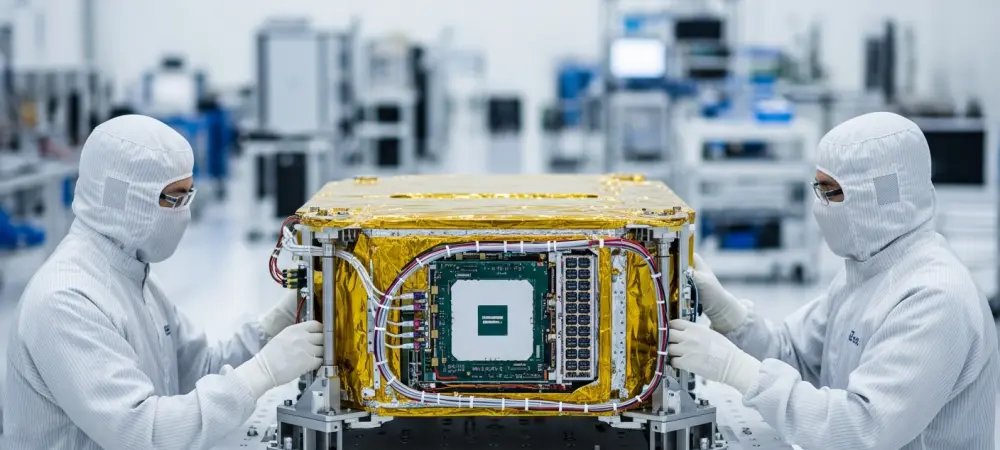
The relentless expansion of generative artificial intelligence has finally collided with the hard physical limits of the terrestrial power grid, forcing hyperscalers to look toward the vacuum of space for a sustainable future. As of late, the massive computational clusters required to train and run next-generation large language models have become so energy-intensive that they are effectively outgrowing the cities and nations that birthed them. On Earth, data centers are no longer just facilities; they are giant consumers of electricity and water that place immense pressure on local communities and aging infrastructure. This friction has reached a breaking point, characterized by regulatory freezes and environmental concerns that threaten to stall the AI revolution entirely. Consequently, the concept of orbital data centers has moved from science fiction to a strategic necessity, offering a way to bypass ground-based bottlenecks by relocating the most intensive workloads into low-Earth orbit where energy is abundant and land use is a non-issue. By positioning high-performance hardware in the stars, the industry aims to secure a path for growth that is no longer shackled by the fragility of the terrestrial grid or the slowing pace of public utility expansion. The shift signifies a profound transformation in how the digital world interacts with the physical environment, moving away from resource extraction toward a model of extraterrestrial energy utilization.
Terrestrial Limitations: The Grid Under Massive Strain
The primary driver for moving computation into space is the escalating strain on global electricity supplies, which has reached a critical stage for major technology providers. According to the International Energy Agency, data center power consumption grew by 17% in 2025, with AI-specific facilities seeing a staggering 50% surge in demand within the same period. Projections currently suggest that total consumption will double by 2030, reaching nearly 950 terawatt-hours, a figure that rivals the entire energy output of several developed nations. This explosive growth is making it increasingly difficult for the existing terrestrial grid to keep pace with the sheer volume of hardware being deployed, leading to frequent permit denials and power-rationing discussions in traditional tech hubs. The demand is not just for electricity, but for the reliability and density of power that legacy systems were never designed to deliver.
Beyond the sheer volume of power needed, developers face intense social and regulatory hurdles that are becoming impossible to ignore in many jurisdictions. Local communities often oppose data center construction due to the massive water consumption required for cooling and the noise introduced to energy markets that can drive up costs for residents. Furthermore, the lead time for building the necessary high-voltage transmission lines now ranges from four to eight years, creating a massive gap between the availability of new AI chips and the infrastructure required to turn them on. This delay creates a binding constraint where, even if the latest processing units are purchased, they cannot be utilized because the ground-based power lines simply do not exist. As these terrestrial walls grow higher, the incentive to abandon the surface for the open environment of space becomes more than a curiosity; it becomes a fundamental business requirement for survival in a competitive landscape.
Orbital Energy: Harvesting Sunlight Beyond the Atmosphere
Orbital data centers offer a radical alternative by drawing power directly from the source without the interference of weather or the day-night cycle. Satellites placed in sun-synchronous orbits can receive near-continuous sunlight, generating massive amounts of energy via high-efficiency solar arrays without competing for local community resources or fresh water. This shift moves the environmental and logistical burden away from populated areas, allowing for a scale of energy production that is increasingly difficult to achieve under current environmental regulations on Earth. In space, the lack of an atmosphere means that solar panels can operate at peak efficiency for nearly twenty-four hours a day, providing a steady stream of power that is far more reliable than the intermittent renewable sources often found on the ground. This consistency is vital for the massive, non-stop training runs required by the latest foundation models.
The architecture of these facilities is evolving from single-chip satellites to dense clusters that fly in tight formation, functioning as a singular distributed compute unit. These gigawatt-class facilities would represent a scale of infrastructure never before attempted by private industry, potentially involving constellations of tens of thousands, or even a million, interconnected satellites. By utilizing high-bandwidth inter-satellite laser links, these constellations can act as a massive parallel processor, distributing workloads across thousands of nodes to mitigate heat and maximize throughput. Future visions for this technology involve moving beyond low-Earth orbit to support long-term missions to the Moon and Mars, creating a backbone for an off-world digital economy. This decentralized approach ensures that if one unit fails, the rest of the cluster can compensate, providing a level of resilience that is difficult to replicate with centralized ground facilities.
Economic Viability: Comparing Ground and Space Costs
The financial argument for space-based compute remains one of the most significant hurdles for widespread adoption among the tech giants. Current models show that a one-gigawatt facility operated over a five-year lifespan would cost approximately $51.1 billion in orbit, compared to roughly $15.9 billion for a similar facility built on Earth. This massive premium is driven by the extreme costs of launching heavy hardware into orbit and the necessity for specialized, radiation-hardened electronics that can withstand the rigors of the space environment. Today, the cost of orbital power is nearly five times as much as U.S.-based terrestrial power, making it a difficult sell for all but the most specialized and time-sensitive AI applications. The capital expenditure required to establish an initial presence in orbit is so high that only the largest corporations can currently consider it as a viable part of their long-term strategy.
However, a significant tipping point is approaching as the cost of launching payloads into orbit continues to fall at an unprecedented rate. If the cost of reaching orbit drops to approximately $200 per kilogram, space-based compute could become financially competitive with ground-based options when factoring in the total cost of ownership. Some industry leaders argue that the absolute cost may be less important than the speed of implementation in a market where being first with a new model is everything. If an orbital data center can be deployed and powered on years faster than a terrestrial facility waiting for grid upgrades and environmental permits, the competitive advantage of having that AI capacity online sooner could easily justify the higher initial investment. The ability to bypass decade-long bureaucratic delays on the ground offers a value proposition that goes beyond simple utility costs.
Technical Obstacles: Reliability and Obsolescence in the Void
Space is a notoriously difficult environment for sensitive electronics, presenting challenges that traditional data center engineers have never had to face. Hardware must survive the intense vibrations of launch and then endure continuous exposure to high-energy radiation and drastic temperature swings that can cause materials to expand and contract rapidly. Unlike terrestrial centers where technicians can easily swap out a failed drive or a faulty GPU, orbital hardware is completely inaccessible once it leaves the ground, making every failure permanent. This necessitates a much higher standard for reliability and lifecycle planning, requiring redundant systems and self-healing software architectures that can route around damaged hardware components. The design philosophy shifts from easy maintenance to total autonomous resilience, which adds layers of complexity to both the hardware and the operating system.
There is also the significant challenge of hardware-satellite desynchronization, where the pace of AI innovation far outstrips the lifespan of the satellite itself. AI chip development moves significantly faster than the typical lifecycle of a space platform, which might be designed to operate for five to seven years. In contrast, the processors it carries could become technologically obsolete in eighteen months, leading to a situation where a perfectly functional satellite is carrying useless, outdated silicon. Additionally, moving bulk data between Earth and orbit introduces latency and bandwidth challenges that fiber-optic networks do not face. Innovation in high-frequency laser communication is required to keep the data flowing efficiently between the orbital clusters and the ground stations that serve the end-users. Solving these issues requires a fundamental rethink of how we build and upgrade digital infrastructure in an environment that does not allow for physical human intervention.
Market Trajectory: The Leading Players in the Space Race
Major aerospace and tech entities are already moving this concept toward reality through ambitious pilot programs and massive satellite filings. SpaceX has filed for constellations aiming for 100 gigawatts of capacity, while Blue Origin’s “Project Sunrise” looks to deploy over 51,000 satellites designed specifically for off-world data processing and edge computing. Google is also conducting advanced research into satellite-based AI training, aiming to prove that training models in orbit can meet enterprise standards for security and reliability. Meanwhile, smaller companies like Starcloud have already successfully trained the first large language model in orbit, proving the technical feasibility of the concept and setting a precedent for others to follow. These early successes have shifted the industry consensus from questioning if orbital compute is possible to determining when it will become a mainstream commercial reality.
The industry recognized that the transition to orbital compute was not a replacement for ground-based systems but a necessary expansion that required specific legislative and technical breakthroughs. Engineering teams standardized modular designs to allow for rapid hardware refreshing during regular launch windows, effectively solving the problem of processor obsolescence through frequent orbital updates. Major hyperscalers collaborated on a shared laser-relay network that stabilized data transmission rates, while insurance providers developed new risk-assessment models for orbital debris management to protect these high-value assets. By adopting these protocols, companies successfully mitigated the financial risks associated with space-based infrastructure and created a resilient secondary tier for the global AI ecosystem. These actions ultimately decoupled the progress of machine intelligence from the constraints of terrestrial resources, ensuring that the next phase of digital development occurred without compromising the ecological health of the planet. The groundwork established through these initiatives provided the template for sustainable off-world infrastructure that would eventually support long-term lunar and Martian exploration missions.