

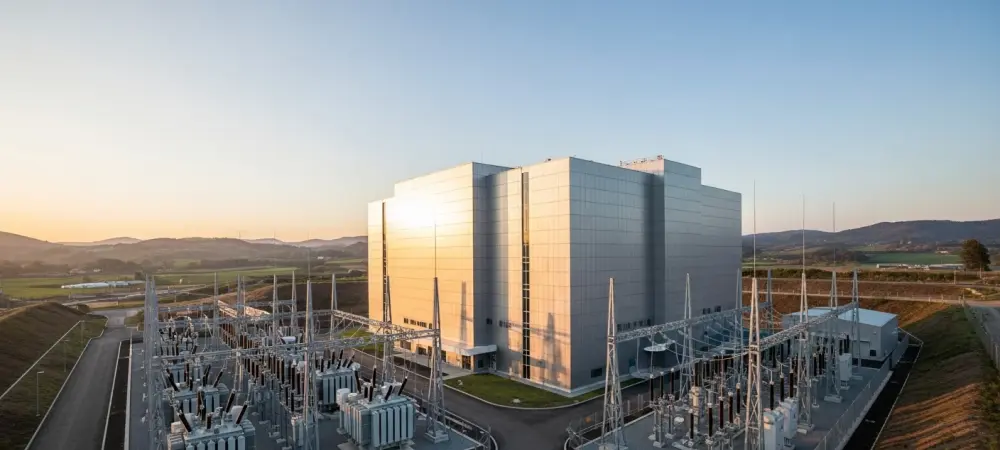
The verdant perimeter surrounding London, once considered a permanent buffer against the relentless advance of concrete and steel, is now being reconsidered as the foundational soil for the United Kingdom’s ambitious leap into the era of artificial intelligence. This sprawling ring of protected countryside, established nearly eight decades ago, has long served as the environmental conscience of the capital, preventing urban sprawl and preserving the pastoral character of the surrounding counties. However, the pressing demand for high-speed computing and massive data storage is forcing a re-evaluation of these traditional boundaries, pitting the legacy of environmental protection against the requirements of a modern digital economy.
The current situation presents a high-stakes gamble where the city must decide if its future prosperity depends on maintaining a static green ring or evolving into a global silicon powerhouse. As artificial intelligence continues to reshape the financial and technological sectors, London finds itself at a critical juncture. The decision to open even small portions of the Green Belt for data center construction represents a fundamental shift in priorities, suggesting that the “lungs of the city” might now need to house the “brains of the nation” to ensure long-term economic relevance in a competitive world.
The High-Stakes Gamble: Between Historic Preservation and the AI Revolution
London stands at a crossroads where eighty years of environmental tradition meet the insatiable hunger of the silicon age. While the city’s Green Belt has long been a sacred boundary against urban sprawl, a bold new proposal suggests that the future of British innovation might just depend on breaking that seal. As artificial intelligence transforms the global economy, the capital is weighing a provocative question: is a patch of neglected land more valuable as a vacant lot or as the engine room of the next industrial revolution? This debate is not merely about real estate; it is about the identity of a city trying to reconcile its historic charm with the cold requirements of digital progress.
The tension between preservation and expansion has reached a boiling point as tech giants scout for locations that offer both proximity to the city and the vast acreage required for hyperscale facilities. For decades, developers faced an almost certain rejection when eyeing protected zones, but the economic necessity of supporting the AI boom has weakened that wall. If London chooses to maintain its current restrictions, it risks pushing vital infrastructure to rival European cities, potentially losing its status as a premier tech hub. Conversely, sacrificing these green spaces could trigger a domino effect that compromises the environmental health of the entire metropolitan area.
Redefining the “Grey Belt” to Secure London’s Digital Sovereignty
The proposed “London Plan” introduces a pivotal shift in how the city views its protected surroundings by moving away from a binary view of land use. For decades, the Green Belt was an untouchable ring of countryside, but the new strategy identifies “Grey Belt” land—sites that are technically protected but offer little ecological value or are already partially developed—as the primary target for expansion. This policy matters because it prioritizes digital infrastructure as a matter of national importance, moving away from a housing-only development mindset. By reclassifying these neglected spaces, the Mayor’s office aims to position London as a global competitor to massive tech hubs like Slough.
Securing digital sovereignty is no longer just a word; it is a strategic requirement for a nation that intends to lead in the development of sovereign AI models. If the data that powers British industry is stored and processed abroad, the nation loses a degree of control over its most valuable asset. Therefore, the utilization of the Grey Belt is seen as a way to domesticate the digital supply chain. By providing developers with viable locations close to the heart of the capital, the government ensures that the UK remains the master of its own digital destiny while making productive use of land that currently serves no environmental or social purpose.
Why Data Centers Are Winning the Battle for Protected Land
Data centers are being granted a privileged status in this new planning hierarchy due to their unique operational profile. Unlike traditional industrial warehouses or factories that bring heavy truck traffic, noise pollution, and logistical chaos, data centers are remarkably quiet and require very few staff members to operate. This low-impact footprint allows them to bypass certain restrictions that hinder other commercial projects. Furthermore, these facilities are no longer viewed as isolated boxes but as strategic assets that can blend into the landscape more easily than a bustling manufacturing plant or a high-density housing complex.
The shift in perception is also driven by the realization that data centers can function as more than just storage vaults. The plan envisions them as circular infrastructure hubs that can capture waste heat from servers to warm local homes and landmarks, turning a massive energy consumer into a community utility. This potential for environmental synergy makes them far more attractive to planners than traditional industries. When a facility can demonstrate that it will provide carbon-neutral heating to a nearby neighborhood, the argument for building on the Grey Belt becomes much harder for conservationists to refute.
The Energy Paradox: Balancing Hyperscale Growth With a Strained Grid
The ambition to lead in AI faces a physical reality: the colossal energy requirements of modern data processing. Experts warn that without a “Great Grid Upgrade,” the drive for digital dominance could cannibalize the power needed for new housing and essential services. The grid, which was designed for a different era of consumption, is already operating near capacity in several key areas of the capital. This creates a paradox where the city wants to build the infrastructure of the future but lacks the immediate power to run it. The drive toward digitalization must therefore happen in lockstep with a complete overhaul of the energy distribution network.
The proposal hinges on a coordinated planning approach where developers must prove their commitment to sustainability from the outset. This includes mandatory heat recovery systems, innovative cooling technologies, and a strict requirement to use renewable energy sources wherever feasible. To prevent the data sector from draining the city’s resources, new projects are being modeled after successful international examples, such as district heating networks in Milan. This ensures that every megawatt consumed by a server serves a secondary purpose, mitigating the overall strain on the grid and aligning the tech sector with the city’s broader carbon-neutral goals.
Navigating the New Policy Framework for Digital Infrastructure Developers
For developers looking to capitalize on this opening, the path to approval requires more than just a blueprint; it requires a commitment to circularity and efficiency. The new framework demands that any proposal for Grey Belt development must include a strategy for waste heat utilization, diverting thermal energy into local heat networks rather than venting it into the atmosphere. Developers must also demonstrate a comprehensive resource efficiency plan that addresses both water and electricity usage. By aligning projects with these strict mandates, tech firms can navigate political resistance and prove that their presence provides a tangible benefit to the local environment.
The shift toward this new policy framework marked a turning point in how the city integrated its technological ambitions with its environmental heritage. Authorities successfully identified underutilized sites that offered the necessary space for hyperscale operations without compromising the ecological integrity of the wider Green Belt. Data center operators adopted advanced heat-sharing technologies that warmed thousands of homes, effectively transforming industrial sites into essential public utilities. This coordinated effort between the government and the private sector ensured that the power grid was upgraded in time to support both the AI revolution and the growing needs of the residential population. By prioritizing circularity, the capital established a sustainable development model that secured its position as a global leader in the digital age.