

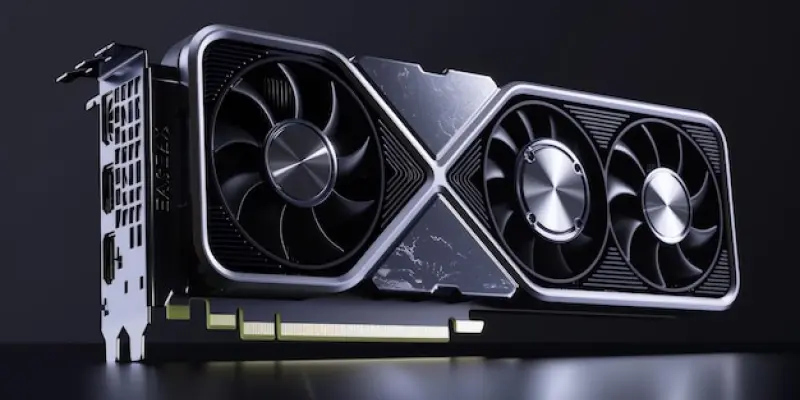
Amid the anticipation for Nvidia’s RTX 5060 Ti, details from a recently leaked shipping manifest have sparked considerable interest among tech enthusiasts. The RTX 5060 Ti, slated for an end-of-April launch, has brought curiosity about whether it will meet the high-performance expectations set by its predecessors. The manifest reveals that the RTX 5060 Ti will feature a 128-bit memory bus paired with GDDR7 to elevate memory bandwidth. However, this incremental improvement may not signify a remarkable advancement from the current RTX 50-series. As Nvidia’s strategy leans heavily on AI capabilities, the GPU’s true potential may rely on specialized game support to stand out.
Specifications and Core Enhancements
The RTX 5060 Ti is designed with 4,608 CUDA cores, presenting a boost clock of 2,572 MHz and either 16GB or 8GB of GDDR7 memory operating at 28Gbps. With a resulting bandwidth of 448GBps and a total board power of 180W, it offers slight enhancements from previous models. The RTX 5060, expected in May, will house 3,840 CUDA cores and 8GB of GDDR7 memory, offering similar bandwidth but reduced power consumption at 150W. Despite boasting more CUDA cores than their predecessors, these GPUs generally deliver modest performance upgrades in non-DLSS scenarios, suggesting that significant advancements might be limited without specialized technologies. Even with these specifications, the performance improvements are not groundbreaking. The RTX 5090’s performance, measured roughly at 30% over its predecessors under non-DLSS conditions, shows Nvidia’s struggle this generation. The GPU industry faces hurdles like unchanged process nodes, impacting performance elevation despite architectural advancements. Nvidia’s focus on AI features and increased Tensor cores has not entirely offset broader issues within the ecosystem, such as supply chain disruptions and hardware-related problems like melting cables and driver complications. While the RTX 5060 series promises higher efficiency, it might require more substantial game developer support to harness new features effectively.
Nvidia’s Strategic Shift Toward AI
In recent years, Nvidia has invested heavily in shifting to AI-centric features and Tensor cores, aiming to enhance user experiences through AI-driven technologies like DLSS (Deep Learning Super Sampling). Although this approach has brought about noticeable improvements in rendering and frame rates, it has not completely addressed the inherent performance limitations faced by this generation of GPUs. The reliance on AI to deliver significant advancements signals Nvidia’s recognition of the increasing role of machine learning in gaming and professional graphics. However, integrating these AI technologies introduces new challenges, including the need for broader software support and optimized game designs that fully leverage these innovations. Without explicit support from game developers, AI features alone might not be sufficient to overcome the stagnation in raw computing power improvements. The industry’s response to AI-centric GPUs will determine the future trajectory of graphics performance evolution, especially as Nvidia navigates supply shortages and other technical obstacles.
Future Considerations and Market Impact
The RTX 5060 Ti has generated excitement among tech enthusiasts, especially following a leaked shipping manifest. Set for an end-of-April release, the new GPU raises questions about whether it can uphold the high-performance standards set by its predecessors. Featuring a 128-bit memory bus paired with GDDR7 memory to enhance bandwidth, it offers improvements that may not signify a significant leap forward compared to existing models. Nvidia’s current strategy with a strong emphasis on AI capabilities implies that the GPU’s true strength might emerge when supported by specific game optimizations. The gaming community awaits to see whether the new GPU can truly distinguish itself in a market full of powerful options. To make a lasting impact and meet high expectations, the RTX 5060 Ti will need to deliver exceptional performance.