

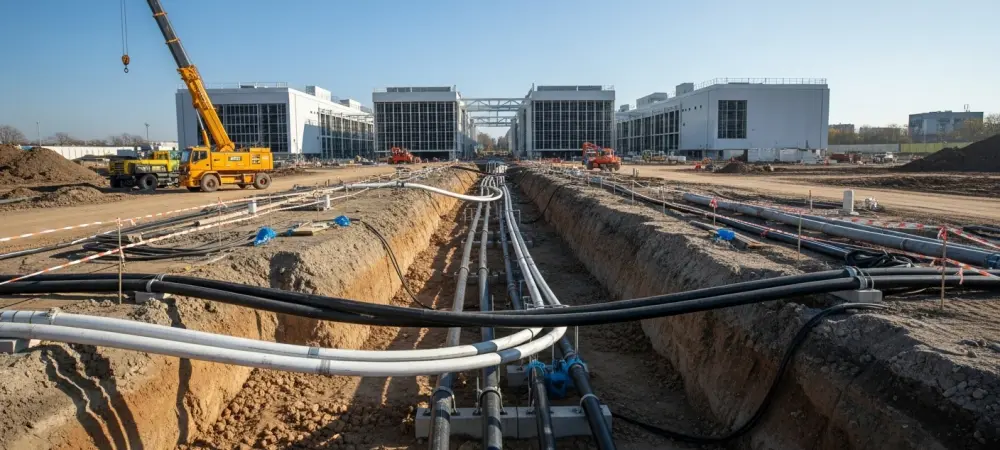
As the rapid proliferation of generative artificial intelligence reshapes the global economic landscape, North Carolina is positioning itself at the forefront of a legislative movement designed to balance technological advancement with the preservation of essential public resources. The proposed Ratepayer and Resource Protection Act represents a fundamental departure from the era of unchecked growth, signaling a shift toward a model where the massive energy and water demands of hyperscale data centers are no longer subsidized by the average citizen. By prioritizing regulatory oversight over aggressive corporate incentives, state lawmakers are attempting to solve a modern “physics problem”—the reality that AI demand is currently outpacing the physical capacity of the electrical grid and water supplies. This pivot is not merely about fiscal responsibility; it is about ensuring that the state’s infrastructure remains resilient and accessible for every resident while forcing tech giants to internalize the true costs of their expansion into the region.
Structural Financial Adjustments for Large-Scale Utilities
Mandatory Infrastructure Funding: The 40-Megawatt Threshold
At the core of this legislative overhaul is the implementation of “Full Cost Pricing” for any data center facility exceeding a peak power demand of 40 megawatts. Historically, large industrial developments have benefited from a shared cost model, where the massive expenses associated with building new power plants, transmission lines, and substations were distributed across the entire utility customer base. The new framework seeks to dismantle this long-standing dynamic by requiring these high-load entities to bear the total marginal cost of the specific infrastructure they necessitate for their operations. This shift ensures that the financial burden of rapid industrial expansion remains with the corporations reaping the rewards of the AI boom, rather than being tucked away into the monthly bills of families and small businesses. By isolating these costs, the state creates a transparent financial barrier that prevents the broader population from unintentionally funding the specialized needs of global tech behemoths seeking speed and power.
Furthermore, this requirement for mandatory infrastructure funding compels data center developers to engage in more rigorous long-term planning before breaking ground on massive server campuses. Instead of relying on the utility provider to absorb the risk of building out capacity, the developer must now provide the capital upfront for every necessary upgrade, from the generation source to the local substation. This change in the financial landscape effectively moves data centers from being “ratepayer-supported” assets to “user-funded” private investments. Industry analysts suggest that this will lead to a more disciplined approach to site selection, as the proximity to existing, robust electrical infrastructure becomes a critical factor in a project’s economic viability. By removing the safety net of public funding, the state is essentially forcing the market to price in the true physical constraints of the power grid, creating a more sustainable relationship between the technology sector and the public utilities that serve the broader community interests.
Ratepayer Safeguards: Preventing Financial Liability and Stranded Assets
To reinforce the financial boundaries established by the act, the legislation introduces a robust “hold harmless” provision designed to insulate residential households and small commercial entities from any negative fiscal impacts. This legal safeguard is specifically crafted to prevent the costs of data center-related grid upgrades from leaking into the general rate base through accounting maneuvers or complex utility filings. If a utility provider incurs costs solely to serve a hyperscale client, those costs must remain isolated from the rates charged to the public, regardless of the eventual success or failure of the data center project. This creates a firewall between corporate experimentation and the essential financial stability of the local population. By codifying these protections, lawmakers are sending a clear signal that the public will no longer serve as an involuntary insurer for the high-stakes, high-energy gambles often associated with the rapid development of artificial intelligence clusters.
Beyond immediate rate protection, the bill also addresses the looming threat of “stranded assets,” which occur when infrastructure is built for a specific client who then abandons the project or scales back operations. In the past, the remaining cost of these underutilized power plants or transmission lines often fell on the remaining ratepayers to settle over several decades. The Ratepayer and Resource Protection Act requires data center operators to provide financial guarantees or bonds that cover the potential loss of value if the facility goes offline or reduces its load significantly. This proactive stance shifts the risk of technological obsolescence from the public back to the private investors who choose to build in North Carolina. By ensuring that the financial fallout of a failed or downsized project does not become a multi-generational liability for taxpayers, the state is establishing a new standard of corporate accountability that values community stability over the fleeting promises of rapid industrial growth.
Resource Self-Sufficiency and Environmental Standards
Clean Energy Mandates: The Shift to On-Site Generation
One of the most ambitious and potentially disruptive components of the proposed legislation is the mandate for large-scale data centers to achieve a significant degree of energy self-sufficiency. The act requires these facilities to install and operate on-site clean power generation capable of meeting at least 25% of their projected peak demand before they are allowed to begin full operations. This is a radical departure from the current trend of purchasing virtual power purchase agreements or renewable energy credits, which often allow companies to claim carbon neutrality on paper without actually adding new, local generation to the grid. By banning these accounting-based offsets as a means of compliance, North Carolina is forcing tech giants to invest in physical hardware—such as on-site solar arrays, battery storage systems, or advanced modular reactors—that contributes directly to the stability and greening of the local energy ecosystem rather than relying on distant wind farms.
This shift toward “behind-the-meter” strategies presents a formidable engineering and permitting challenge for even the most well-funded technology corporations. While some industry leaders like Microsoft and Amazon have already begun experimenting with dedicated power sources to bypass grid bottlenecks, making this a legal requirement transforms a competitive advantage into a baseline cost of doing business. For a multi-hundred-megawatt campus, generating 25% of the load on-site requires a massive physical footprint and complex integration with the local distribution network. Critics from the tech industry argue that such mandates could slow down the deployment of critical AI infrastructure, but supporters of the bill maintain that this friction is necessary to prevent the total exhaustion of the state’s available power supply. By requiring companies to bring their own energy to the table, the state is effectively managing the “speed to power” race, ensuring that industrial growth does not outpace the physical reality of what the environment can sustain.
Water Resource Management: Moving Toward Closed-Loop Systems
As the heat generated by modern high-density AI servers continues to rise, the demand for water-intensive cooling technologies has become a major point of contention for local communities. The Ratepayer and Resource Protection Act addresses this by introducing strict new standards for water consumption, specifically mandating the use of closed-loop or reclaimed water systems for all new data center developments. This move is designed to phase out traditional evaporative cooling methods, which can consume millions of gallons of fresh water daily to manage the thermal loads of a single facility. By requiring these systems to recycle their cooling water or utilize non-potable sources, the legislation aims to protect the state’s aquifers and municipal water supplies from being drained by industrial users. This push for efficiency reflects a broader realization that water is a finite resource that must be shared between agriculture, residential needs, and the burgeoning technology sector.
In addition to the technical requirements for cooling systems, the bill also establishes a new level of environmental transparency that is currently unprecedented in the industry. Data center operators would be legally required to publicly disclose their actual water usage, along with specific cooling efficiency metrics, in detailed annual reports submitted to state regulators. This data-driven approach allows local officials and the public to hold corporations accountable for their environmental footprint, moving beyond vague sustainability marketing toward verifiable performance benchmarks. If a facility fails to meet the state-mandated efficiency targets, it could face significant fines or restrictions on its operations until improvements are made. This focus on transparency and rigorous management ensures that the state remains a viable home for technology without sacrificing the long-term health of its natural ecosystems. It forces the industry to innovate in cooling technology, potentially making North Carolina a leader in sustainable data center design and operation.
Realigning Economic Incentives and Regional Planning
Eliminating Subsidies: Ending the Incentive Era for High-Load Facilities
For decades, the standard playbook for economic development in the Southeast involved offering deep tax abatements and infrastructure subsidies to lure major technology firms to the region. However, the Ratepayer and Resource Protection Act marks a decisive end to this era by making hyperscale data centers ineligible for any state or local incentives that are funded directly or indirectly by ratepayers. This policy shift is rooted in the observation that while data centers represent massive capital investments, they typically create very few permanent, high-paying jobs relative to their physical size and resource consumption. Lawmakers are increasingly questioning the return on investment for the public when a billion-dollar facility employs only a few dozen technicians but consumes enough electricity to power a medium-sized city. By removing these subsidies, the state is signaling that it no longer feels the need to “buy” the presence of these corporations at the expense of its own citizens.
This removal of financial sweeteners forces a fundamental recalculation of the economic landscape for the “Big Tech” firms that have traditionally expected preferential treatment. Without the cushion of ratepayer-funded infrastructure or property tax breaks, the decision to build in North Carolina becomes a matter of pure operational necessity and resource availability. This approach naturally leads to a more balanced economic environment where other industries—such as manufacturing or biosciences—that provide higher employment density can compete more effectively for land and resources. The act essentially treats data centers as essential infrastructure rather than traditional job-creating industrial plants, placing them in a category where they must “pay their own way” like any other utility-heavy commercial venture. This shift reflects a growing national sentiment that the prestige of hosting a global tech brand is no longer worth the strain it places on the financial and physical health of the host community.
Addressing Local Infrastructure Limits: The Rise of Moratoriums and National Trends
The legislative energy at the state level is being bolstered by a wave of resistance from local municipalities that are seeing the direct impact of rapid data center expansion on their own backyards. In cities like Durham, officials have already moved to implement temporary moratoriums on new developments, providing a necessary “cooling-off period” to assess the long-term consequences of these projects on local zoning, water availability, and grid reliability. These local freezes are not necessarily intended to ban technology altogether but rather to ensure that the infrastructure can actually handle the influx of massive server clusters without degrading the quality of life for current residents. This localized pushback highlights the tension between the global race for AI supremacy and the very real physical limits of the towns and cities that host the underlying hardware. The state bill provides a much-needed framework that supports these local efforts by creating a consistent set of rules for the entire region.
North Carolina’s regulatory pivot is also part of a broader national trend as other states begin to grapple with the same resource-intensive reality of the AI buildout. For example, similar shifts have been seen in Wisconsin, where regulators recently overhauled utility tariffs to ensure that large-load customers cover the full cost of the power generation they require. As infrastructure limits are reached in traditional hubs like Northern Virginia, the ability for companies to find “easy” capacity is rapidly disappearing, making states with strict but predictable regulatory environments more attractive in the long run. By setting clear expectations for cost-sharing and resource management now, North Carolina is positioning itself as a leader in sustainable industrial planning. This movement indicates that the primary bottleneck for the technology industry has shifted from a lack of compute supply to a lack of power and water capacity, forcing a new era of cooperation and transparency between the private sector and public regulators.
Future Perspectives on Sustainable AI Infrastructure
The legislative transition toward a sustainable infrastructure model in North Carolina has established a significant precedent for how states manage the expansion of the high-tech sector. By moving away from a strategy of aggressive corporate subsidies and toward a framework of cost internalizing, lawmakers successfully balanced the necessity of technological progress with the protection of public resources. The enactment of the Ratepayer and Resource Protection Act provided a clear roadmap for other regions facing similar pressures from the AI boom. It was clear that the “pay-as-you-go” model did not halt development, but rather ensured that only the most efficient and financially stable projects moved forward. This approach fostered a new environment where the burden of industrial growth was carried by those directly profiting from it, ultimately securing a more resilient and equitable utility system for the general population.
Moving forward, stakeholders in both the public and private sectors must prioritize long-term resource planning over short-term economic gains to maintain this balance. Future considerations should include the expansion of grid-edge technologies and more aggressive investments in local, decentralized power generation to meet the ongoing demands of the digital economy. Public utility commissions should adopt more transparent reporting standards to track the cumulative impact of large-scale industrial loads on regional water and energy supplies. For corporations, the focus must remain on engineering innovation that reduces the physical footprint of data centers, particularly in the areas of liquid cooling and high-efficiency power distribution. By continuing to refine these regulatory and technical standards, the state can ensure that the technological infrastructure of tomorrow does not come at the expense of the communities and natural resources of today.