

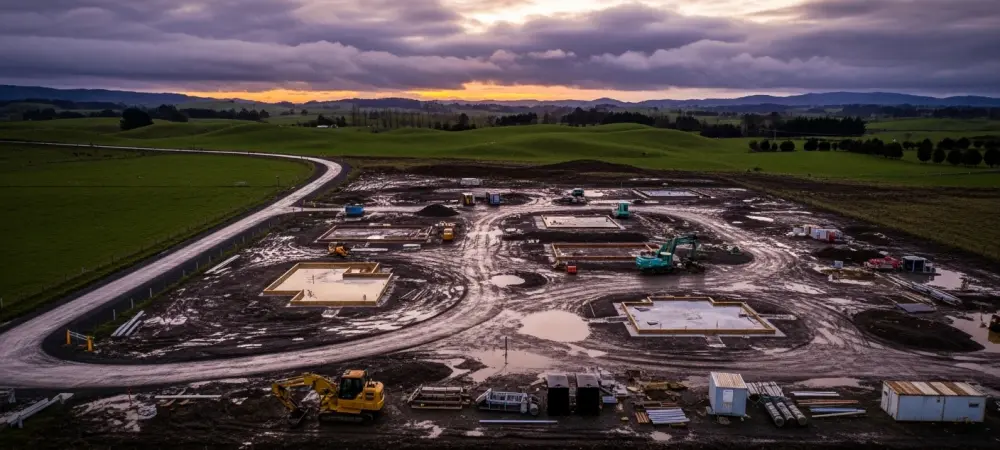
The sight of idle construction equipment and silent concrete pads at Westgate serves as a stark reminder that even global tech titans must sometimes abandon massive infrastructure projects when economic tides shift unexpectedly. For Amazon Web Services in New Zealand, this reality manifested as a $26 million financial hit recently disclosed in local filings. This impairment charge flipped the company’s regional financial narrative from a steady profit to a significant pre-tax loss, signaling a major strategic pivot.
The High Price of a Sudden Change in Direction
Can a company with over NZ$650 million in local assets still feel the sting of a $26 million hit? For Amazon Web Services, the answer is a definitive yes, as the tech giant recently revealed a NZ$45 million impairment charge. This unexpected fiscal setback marks a dramatic departure from the company’s original blueprint for proprietary infrastructure in the region. The financial blow reflected a calculated decision to step away from large-scale physical builds. By prioritizing fiscal agility over heavy asset ownership, the company accepted immediate losses to safeguard long-term flexibility. This shift demonstrated that even the most ambitious capital expenditure plans are subject to the reality of fluctuating regional market conditions and rising construction costs.
From Greenfield Ambitions to a Leaner Operational Reality
To understand the current landscape, one must look back to the ambitious NZ$7.5 billion investment strategy AWS unveiled years ago. Originally, the plan centered on constructing massive, self-managed greenfield data centers to anchor its local presence. However, as global economic conditions and infrastructure trends evolved, AWS halted construction, signaling a pivot toward a more agile, asset-light model that mirrors broader shifts in the international tech industry.
This strategic move allowed the company to bypass the lengthy timelines and regulatory hurdles associated with building from scratch. Instead of managing heavy civil engineering projects, the focus shifted toward deploying proprietary hardware within existing specialized environments. This transition ensured that the company remained responsive to the rapid pace of digital transformation without being anchored by half-finished concrete structures.
Devaluing Land and Redefining the Auckland Cloud Region
The financial fallout of this cancellation was most visible in the devaluation of land holdings, which were written down to a recoverable value of NZ$62.7 million. Despite abandoning its own construction projects, the company successfully launched its New Zealand cloud region in late 2025. By utilizing three availability zones housed within leased third-party facilities, it achieved operational status without the overhead of physical site management.
This redirection enabled AWS to meet the soaring demand for AI and cloud services immediately. Utilizing established infrastructure meant that local businesses could access advanced computing power months sooner than if they had waited for proprietary sites to be completed. The focus remained on the quality of the digital environment rather than the ownership of the exterior walls.
Quantifying the Financial Reversal and Competitive Landscape
Financial filings highlighted a sharp reversal in fortune, with Amazon Data Services New Zealand reporting a pre-tax loss of NZ$36 million, contrasting sharply with its previous profitable standing. While these losses were substantial, they occurred within a highly competitive local market. Providers like CDC Data Centres, Datacom, and OVHcloud were also aggressively expanding their footprints during the same period.
Even with this impairment charge, AWS remained a dominant force by leveraging its massive asset base. The company effectively shifted the risk of physical development to specialized infrastructure partners, allowing it to concentrate resources on software and service innovation. This competitive positioning ensured that despite the accounting loss, its market influence continued to grow through high-performance service delivery.
Strategies for Agile Growth in Maturing Digital Markets
The AWS experience in New Zealand provided a framework for how large-scale enterprises navigated the complexities of regional infrastructure. By moving toward a model of leasing space and deploying hardware within established centers, the company accelerated its time-to-market. This partnership-based growth strategy ensured that the focus remained on delivering high-performance digital services rather than managing the intricacies of local real estate. Ultimately, the decision to pivot preserved the company’s ability to innovate within the AI sector. The move toward a leaner operational model allowed for faster scaling as digital demands evolved. By decoupling service delivery from physical construction, the organization set a precedent for future regional expansions, prioritizing speed and flexibility over traditional asset accumulation.