

Setting the Stage: The Dawn of the AI-First Infrastructure Era
The relentless surge of artificial intelligence has fundamentally altered the global digital architecture, transforming once-static data warehouses into dynamic, power-intensive engines of human progress. As of mid-2026, artificial intelligence is no longer merely an experimental branch of software development but has solidified its position as the primary catalyst for data center expansion. The shift from traditional cloud storage, which primarily focused on data retention and retrieval, to high-density compute environments reflects a monumental change in how technological systems operate. This transition is critical for global economic stability, as the ability to process massive datasets in real time now dictates the competitive advantage of entire nations. Modern infrastructure must now accommodate the massive computational appetite of generative models and autonomous systems, which require vastly more resources than the legacy digital applications of the past decade. This evolution is significant because it marks the departure from a centralized, software-defined world toward a hardware-intensive reality where physical constraints like power and heat are the new bottlenecks. The global digital backbone is being rewritten to prioritize processing power over simple connectivity, forcing a reconsideration of how infrastructure interacts with the physical world.
This new era is defined by three converging forces: energy sovereignty, shifting regulatory frameworks, and geographic decentralization. As traditional data hubs reach their physical limits, the industry is witnessing a migration toward regions that can offer stable power and supportive governance. The following exploration details how the rise of high-density compute is not just a technical upgrade but a geopolitical and social transformation that is redefining the foundation of the modern economy.
The Architectural and Geopolitical Evolution of Modern Compute Hubs
Engineering for Intensity: The Transition to High-Density Power and Cooling
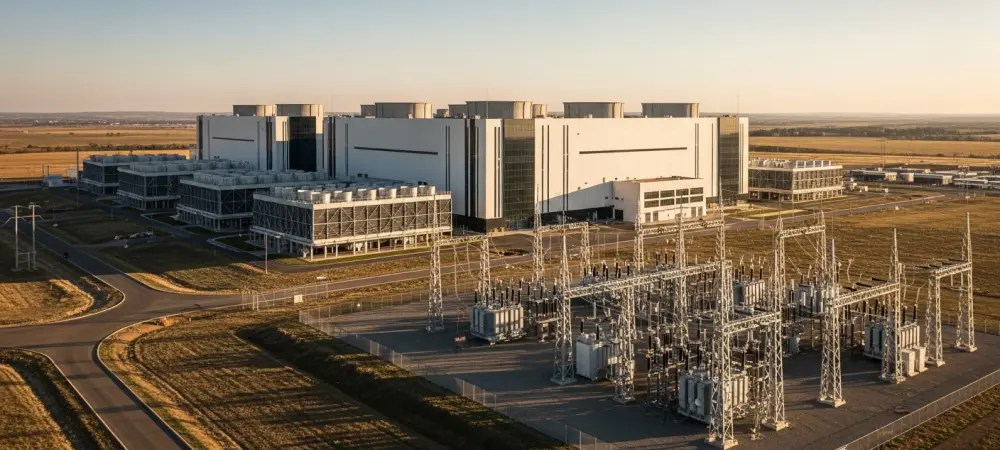
The move toward high-density racks and advanced cooling systems has become a critical response to the intense heat and power requirements of modern AI training. Traditional air-cooling methods, which served the industry for decades, are increasingly viewed as insufficient for the concentrated thermal output of the latest processing hardware. In response, massive projects have emerged to push the boundaries of engineering, such as the 540 MW campus in Hale County, Texas. This project illustrates the scale required to sustain the next generation of digital services, moving away from fragmented smaller sites toward massive, integrated power complexes.
One of the most significant shifts involves the adoption of liquid cooling technologies, which are becoming a necessity to handle hardware like the Nvidia Vera Rubin-class chips. These advanced components generate heat levels that would melt standard server configurations without direct-to-chip or immersion cooling solutions. Industry leaders are currently engaged in a rigorous debate regarding the viability of maintaining legacy air-cooled facilities versus the high capital expenditure required for liquid-cooled infrastructure. While the initial investment for liquid cooling is substantial, the long-term efficiency gains and the ability to pack more compute power into a smaller footprint are proving to be decisive factors for hyperscale operators.
The engineering challenge extends beyond the server rack and into the very design of the building. Modern facilities must be constructed to support the immense weight of liquid-cooling loops and the electrical infrastructure capable of delivering hundreds of kilowatts to a single rack. This architectural pivot signifies a move away from the “one-size-fits-all” approach to data center design. Operators are now forced to choose between retrofitting existing structures at great cost or building bespoke, liquid-ready environments from the ground up to ensure they remain relevant in a compute-hungry market.
Pursuing Energy Sovereignty Through On-Site Generation and Microgrids
As aging electrical grids struggle to keep pace with the exponential growth of AI, there is a visible shift toward “behind-the-meter” energy solutions. These localized power systems allow data centers to operate independently of the public utility grid, reducing the risk of outages and bypassing the long queues for grid connection. Fuel-cell microgrids and proximity to nuclear power are becoming the preferred methods for securing energy sovereignty. For instance, the fuel-cell-powered campus in New Mexico spearheaded by Oracle demonstrates how operators are taking direct control of their power supply to ensure uninterrupted service for high-density AI workloads.
Other major players are exploring even more radical energy strategies, such as AWS’s pursuit of sites adjacent to nuclear power plants. This strategy provides a constant, carbon-neutral “baseload” of electricity that is immune to the fluctuations of renewable sources like wind or solar. By securing a dedicated power source, these companies can mitigate the risks associated with power-constrained markets where demand often exceeds supply. This trend toward energy independence creates a competitive advantage, as those who can guarantee power availability are the only ones capable of scaling their AI operations in a meaningful way.
The move toward self-generation also reflects a strategic response to the rising costs of traditional utility power. While the initial cost of building a private microgrid is high, it protects the operator from future price hikes and regulatory changes that might prioritize residential power over industrial use. However, the pursuit of energy sovereignty is not without risks, as operators must now manage complex energy portfolios and maintain sophisticated generation equipment that was previously the responsibility of utility companies. This integration of energy production and data processing is a fundamental shift in the identity of the data center industry.
Global Decentralization: Moving Beyond Traditional Hyperscale Hubs
The global map of data processing is undergoing a significant transformation, with “secondary” markets like Wyoming, Malaysia, and Norway emerging as the new centers of gravity. These locations were once considered peripheral, but they are now attracting massive investment because they offer the space and resources that traditional hubs like Northern Virginia and Singapore lack. The rise of these new markets is disrupting the long-held dominance of established tech corridors, as land availability and energy costs become the primary drivers of site selection, often outweighing the historical importance of latency.
Regional advantages are playing a major role in this geographic shift. Norway, for example, offers a naturally cool climate that reduces the energy required for cooling, along with an abundance of renewable energy. In contrast, Malaysia has become a key destination due to the “China Plus One” strategy, where companies seek to diversify their infrastructure away from geopolitical flashpoints while remaining close to Asian markets. These regions are no longer just backup sites; they are being designed as primary compute hubs capable of hosting tens of thousands of advanced AI chips, reflecting a new, more distributed digital topography. The assumption that proximity to major population centers is the only priority for data center placement is being challenged by the reality of AI training. While “inference” tasks—the actual use of AI—may still require low latency, the “training” phase is much less sensitive to delays but highly sensitive to power costs. This distinction allows operators to build massive training facilities in remote locations where energy is cheap and plentiful. As a result, the industry is moving toward a hub-and-spoke model where massive rural campuses handle the heavy lifting of AI development, while smaller urban facilities manage the day-to-day interactions.
The Geopolitical Crossroads: Neutrality and Growth in Emerging Markets
In the current technological landscape, Brazil and Southeast Asia have emerged as vital neutral territories that attract investment from both Western and Eastern tech giants. These regions offer a unique geopolitical buffer, allowing them to host infrastructure for global competitors without becoming entangled in trade disputes. Brazil, in particular, has leveraged its massive renewable energy projects to position itself as a sustainable destination for AI-focused capital. Regional players like Scala and Elea are successfully competing with global hyperscale giants by utilizing local resources and understanding the nuances of the regional regulatory environment.
The success of these emerging markets depends not only on physical infrastructure but also on the development of a skilled workforce. A comparative analysis of Brazil’s growth shows a concerted effort to close the “talent gap” through training initiatives launched in mid-2026 by industry foundations and local tech firms. These programs are designed to create a pipeline of engineers and technicians capable of managing the complex, high-density environments required for AI. This focus on human capital is essential for sustaining long-term growth and ensuring that the local economy benefits from the presence of multi-billion-dollar data centers.
Expert perspectives suggest that the ability of a region to offer a stable, neutral environment is becoming as valuable as its physical infrastructure. In Southeast Asia, countries that can navigate the interests of various global powers while providing reliable utility access are seeing the fastest growth. By positioning themselves as “safe harbors” for data, these nations are securing a central role in the global AI economy. The rise of regional powerhouses illustrates that the future of data centers is no longer a monopoly held by a few select nations, but a truly globalized industry where local resources and strategic neutrality are the keys to success.
Navigating the New Social Contract: Strategic Takeaways for Industry Leaders
A significant trend that has solidified is the emergence of a new “social contract” between data center developers and the communities that host them. Governments and regulators are increasingly requiring that massive projects provide more than just tax revenue; they must now fund the very infrastructure they consume. In many jurisdictions, developers were tasked with financing local electrical grid upgrades and water management systems to gain project approval. This shift ensured that the burden of rapid expansion did not fall on local residents, effectively making the data center a partner in municipal development rather than a drain on resources. For operators to thrive in this environment, a move toward transparent sustainability reporting became a non-negotiable requirement. Recommendations for industry leaders included the adoption of granular data tracking for every kilowatt of energy and liter of water used. Beyond environmental metrics, investing in localized workforce development was identified as a primary method for mitigating regulatory friction. By creating high-skilled jobs and training programs, operators transformed their facilities into community assets, which helped secure the long-term “social license to operate” in regions that were previously skeptical of large-scale industrial growth.
Stakeholders also realized the importance of proactive grid management to maintain fiscal responsibility. Instead of waiting for public utilities to expand capacity, successful operators took the initiative to build their own substations or invest in shared energy storage projects. This proactive approach helped to avoid the delays that plagued the industry in previous years. Applying these insights allowed firms to navigate a complex regulatory landscape while ensuring that their expansion remained both profitable and politically viable in an increasingly scrutinized global market.
Future-Proofing the Digital Backbone of a Post-AI World
The digital backbone was no longer viewed as a collection of isolated hardware installations but as a sophisticated integration of energy systems, social frameworks, and advanced compute. The transformation of the data center industry reflected a maturation process where the sheer demand for AI processing power forced a complete redesign of the facility’s role in society. As the industry evolved, the focus shifted from simple capacity expansion toward a holistic model of sustainable development. This shift was necessitated by the realization that the physical constraints of the planet would always dictate the limits of digital growth.
Regulatory compliance and energy innovation remained at the forefront of the industry’s priorities. Operators that anticipated the need for carbon-neutral power and localized infrastructure investment found themselves in a much stronger position than those who resisted the change. The maturity of the industry under the weight of AI demand proved that success was not just about the number of chips in a rack, but about the stability of the entire ecosystem surrounding those chips. This period of intense growth demonstrated that the data center is the modern world’s most critical utility, requiring the same level of oversight and care as water or electricity.
The redesign of these facilities served as the foundation for the next century of human innovation, moving beyond the limitations of the early internet era. These new compute hubs became the engines of scientific discovery, economic modeling, and social coordination. By integrating deeply with local energy grids and prioritizing social responsibility, the data center industry established a new standard for how technology should interact with the world. The lessons learned during this era of AI expansion provided a roadmap for building a digital future that is both powerful and resilient, ensuring that the infrastructure of tomorrow is capable of supporting the limitless potential of human ingenuity.