

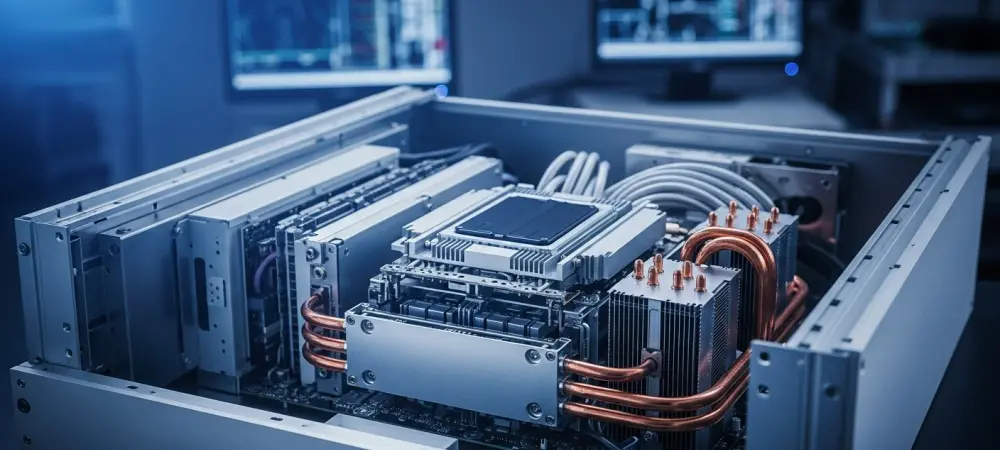
The relentless push for sophisticated edge intelligence has forced a dramatic shift in how silicon manufacturers approach the architectural design of hardware destined for the most unforgiving environments on Earth. As industrial computing transitions from simple embedded controllers to high-performance edge nodes, the reliance on specialized silicon has become a cornerstone for success in military, aerospace, and advanced automation sectors. These industries no longer settle for repurposed consumer chips that fail under thermal stress.
The Current Landscape of Ruggedized Hardware and Embedded Systems
Modern industrial ecosystems demand a delicate balance between raw processing power and extreme durability. Major industry players recognize that the ruggedized designation acts as a critical filter, separating mission-critical hardware from standard electronics. This distinction ensures that equipment operating in extreme temperatures or high-vibration zones maintains operational integrity without the risk of catastrophic failure.
Furthermore, the increasing complexity of field operations has necessitated the use of hardware that can survive where humans often cannot. From deep-sea sensors to high-altitude defense systems, the demand for high-performance silicon that remains stable in unconditioned spaces is at an all-time high. This evolution highlights a transition toward a future where durability is as vital as the clock speed of the processor itself.
Decoding the Evolution of High-Performance Industrial Silicon
Emerging Trends in Edge Intelligence and Specialized Core Architectures
The emergence of Panther Lake R signals a departure from mainstream mobile chip configurations by prioritizing structural stability over sheer multitasking volume. Unlike consumer versions, this variant utilizes a synthesis of Cougar Cove performance cores and Darkmont low-power efficiency cores. By removing standard efficiency cores, Intel aims to achieve superior thermal stability in sealed, fanless environments where heat dissipation is a constant battle.
The technical divergence is further solidified by the inclusion of Model ID 223 within the Linux kernel. This unique identifier allows for specialized power-delivery protocols that are not present in standard silicon. Such granular control ensures that the processor behaves predictably even when external conditions fluctuate wildly, providing a layer of reliability that is essential for autonomous field operations.
Analyzing Market Growth Projections for the Rugged Computing Sector
Current forecasts indicate a robust expansion for the rugged tablet and industrial PC market through 2030, driven largely by the proliferation of AI-at-the-edge. As factory automation and energy sectors modernize, the adoption of next-generation architectures like Panther Lake R is expected to accelerate. Manufacturers are increasingly seeking hardware that can handle complex data analytics locally rather than relying on distant cloud servers. This shift toward localized processing power reduces latency and enhances security for critical infrastructure. As global investment in smart manufacturing grows, the demand for specialized silicon that can withstand the dust of a factory floor or the moisture of an offshore oil rig will continue to rise. This trend positions ruggedized chipsets as the backbone of the next industrial revolution.
Navigating the Technical Hurdles of Deployment in Harsh Environments
Designing for harsh environments requires overcoming the persistent threat of thermal throttling in chassis designs that lack active cooling. Maintaining long-term software support for niche hardware variants also poses a significant challenge for developers. Ensuring that Linux kernel stability remains consistent over decades-long industrial lifecycles is a priority that complicates the deployment of rapid architectural iterations.
Moreover, the supply chain for industrial-grade silicon must remain resilient against global disruptions to ensure the longevity of defense and infrastructure projects. Balancing high-frequency performance with the power constraints of battery-operated field equipment requires a level of engineering precision that consumer devices rarely demand. Every watt must be accounted for to prevent overheating in sealed enclosures.
Regulatory Compliance and Software Standards for Next-Generation Rugged Chips
Strict adherence to MIL-STD-810H and specific IP ratings often dictates silicon-level design choices before a single chip is manufactured. Specialized kernel handling for Model ID 223 assists in meeting these regulatory safety benchmarks by enforcing strict hardware-level encryption and thermal management rules. These standards ensure that data remains secure and hardware remains functional during volatile field deployments in combat or rescue zones.
Occupational safety and hardware reliability benchmarks also drive the implementation of standardized thermal management. By embedding these protections at the silicon level, manufacturers can guarantee that devices will not fail or become a safety hazard in extreme heat. This integration of regulatory compliance directly into the processor architecture streamlines the certification process for end-user equipment.
The Future Roadmap for Panther Lake R and Industrial Innovation
The introduction of Panther Lake R suggests that specialized R variants could eventually become a standard offering across all major microarchitecture portfolios. Future iterations will likely integrate dedicated AI accelerators to enhance real-time analytics in remote locations. This evolution will further erode the traditional trade-offs between high-frequency performance and environmental resilience, allowing for smarter infrastructure globally.
Anticipated global economic shifts will likely influence the manufacturing sites and deployment strategies for these specialized chips. As nations prioritize domestic silicon production for security reasons, the ruggedized sector may lead the way in adopting new fabrication techniques. This trajectory ensures that the industrial edge remains at the forefront of technological innovation and sovereign capability.
Synthesizing the Impact of Panther Lake R on the Global Rugged Sector
The strategic pivot toward specialized core layouts effectively redefined efficiency for non-consumer applications, proving that architectural focus often outweighs raw core counts. Intel’s maneuver to dominate the industrial edge suggested a long-term commitment to high-stakes computing environments. Stakeholders who transitioned to these next-generation ruggedized architectures found themselves better prepared for the convergence of high-performance processing and extreme environmental resilience. The focus shifted toward creating modular systems that allowed for easier upgrades within existing hardened chassis. This approach ensured that the global rugged sector maintained its technological edge while adhering to the rigorous safety and durability standards required for modern industrial operations.