

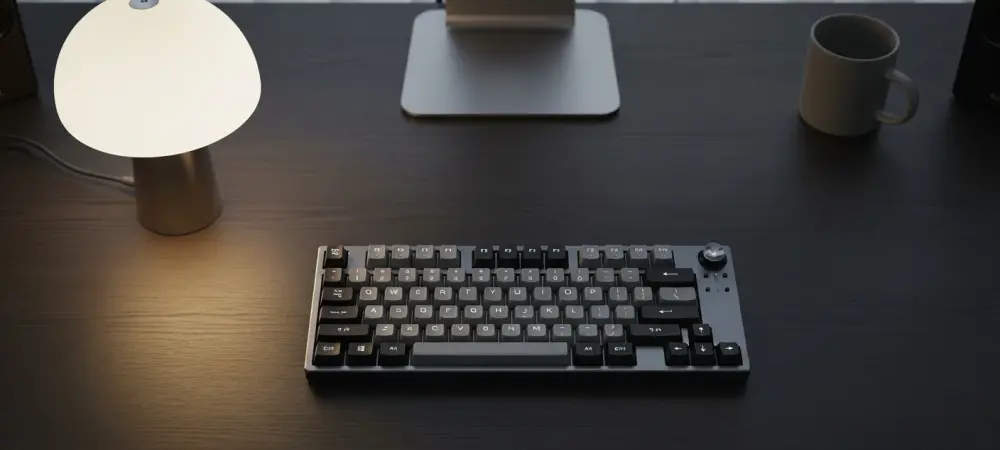
The quest for the perfect typing experience has long forced enthusiasts to choose between the towering, resonant depth of traditional mechanical keyboards and the flat, often lifeless utility of modern laptop interfaces. For many years, the industry operated under the assumption that tactile satisfaction required physical bulk, leaving those who desired a minimalist aesthetic with subpar alternatives. However, a significant shift has occurred within the hardware landscape, leading to the emergence of low-profile mechanical designs that refuse to compromise on build quality or sensory feedback. The Iquinix Magi75 stands at the forefront of this movement, offering a meticulously engineered solution for professionals and hobbyists who have previously found the transition to slim layouts jarring or unsatisfying. By integrating a 75% form factor with high-end materials, this device bridges the gap between the nostalgic resonance of full-sized boards and the streamlined efficiency demanded by contemporary desk setups.
Premium Construction and Innovative Engineering
Structural Integrity and Material Excellence
The most immediate distinction of this hardware is its unyielding physical presence, achieved through the use of a CNC-machined aluminum chassis that sets it apart from the plastic-heavy designs typical of the low-profile segment. Most manufacturers prioritize weight reduction in slim keyboards, often resulting in a hollow or flimsy feel that detracts from the premium experience. In contrast, the Magi75 maintains a substantial weight of approximately 950 grams, providing a sense of permanence and stability on the desk. This density is essential for preventing the keyboard from shifting during high-speed typing or intense gaming sessions, where minor movements can lead to frustrating input errors. The use of aluminum also ensures that the frame is entirely resistant to flexing, a common flaw in thinner peripherals. This structural rigidity serves as the foundation for every other performance metric, ensuring that the energy of each keystroke is directed into the switch rather than being dissipated through a vibrating case.
Furthermore, the aesthetic treatment of the aluminum shell demonstrates a commitment to long-term durability and visual appeal through the application of advanced anodization and E-coating techniques. These finishes do more than just provide color; they create a resilient surface that is significantly more resistant to scratches, scuffs, and the general wear and tear associated with daily use. Whether the user selects a classic metallic finish or a more vibrant coated option, the surface retains a premium texture that is pleasant to the touch and easy to maintain. This focus on material excellence extends to the internal mounting points, where precision-drilled threads and reinforced supports ensure that the assembly remains tight and rattle-free over years of service. By refusing to cut corners on the exterior shell, the design effectively elevates the low-profile keyboard from a mere travel accessory to a centerpiece of a sophisticated professional workspace, proving that slim dimensions do not have to equate to a compromise in industrial design or material quality.
The Proprietary Le-Tray Internal Architecture
Beyond the impressive exterior, the internal engineering of the Magi75 utilizes a specialized “Le-Tray” mounting system that represents a major departure from the standard tray-mount configurations found in most mass-produced keyboards. Conventional low-profile boards often suffer from a harsh, jarring “bottom-out” sensation because the switches are mounted directly against a rigid plate with little to no vibration dampening. To solve this, the Le-Tray architecture integrates a series of PCB support arms equipped with high-quality silicone rings that act as a suspension system for the entire internal assembly. This allows for a minute amount of vertical movement when a key is pressed, effectively absorbing the shock of the impact before it reaches the user’s fingertips. This cushioned response is particularly beneficial for those who spend eight or more hours a day typing, as it significantly reduces the cumulative strain on the joints and tendons of the hands, making the experience feel much softer and more refined than traditional alternatives.
The acoustic signature of the device is further refined through the inclusion of multiple layers of specialized sound-dampening foam and internal insulation, which work in tandem with the Le-Tray structure to eliminate unwanted noise. In the world of mechanical keyboards, “hollow” or “pingy” sounds are often viewed as indicators of poor construction, and these issues are frequently magnified in thin-profile designs. By filling the internal voids with dense, vibration-absorbing materials, the Magi75 produces a muted, sophisticated sound profile that is ideal for open-office environments or shared living spaces. Instead of the loud, clacking noise associated with older mechanical models, this board provides a subtle, rhythmic feedback that confirms an input has been registered without distracting those nearby. This attention to auditory detail ensures that the keyboard is as pleasing to the ears as it is to the eyes, reinforcing its position as a high-end tool designed for users who appreciate the nuances of a well-tuned mechanical instrument.
Superior Typing Dynamics and Versatility
High-Performance Switches and Keycap Quality
The primary interaction point for any keyboard is the switch and keycap combination, and the Magi75 utilizes the Kailh Gold Red low-profile switches to deliver a fast and responsive typing experience. These switches are specifically engineered for speed, featuring a light actuation force of 40 gf and a reduced travel distance compared to standard MX-style switches. This configuration allows the fingers to glide across the surface with minimal effort, facilitating a rapid-fire typing style that is both efficient and satisfying. For users transitioning from a laptop keyboard, the learning curve is remarkably short because the tactile feedback remains consistent while the physical effort required to actuate the keys is significantly lower than that of a traditional full-travel mechanical board. The result is a highly fluid dynamic that favors both the high-speed input requirements of competitive gaming and the sustained throughput necessary for heavy coding or writing tasks, ensuring that the hardware never acts as a bottleneck for the user’s productivity.
To match the performance of the switches, the keycaps are manufactured from double-shot PBT plastic, a material widely recognized for its superior longevity and resistance to environmental degradation. Unlike the cheaper ABS plastic keycaps found on many consumer-grade boards, PBT does not develop the unsightly “shine” caused by the absorption of finger oils over time. Each keycap is also treated with an anti-oil coating that further enhances its resistance to staining and maintains the crisp, matte texture that enthusiasts crave. The double-shot molding process ensures that the legends on the keys are physically part of the structure rather than being printed on the surface, meaning they will never fade or wear away even after millions of keystrokes. This commitment to component quality ensures that the keyboard maintains its factory-fresh appearance and tactile consistency for the duration of its lifespan, providing a reliable interface that feels as good on its thousandth day of use as it did on its first, which is a critical consideration for any long-term hardware investment.
Advanced Tri-Mode Connectivity Features
Modern workflows often span multiple operating systems and hardware platforms, and the Magi75 addresses this reality through its robust tri-mode connectivity suite. Users can effortlessly switch between a wired USB-C connection for the lowest possible latency, a 2.4 GHz wireless link for a cable-free desktop experience, and Bluetooth 5.1 for maximum compatibility with mobile devices. The Bluetooth implementation is particularly sophisticated, allowing the keyboard to remain paired with up to three different devices simultaneously, such as a desktop PC, a tablet, and a smartphone. Switching between these devices is handled through simple firmware shortcuts, making it possible to respond to a text message on a phone and then immediately return to writing a document on a laptop without the need for manual re-pairing or hardware toggles. This level of versatility makes the keyboard an indispensable hub for power users who need to manage a complex ecosystem of digital tools with a single, high-quality input device.
Supporting these wireless capabilities is a generous 4000mAh lithium-ion battery, which provides ample power for extended periods of use without the need for frequent recharging. In an era where many wireless peripherals struggle to last more than a few days on a single charge, the Magi75 stands out by offering weeks of operation under normal conditions, especially when the RGB lighting is managed efficiently. The device also features an intelligent power-saving mode that puts the hardware to sleep during periods of inactivity, coupled with a rapid wake-up function that ensures no initial keystrokes are lost when the user resumes typing. This seamless transition between power-saving and active states is crucial for maintaining a frustration-free experience in wireless mode. Furthermore, the inclusion of a high-quality braided USB-C cable ensures that when it is time to recharge, the connection is stable and the physical aesthetic remains consistent with the premium nature of the rest of the package, reinforcing the idea that this is a complete, well-thought-out solution for the modern professional.
Customization and User Considerations
Enthusiast-Grade Customization and Software
One of the most impressive aspects of the Magi75 is the inclusion of features that were once exclusive to the niche enthusiast market, such as hot-swappable switch sockets. This design allows users to pull and replace the mechanical switches without the need for a soldering iron, which is a massive advantage for both maintenance and personalization. While the sockets are limited to compatible low-profile switches, the ability to swap out a malfunctioning component or experiment with different tactile profiles significantly extends the functional life of the keyboard. This modularity empowers the user to tailor the typing experience to their specific preferences, whether they desire a clickier response or a more linear feel. By making the core components user-replaceable, the manufacturer has moved away from the “disposable electronics” model, instead providing a platform that can evolve and be repaired over time, which is a major selling point for those who value sustainable and long-lasting technology.
In addition to hardware modularity, the keyboard offers deep software customization through compatibility with the VIA application, a powerful tool for remapping keys and creating complex macros. Unlike basic proprietary software that often feels bloated or restrictive, VIA allows for near-infinite flexibility by enabling users to upload JSON configuration files and modify every layer of the keyboard’s functionality. This is particularly useful for programmers, designers, and gamers who need specific shortcuts or specialized layouts to optimize their professional workflows. For instance, a user could remap the navigation cluster to control media playback or trigger intricate automation scripts with a single press. While the 16-million-color RGB lighting system does not currently support per-key customization through the hardware shortcuts, the pre-set dynamic effects provide a clean, modern aesthetic that can be adjusted to match any desk theme. This combination of powerful software backend and user-friendly hardware features ensures that the Magi75 can be precisely tuned to meet the demands of even the most discerning power user.
Portability, Packaging, and Ergonomic Limits
The consideration for the user’s total experience extends to the packaging and accessories, where the traditional cardboard box has been replaced by a high-quality, padded storage pouch designed for travel. This inclusion highlights the keyboard’s role as a tool for the mobile professional who needs a consistent typing experience across different environments, from the home office to a corporate boardroom or a local café. The pouch is large enough to safely house the keyboard, the braided USB-C cable, the 2.4 GHz wireless dongle, and the included keycap and switch puller, ensuring that all necessary components remain organized and protected during transit. For those who frequently commute or travel for work, this dedicated carrying solution adds significant value and reinforces the premium positioning of the product. It reflects a holistic design philosophy where the utility of the device is considered not just when it is in use, but also when it is being moved between locations.
However, the pursuit of a sleek and rigid design does involve certain trade-offs that prospective users should consider, particularly regarding ergonomic adjustability and total weight. The solid aluminum chassis does not feature flip-out feet, meaning the typing angle is fixed at a slight incline that cannot be adjusted to suit individual ergonomic preferences. While the default angle is designed to be comfortable for the majority of users, those who require a steeper slope for their typing style may find the lack of adjustability a minor drawback. Additionally, while the 950-gram weight provides excellent stability, it makes the Magi75 significantly heavier than plastic-bodied travel keyboards. For the minimalist traveler who counts every ounce in their backpack, this heft might be a factor to weigh against the superior typing feel and build quality. These considerations are not necessarily flaws but rather deliberate design choices that prioritize structural integrity and premium feel over extreme portability and adjustability, catering to a specific audience that values durability and tactile excellence above all else.
Final Assessment of Performance and Value
The Iquinix Magi75 successfully navigated the complex challenge of delivering a high-performance mechanical experience within a constrained, low-profile form factor. Throughout the evaluation, the device demonstrated that it was possible to achieve a refined, quiet, and stable typing environment without the bulk of a traditional chassis. By prioritizing a heavy CNC aluminum frame and the innovative Le-Tray mounting system, the engineering team eliminated the common pitfalls of slim keyboards, such as excessive vibration and hollow acoustics. The integration of high-speed Kailh switches and durable PBT keycaps ensured that the tactile response remained sharp and reliable, bridging the gap for those accustomed to full-sized enthusiast boards. Furthermore, the inclusion of tri-mode connectivity and VIA software support provided the versatility and customization options required for modern, multi-device professional workflows.
Looking forward, the success of this design suggested that the market for premium low-profile peripherals was poised for continued expansion, as more users prioritized desk space and ergonomics without sacrificing quality. For those seeking to optimize their workstation, the next logical step involved assessing their specific need for portability versus the desire for a permanent, heavy-duty typing tool. While the fixed typing angle and significant weight might have given pause to some, the overall consensus favored the Magi75 as a top-tier choice for its uncompromising build and sophisticated feel. It stood as a testament to the idea that mechanical keyboards could be both elegant and powerful, offering a durable solution that was built to withstand years of intensive use. For anyone currently operating in a hybrid or professional setting, investing in such a well-engineered interface became a clear path toward improving both daily comfort and long-term productivity.