

With a deep background in AI and machine learning, Dominic Jainy has spent his career at the intersection of intelligent systems and real-world applications. His work provides a unique lens through which to view the next wave of robotics, particularly how sophisticated technologies are being made accessible for everyday use. We sat down with him to discuss Hyundai’s new MobED platform, exploring the engineering that sets it apart, the strategy behind its dual-model release, and its potential to redefine our relationship with autonomous machines in both industrial and personal settings.
The MobED’s “eccentric control mechanism” is a standout feature for handling diverse terrains. Could you break down how this system works and perhaps share a real-world scenario that illustrates its stability advantage over other mobile robots?
The genius of the eccentric control mechanism is that it allows the platform to maintain a perfectly level orientation, regardless of what the individual wheels are doing. Imagine each wheel is on its own robotic arm that can adjust height and angle in real-time. This allows it to step over obstacles or lean into turns while keeping the main body flat. During development showcases, one of the most striking examples was seeing it navigate a steeply angled ramp. While a conventional four-wheeled robot would tilt with the ramp, potentially spilling its payload, MobED’s wheels adjusted independently, and the platform itself glided up at a completely level attitude. This isn’t just for show; it’s critical for sensitive tasks like filming or transporting delicate materials where stability is everything.
You mentioned that MobED is designed with “intuitive autonomy” to be user-friendly for people without technical expertise. Beyond its sensors, what specific features contribute to this ease of use, and could you describe what it would be like for someone to use it as a golf caddy for the first time?
The “intuitive” part comes from a brilliantly simple user interface and incredibly smart predictive software. For a first-time user, deploying it as a golf caddy would be almost effortless. You’d power it on and be greeted by a large, clear touchscreen controller. From there, you’d likely select a “Follow” mode, and the robot would use its Lidar and cameras to lock onto you and maintain a safe distance. To send it ahead to the next hole, you could simply tap a location on the course map displayed on the screen. The robot’s predictive navigation algorithms would then take over, plotting a safe path around sand traps, water hazards, and other players. The human operator just provides the high-level intent, and the AI handles all the complex maneuvering in the background.
With a Basic model for researchers and a Pro model for immediate deployment, what sort of custom applications for the Basic platform are you most eager to see, and what do you predict will be the Pro version’s most impactful “killer app” in the industrial world?
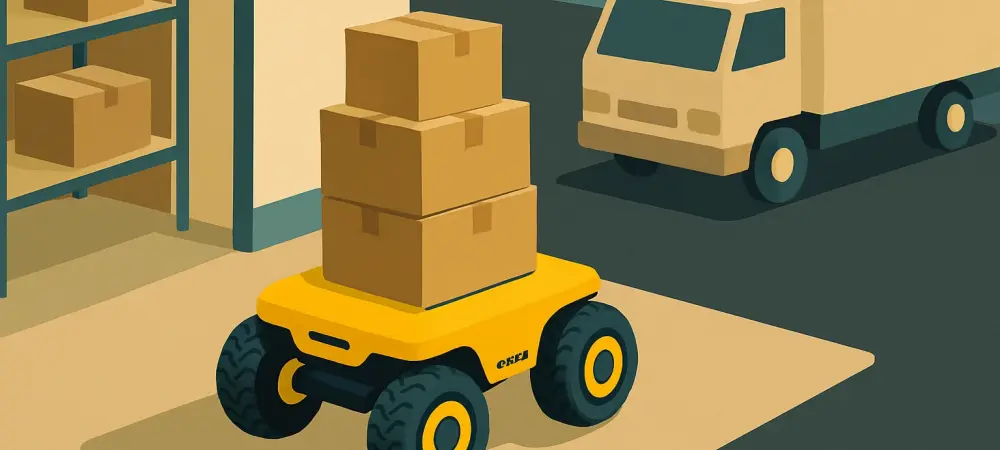
The Basic model is a fantastic sandbox for innovation. I’m particularly excited to see it used in environmental science, where researchers could mount specialized sensors to it for things like soil sampling or air quality monitoring in terrain that’s too difficult or dangerous for humans. For the Pro version, while the consumer applications are flashy, I believe its most impactful “killer app” will be in last-mile logistics and on-site material handling. Its ability to seamlessly move from a warehouse floor to an uneven outdoor path and up a delivery ramp without any special infrastructure is a game-changer. It solves a complex problem for countless businesses, from construction sites to fulfillment centers, making it an incredibly valuable tool for industrial automation.
Hyundai is setting an ambitious goal of selling 10,000 MobED units in its first three years. From your perspective, what kind of market strategy is needed to hit that number, especially when launching the Pro version in 2026?
To achieve that volume, they’ll need a dual-pronged strategy. First, they must aggressively target high-value commercial and industrial sectors where the ROI is clear and immediate. This means creating dedicated sales teams for logistics companies, large-scale agriculture, and even the film industry, showcasing how the Pro version can increase efficiency and safety. At the same time, they need to build consumer desire by highlighting the lifestyle applications seen in their videos, like mountaineering or as a personal caddy. This creates a halo effect, building brand awareness and justifying a premium price point for early adopters and individual consumers, which will be crucial for scaling up production and driving toward that 10,000-unit goal.
The platform clearly evolved from its 2022 concept. What do you imagine was the most significant engineering challenge the team overcame, and how might early feedback have shaped the final modular design with its universal mounting rails?
The greatest engineering hurdle was almost certainly perfecting the balance between the complex eccentric control mechanism and real-world durability. Making that system robust enough to handle heavy loads and unpredictable impacts, all while being power-efficient, is a monumental task. I suspect early feedback from potential partners was pivotal in shaping its final form. They likely heard a recurring theme: “This stability is amazing, but can we attach our own equipment to it?” That’s what would have driven the shift toward a truly modular platform. The inclusion of universal mounting rails and open APIs wasn’t just a feature; it was a fundamental strategic decision, transforming MobED from a single-purpose robot into a versatile tool that others could build upon.
What is your forecast for how platforms like MobED will integrate into our daily lives over the next decade?