

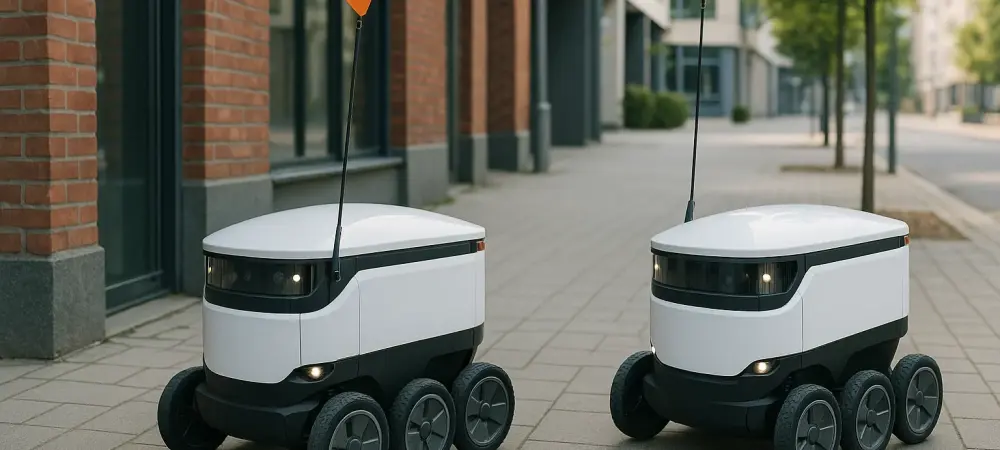
In a world rapidly embracing automation and digitalization, Coco Robotics stands out as a beacon of innovation, pushing boundaries in the delivery sector. With its roots firmly planted in Santa Monica, this company has attracted substantial attention and considerable investment—$80 million—from industry giants and forward-thinking investors. This infusion of capital is driving Coco toward its ambitious target of deploying 10,000 AI-powered delivery robots by 2026, potentially setting a new standard in the realm of autonomous deliveries. As Coco ventures into expansion, a critical question surfaces: can they indeed lead the AI-driven delivery revolution? The evolving landscape of delivery services beckons scrutiny as companies compete to deliver smarter, faster, and more sustainably.
Expansion and Technological Advancements
Achieving Ambitious Fleet Goals
Coco Robotics’ pursuit of scaling its fleet to 10,000 AI-powered robots by 2026 marks a significant milestone, reflecting its commitment to transforming urban logistics. The substantial funding has paved the way for this ambitious expansion, underscoring Coco’s resolve to dominate the autonomous delivery market. As part of this growth strategy, Coco is set to introduce upgraded versions of its delivery robots next year, enhancing durability, speed, and versatility. These advancements are crucial in addressing the demands of busy urban environments, where efficiency and reliability are paramount. Coco’s robots operate autonomously but are supported by a team of human tele-operators, ensuring prompt and effective intervention in complex scenarios where AI alone might falter. This blend of autonomy and human oversight champions both technology and human ingenuity, paving the path for seamless operations.
Partnerships and Integration
Notably, Coco Robotics has forged substantial partnerships with industry heavyweights such as Uber and DoorDash. These collaborations not only enhance Coco’s credibility but also solidify its role within the delivery ecosystem. Integrating Coco’s robots into established platforms like Uber and DoorDash showcases the practical and scalable application of its technology. Furthermore, Coco’s collaboration with OpenAI signifies a pivotal leap, leveraging elite AI models for improved route planning and decision-making. This partnership is indicative of a broader trend within logistics, where cutting-edge AI transforms operations, offering optimized efficiency and reliability. Such collaborations reflect Coco’s ability to integrate advanced AI into everyday logistics smoothly, a critical advantage in today’s fast-paced delivery landscape.
Strategic Focus and Market Expansion
Sustainable Models and Financial Viability
Coco Robotics’ strategic focus emphasizes sustainable and immediate unit economics, a philosophy championed by CEO Zach Rash. Rash’s vision resonates through the company’s approach, prioritizing practical business models over speculative future projections. This pragmatic outlook is increasingly prevalent among AI startups that seek to balance innovation with financial feasibility. With the recent influx of investment, Coco aims to deepen the development of its AI platform further, exploring additional partnerships and market expansion opportunities. By refining and expanding its operations domestically and internationally, Coco demonstrates its commitment to sustainable growth, emphasizing adaptability and responsiveness in a competitive market.
Paving the Path for Innovation
In today’s fast-paced world, where automation and digitalization are transforming industries, Coco Robotics emerges as a pioneer in the delivery sector, consistently pushing innovation boundaries. Headquartered in Santa Monica, this ambitious company has garnered significant attention and funding, receiving $80 million from industry heavyweights and visionary investors. This financial boost is propelling Coco towards its ambitious goal of deploying 10,000 AI-driven delivery robots by 2026, potentially paving the way for a new standard in autonomous delivery services. As the company embarks on this expansion journey, the crucial question arises: can they indeed lead the AI-driven delivery revolution? The delivery service sector is rapidly evolving, demanding scrutiny as companies vie to provide smarter, swifter, and more sustainable solutions. Coco Robotics aims to shape the future of deliveries by harnessing cutting-edge technology and innovation, challenging its competitors to keep pace in this dynamic landscape.