

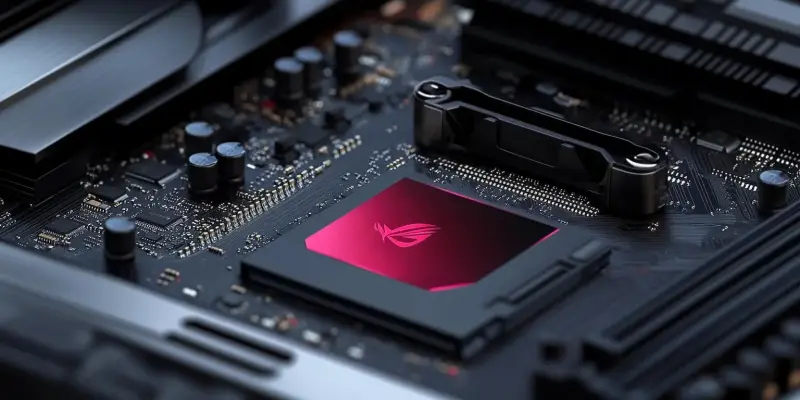
AMD has recently confirmed the ambitious transition of its Strix Halo APU range, originally developed for laptops and handheld devices, to the desktop and mini PC markets. This move signifies a pivotal moment for the tech industry, given the advanced combination of Zen 5 CPU cores and RDNA 3.5 graphics technology within these APUs. The announcement by AMD CEO Lisa Su, during an interview with Asus General Manager Tony Yu, has generated significant excitement, especially since several vendors have already customized desktops with these powerful units. The Strix Halo APUs, particularly suited for mini PCs due to their compact FP11 socket, offer promising advancements. The flagship model, the Ryzen AI Max+ Pro 395, boasts a 16-core Zen 5 CPU and a Radeon 8060S iGPU featuring 40 compute units, garnering the attention of innovators such as Framework, who have integrated it into their $1,999 modular desktop PC.
A Strategic Step Towards Integration
In conjunction with the Strix Halo APU launch, Lisa Su highlighted the impressive early success of the new Radeon RX 9000 series graphics cards, which have greatly outperformed previous generations in sales. The RDNA 4 architecture is set to further improve AMD’s position in the GPU market, with potential releases like the Radeon RX 9060. Leaked information suggests a successor to the Strix Point mobile APUs, codenamed Gorgon Point, might launch in about a year. This series targets high-end laptops with an FP8 package, Zen 5 and 5c CPU cores, RDNA 3.5 iGPU, and XDNA 2 NPU. Hawk Point will still serve mainstream users.
Despite speculation, there are no definitive details on the awaited Zen 6 architecture. These advancements highlight AMD’s drive to innovate and lead in both APU and GPU markets. By focusing on high performance and flexibility, AMD aims to offer cutting-edge solutions across mobile and desktop platforms, ensuring a strong presence in the evolving tech landscape.
Lisa Su’s announcements showcase AMD’s strategic direction for sustained growth and market leadership. The blend of mobile and desktop technology, embodied by Strix Halo, demonstrates AMD’s commitment to innovation and practicality, sparking further developments in both consumer and enterprise sectors.
The integration of Strix Halo APUs into desktops marks a significant milestone, showcasing AMD’s forward-thinking approach. With the power of Zen 5 CPU cores and RDNA 3.5 graphics, along with upcoming developments like Gorgon Point, AMD is set to shape technological advancements that meet user expectations. The evolution of GPUs and APUs points to a promising future for AMD, one that enthusiasts and consumers should eagerly anticipate.