

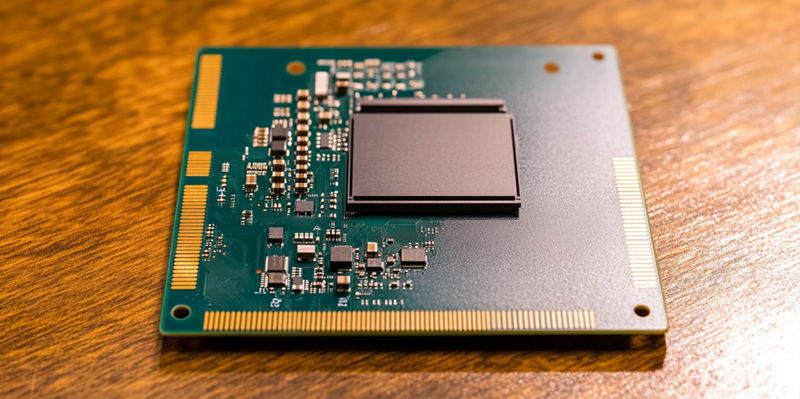
The upcoming release of AMD’s Strix Halo chips, particularly the flagship APU (Accelerated Processing Unit) AMD Ryzen AI Max+ Pro 395, has stirred significant anticipation among tech enthusiasts and industry insiders. Serving as a beacon of technical innovation, this new APU is set to redefine benchmarks for Ryzen laptop processors. This chip’s newly revealed specs include 16 Zen 5 cores, Radeon 8060S integrated graphics, and an NPU, suggesting it’s poised to offer powerful performance for both gaming and professional applications. The recent benchmarking data, however, offers a glimpse into its current capabilities and raises pertinent questions about its future impact on the market.
Benchmark Performance Analysis
Initial Geekbench Vulkan Test Results
The recently benchmarked AMD Ryzen AI Max+ Pro 395 chip was tested using Geekbench’s Vulkan performance test, where it achieved a score of 67,004. While this number represents a significant baseline, it’s important to contextualize the data, keeping in mind that the benchmark was conducted using an early sample chip. The score places the APU behind some of the existing GPUs, including the RX 7600 desktop graphics card. This discrepancy has led to discussions about the potential and limitations of the integrated graphics capabilities housed within AMD’s new APU.
Despite the lower-than-expected score, the performance should not be dismissed out of hand. Early samples often don’t fully reflect the comprehensive capabilities of the final product. Manufacturing processes, software optimizations, and driver improvements could result in considerable enhancements by the time these APUs hit the market. Analysts have therefore advised keeping a close eye on subsequent benchmarks and official tests that will provide more precise performance metrics closer to the release date.
Comparison with Existing GPUs
Comparing the provisional performance of the AMD Ryzen AI Max+ Pro 395 with existing GPUs serves to highlight both its potential and its current limitations. AMD had previously touted the integrated graphics component of the Strix Halo APU as being competitive with Nvidia’s RTX 4070 mobile GPU. However, the current benchmarks do not support this assertion, as the integrated GPU falls short of rivaling the standalone capabilities of Nvidia’s offering. The difference isn’t necessarily surprising given the usual design and thermal limitations that integrated GPU solutions face when compared to discrete desktop GPUs.
While direct comparisons may currently favor discrete GPUs, the integrated solution provided by the new APU could still offer substantial benefits in terms of efficiency, cost, and form factor, particularly for users not requiring cutting-edge graphics performance. These factors might tilt the balance for applications in portable or thin-and-light devices, which prioritize battery life and portability over sheer graphical prowess. Moving forward, it will be crucial to assess the actual use case scenarios where the Strix Halo APU can outshine or supplement existing solutions.
Market Implications and Future Prospects
Potential Unveiling at CES 2025
The leak regarding the Strix Halo chips strongly suggests that AMD is poised to officially unveil these new APUs at CES 2025. This major tech event provides a fitting platform for such key announcements, drawing global attention and setting the stage for 2025’s tech trends. Given the early benchmark results and the specs released, industry reactions will likely be mixed, balancing excitement with cautious skepticism until more definitive data emerges. The presence of ‘Pro’ in the Ryzen AI Max+ Pro 395 nomenclature implies that AMD might be targeting professional workstation applications primarily over mainstream or gaming-focused devices.
This strategic differentiation opens up a realm of possibilities and segment-specific performance adjustments. If the Pro line is tailored for workstation use, it could redefine professional environments with significant boosts in computational efficiency and AI capabilities. Conversely, the potential launch of a Ryzen AI Max+ variant, perceived as less powerful, suggests a broader application reach enveloping both professional and consumer sectors, specifically gaming laptops. Awaiting official confirmations and demonstrations at CES will undoubtedly set the stage for clearer market direction.
Anticipation and Skepticism
The eagerly awaited release of AMD’s Strix Halo chips, especially the flagship APU known as the AMD Ryzen AI Max+ Pro 395, has generated considerable excitement among tech aficionados and industry experts alike. This new APU is heralded as a symbol of cutting-edge innovation and is expected to set new standards for Ryzen laptop processors. The chip boasts impressive specifications including 16 Zen 5 cores, Radeon 8060S integrated graphics, and an NPU, indicating that it is set to deliver robust performance for both gaming and professional tasks. Recent benchmarking data has provided an initial look at its capabilities but also sparks questions regarding its potential future impact on the tech market. The release of this APU not only promises enhanced performance but also represents a significant step forward in AMD’s competitive positioning. As more details emerge, the tech community eagerly anticipates how this chip will influence future developments and trends in both consumer and professional computing environments.