

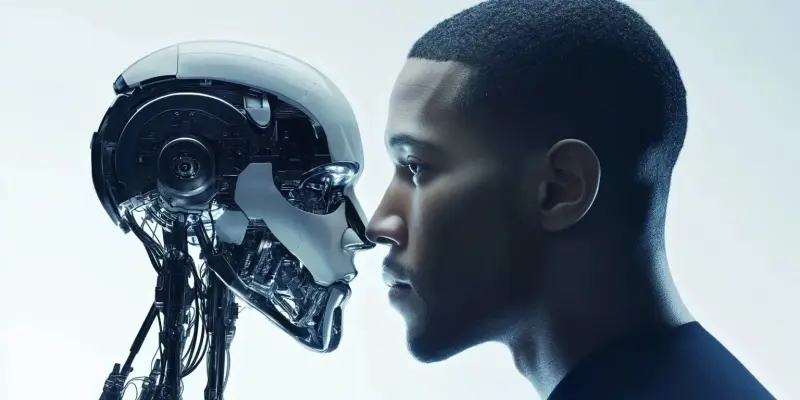
The tech industry is currently at a crossroads, grappling with the integration of Artificial Intelligence (AI) into its core operations. This debate is particularly pronounced in how AI will impact the human workforce, especially engineers. With advancements in AI technology, companies are exploring whether AI can serve as a replacement for human engineers or if it should complement their efforts. Two tech giants, Salesforce and Alibaba, offer contrasting approaches to this issue, reflecting broader industry trends and strategic considerations. These diverging paths highlight the varied perspectives on the future of AI in engineering roles.
Diverging Strategies of Tech Giants
Salesforce, a leading American cloud-based software company, has taken a bold stance by announcing a hiring freeze for human engineers. This move was emphasized by CEO Marc Benioff, who highlighted the growing importance of AI in the company’s workforce strategy during an earnings call. Benioff suggested that future CEOs must be adept at managing both human employees and AI agents, signaling a shift towards AI as a potential replacement for certain engineering roles. This decision underscores Salesforce’s belief that integrating AI can streamline operations and enhance efficiency. The company’s annual Trailblazer event, which showcases the latest advancements in AI agent technology, will further elaborate on its AI-focused strategy.
In stark contrast, Alibaba, a Chinese multinational conglomerate specializing in e-commerce, internet, and technology, is actively hiring, particularly for AI roles. CEO Eddie Wu has described AI as the “electricity of the future,” emphasizing its transformative potential. During Alibaba’s recent hiring season, the company offered 3,000 internship opportunities, half of which were dedicated to AI positions. This aggressive hiring strategy underscores Alibaba’s commitment to human talent in driving AI advancements. Wu’s vision positions AI not as a replacement but as a field that requires significant human investment to realize its full potential. By investing in a skilled workforce, Alibaba aims to lead the global tech industry in AI innovation.
Expert Insights on AI Integration
Experts like Scott Bickley from Info-Tech Research Group and Philip Walsh from Gartner offer valuable perspectives on these contrasting strategies. Bickley points out the cultural and economic differences between the US and China that influence these approaches. He notes that China’s larger pool of software developers and lower labor costs make AI integration more feasible and pronounced. These factors contribute to Alibaba’s ability to invest heavily in human talent while leveraging AI technologies. Bickley also highlights the potential for enterprise software companies like Salesforce to promote AI for internal efficiency and revenue growth, although this may not translate to immediate benefits for their clients.
Walsh from Gartner provides a different angle, suggesting that AI’s impact on the need for software engineers is likely to be expansive rather than reductive. He observes that AI adoption in software development is still in its early stages, with many large enterprises only beginning to deploy AI beyond small-scale trials. Walsh argues that human expertise will remain vital as AI technologies mature. Despite the excitement surrounding AI, the technology still requires substantial human supervision to prevent errors and inefficiencies. Walsh emphasizes the importance of hybrid workflows, combining human and AI agents rather than fully automated AI-managed pipelines. This perspective suggests that AI will complement, rather than replace, human engineers in the foreseeable future.
The Role of Human Expertise
Despite the advancements in AI, both experts agree that human oversight is crucial. Bickley cautions that while companies like Salesforce may benefit from using AI internally, these benefits may not be easily replicable for their clients. Most Software-as-a-Service (SaaS) customers do not have engineering teams of similar scale, making the widespread applicability of AI-driven productivity gains questionable. The complexity of implementing AI-driven solutions necessitates experienced human engineers who can manage, refine, and optimize these systems. Without adequate human involvement, the potential advantages of AI could be undermined by technical challenges and operational inefficiencies.
Walsh further underscores the potential of hybrid workflows, where human and AI agents work in tandem rather than in isolation. He suggests that companies might underestimate the complexity and new demands associated with AI-enabled products if they assume AI alone can replace core engineering functions. The role of human engineers becomes even more critical in training AI systems, ensuring data quality, and addressing unexpected issues that arise. This perspective highlights the enduring importance of human talent in overseeing and enhancing AI systems, ensuring they operate effectively and align with business objectives.
Economic and Market Considerations
Economic prudence in the face of uncertain market conditions might be driving Salesforce’s strategy more than the purported magical advancements in AI. Bickley highlights that enterprise software companies have a vested interest in promoting AI for internal efficiency and revenue growth. However, this approach does not necessarily translate to a reduction in engineering headcount, as AI tools still require substantial human supervision. The economic landscape influences these corporate decisions, with companies like Salesforce balancing the potential cost savings of AI with the need for human expertise to manage and optimize these technologies.
Alibaba’s aggressive hiring, on the other hand, reflects a belief in the ongoing need for human talent to drive AI advancements. This approach aligns with the view that AI is a transformative force requiring significant human investment. By investing in human talent, Alibaba aims to maximize the potential of AI, positioning itself as a leader in the global tech industry. Wu’s vision emphasizes the symbiotic relationship between AI technologies and human engineers, where each enhances the capabilities of the other. This strategy suggests that comprehensive AI integration necessitates a robust and skilled human workforce to achieve sustainable and impactful results.
Balancing AI and Human Workforce
The tech industry stands at a critical juncture, as it navigates the integration of Artificial Intelligence (AI) into its fundamental operations. A key component of this debate centers on the effect AI will have on the human workforce, particularly engineers. As AI technology advances, companies are deliberating whether AI can fully replace human engineers or if it should enhance their work. This topic gains clarity when examining the divergent strategies of two tech titans: Salesforce and Alibaba. Their differing approaches underscore wider trends and varying strategic considerations within the industry. Salesforce emphasizes AI as a tool to augment human capabilities, promoting collaboration between AI and engineers. Conversely, Alibaba is more inclined to evaluate AI’s potential in reducing dependency on human engineers. These distinct perspectives illustrate the broader debate on AI’s role in engineering and the future of tech industry jobs. The decision on how to integrate AI will shape not just individual companies but the industry as a whole.