

The Dawn of a New Cinematic Era
The silver screen, long the exclusive domain of visionary directors and sprawling production crews, is facing a technological revolution unlike any since the advent of CGI. The emergence of powerful AI video generators like OpenAI’s Sora and Runway Gen-2, capable of transforming simple text prompts into dynamic, high-definition footage, has ignited a fierce debate across the industry. Is this the dawn of a new, democratized age of filmmaking, or the twilight of human creativity? This article explores the disruptive impact of AI on the film industry, moving beyond the sensational headlines to offer a balanced analysis. We will examine how this technology is breaking down historical barriers, dissect its current limitations, and project a future defined not by replacement, but by a profound collaboration between human artists and artificial intelligence.
From Silent Films to Algorithmic Scenes: A History of Disruption
To understand the potential impact of AI, it’s essential to view it within the context of film history, which is a story of continuous technological disruption. The transition from silent films to “talkies,” the introduction of color, and the rise of computer-generated imagery were all met with a mixture of excitement and trepidation. Each innovation was initially seen by some as a threat to the established art form, yet each ultimately became an indispensable tool that expanded the creative palette of filmmakers. Similarly, the high barriers to entry in filmmaking—prohibitive equipment costs, the need for specialized technical skills, and lengthy production timelines—have historically limited who gets to tell their stories visually. AI video generators represent the next logical step in this evolution, promising to dismantle these barriers much like digital cameras democratized photography, making video creation more accessible than ever before.
A Critical Look at AI’s Role in Modern Filmmaking
The Democratization of the Moving Image
The most immediate and profound impact of AI video generators is the radical democratization of content creation. For decades, producing a professional-looking video required a significant budget and a skilled team. AI shatters this paradigm. A small business owner can now generate a marketing video in minutes, a podcaster can create engaging visual accompaniments without any editing experience, and an independent writer can visualize a scene from their script without hiring a crew. This newfound accessibility fosters unprecedented efficiency, allowing professionals to rapidly prototype ideas, test visual concepts, and pre-visualize complex sequences before committing to an expensive shoot. By drastically lowering the cost and time investment, AI empowers a new generation of creators and enables a more fluid, experimental approach to storytelling.
The Ghost in the Machine: AI’s Struggle with Nuance and Narrative
Despite its impressive capabilities, current AI technology is far from a perfect storyteller. While it excels at generating stunning B-roll, abstract visuals, or establishing shots, it falters when tasked with narrative coherence and emotional depth. AI models often struggle to maintain visual consistency, causing a character’s appearance to change subtly from one shot to the next or objects to morph in physically impossible ways that break audience immersion. More fundamentally, an algorithm cannot replicate the intentionality and emotional nuance that define masterful filmmaking. The micro-expressions of a seasoned actor, a director’s deliberate framing to convey subtext, or a cinematographer’s use of light to evoke a specific mood are all born from human experience and empathy—realms that remain beyond the grasp of AI.
Navigating the Uncharted Waters of Copyright and Authenticity
The rapid rise of AI video generation has outpaced the development of legal and ethical frameworks, creating significant complexities. These models are trained on vast datasets of existing footage, raising unresolved questions about copyright infringement and fair compensation for the original artists whose work fuels the technology. Without clear regulations, the industry risks devaluing the intellectual property of human creators. Furthermore, as AI-generated content becomes more prevalent, there is a growing concern about the potential for a homogenous, slightly uncanny aesthetic to dominate visual media. Audiences still crave authenticity and the unique signature of a human artist, creating a market-driven demand for stories that feel genuine and emotionally resonant, a quality AI currently struggles to produce.
The Future of Filmmaking: A Collaborative Co-Pilot, Not a Replacement Director
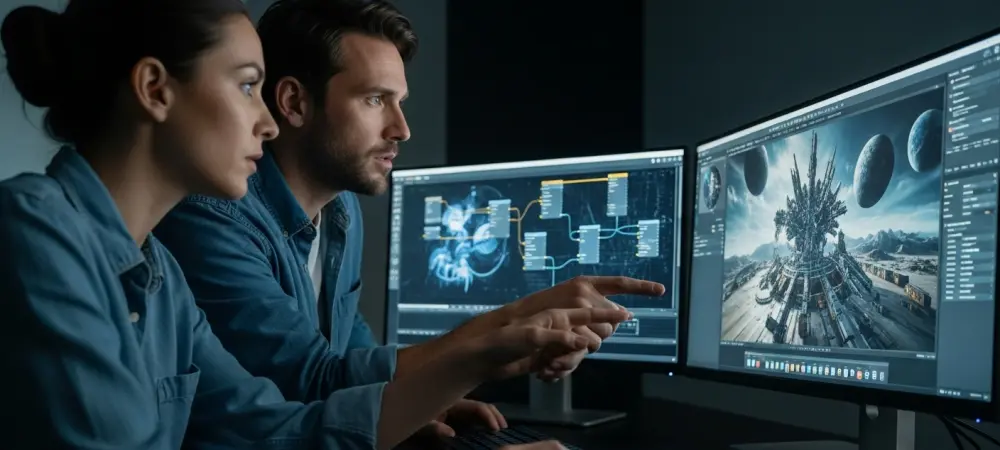
Looking ahead, the most likely trajectory for AI in film is not as a replacement for human creativity but as an immensely powerful co-pilot. The industry is moving toward a hybrid model where AI handles the laborious and technically demanding aspects of production, freeing human creators to focus on what they do best: developing compelling narratives, directing nuanced performances, and infusing a story with thematic depth. In this future, a director might use AI to generate dozens of concept shots for a scene, an editor could use it to seamlessly remove unwanted objects from a frame, and a visual effects artist could use it to create complex environmental backdrops. This collaborative approach enhances the creative process, allowing for greater experimentation and efficiency without sacrificing the human soul of the project.
From Prompt to Production: Practical Strategies for the New Creative Era
The key takeaway for creators is that AI is a tool, and like any tool, its effectiveness depends on the skill of the user. To achieve the best results with current video generators, artists and producers should focus on writing highly specific and descriptive prompts that guide the AI with clear intent. Generating multiple iterations of a concept allows for greater creative choice and refinement. Most importantly, the most successful projects will blend AI-generated footage with traditional, human-led post-production. By layering in professional sound design, deliberate color grading, and skillful editing, creators can elevate raw AI output into a polished and emotionally impactful final product, reinforcing the idea that the best outcomes arise from a partnership between human oversight and artificial intelligence.
The Enduring Power of the Human Storyteller
In conclusion, while AI video generators are set to irrevocably alter the landscape of filmmaking, they will not replace the core of human creativity. Their true power lies in their ability to democratize video production, enhance efficiency, and serve as a revolutionary new tool in the filmmaker’s toolkit. The industry will adapt, just as it has always done, integrating this technology to streamline workflows and unlock new visual possibilities. The most significant change will be the empowerment of a wider array of storytellers, potentially leading to a renaissance of independent and experimental content. Ultimately, technology is a means, not an end. The heart of cinema has always been, and will continue to be, the human connection it forges. AI may generate the footage, but a human creator is still required to give it a soul.