

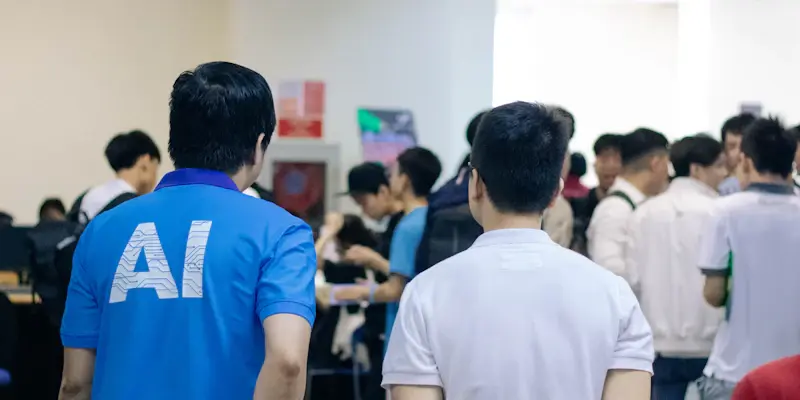
Artificial Intelligence (AI) is revolutionizing various sectors by enhancing efficiency, decision-making, and customer service operations. Historically, AI was perceived as the exclusive domain of IT experts, but today, its applications are spreading across numerous professional fields. With its increasing integration into daily workflows, it is becoming crucial for non-technical professionals to gain proficiency in AI.
AI’s Ubiquity Across Industries
AI is no longer confined to tech-centric roles; it has become an indispensable tool across virtually all industries. This evolution means that positions traditionally regarded as non-technical now regularly interact with AI applications. Whether through automating customer service queries, elevating marketing strategies, or refining logistical operations, AI’s integration is reshaping job functions, making it necessary for a broader workforce to understand and leverage AI tools.
The adoption of AI is fundamentally altering how communication and operational tasks are handled in various businesses. Customer service platforms now use AI to respond to inquiries more efficiently, while sales teams utilize predictive analytics to forecast trends. Even human resources departments are harnessing AI to streamline recruitment processes and enhance employee engagement. This widespread utilization underscores the need for employees across all departments to acquire a solid understanding of AI to maximize its potential benefits.
Adding Value to Your Career
In an era where companies are increasingly pivoting towards AI-enhanced workflows, having AI proficiency enhances an individual’s competitiveness in the job market. Employers are now prioritizing candidates who can effectively navigate and leverage AI technologies to streamline business operations. Employees who are skilled in AI applications contribute more significantly to their organizations by optimizing tasks and fostering innovation.
AI-trained professionals play a critical role in helping companies adapt to new technology trends, ensuring that both their internal processes and customer-facing services remain progressive and efficient. The ability to work alongside AI technologies makes these employees invaluable assets, as they can drive the adoption of innovative solutions and maintain the organization’s competitive edge. Furthermore, the continuous advancements in AI create opportunities for career growth and specialization in emerging fields.
Opening Up New Opportunities
A fundamental understanding of AI opens the door to numerous new opportunities that extend well beyond the familiar realm of chatbots like ChatGPT. This knowledge is essential for engaging in data analysis, strategic planning, and various niche areas such as digital marketing. Non-tech professionals who are proficient in AI are equipped to make more informed decisions, driving successful outcomes and contributing meaningfully to their organizations.
Proficiency in AI empowers professionals to confidently interact with AI-generated data, enabling them to partake in strategic decision-making processes. This skill set also positions them to foster innovation and actively contribute to their company’s growth. Understanding the basics of AI allows individuals to harness its potential in diverse applications, from analyzing consumer behavior patterns to optimizing supply chain logistics, thereby broadening their professional horizons and enhancing their roles.
Cultivating Curiosity and Continuous Learning
Adopting a curious and hands-on approach to learning AI can significantly ease the initial learning curve. It is essential for non-tech professionals to ask pertinent questions and explore AI’s potential applications within their roles. Cultivating a curiosity-driven learning mentality can demystify AI, making it more approachable and less intimidating.
Effective learning in AI is typically incremental and interactive. By participating in AI-related discussions, engaging in relevant professional communities, and experimenting with various AI tools, individuals can solidify their understanding and application of the technology. Such immersive learning experiences provide practical insights and foster a culture of continuous improvement, ensuring that professionals remain well-versed in the latest AI developments and their practical implications.
Essential AI Skills for Non-Tech Professionals
Starting with the basics, such as distinguishing between AI and automation, lays a robust foundation for further learning. More advanced skills include mastering “prompt engineering,” which involves formulating precise prompts and questions for AI tools. This skill significantly influences the quality of outputs generated by AI applications and is crucial for effective interaction with AI.
Additionally, three key skills are vital for non-tech professionals: data literacy, critical thinking, and the ability to recognize biases in AI outputs. Data literacy involves understanding the role data plays in AI and making informed decisions based on AI-generated insights. Critical thinking ensures that professionals trust but verify AI outputs, while recognizing biases is crucial for ensuring that decisions are fair and balanced. Together, these skills help non-tech professionals utilize AI effectively and responsibly.
Practical Steps to Start Learning AI
Embarking on the journey to learn AI does not necessitate a formal degree. Numerous accessible resources, such as online courses offered by platforms like Coursera or OpenAI, provide a strong starting point for non-tech professionals. These courses cover fundamental concepts and practical applications, equipping learners with essential AI skills and knowledge.
Engaging in community discussions on professional platforms like LinkedIn, attending AI-focused webinars, and following AI-related podcasts are excellent ways to remain updated on the latest advancements. Experimenting with AI tools provides hands-on experience and helps learners understand the real-world impacts of AI applications. These practical steps make AI learning more relatable and achievable for non-tech professionals.
Unlocking the Future of Work
Artificial Intelligence (AI) is transforming numerous sectors by significantly boosting efficiency, refining decision-making processes, and enhancing customer service operations. Once considered the exclusive realm of IT specialists, AI’s scope has expanded, making its presence felt across a broad range of professional fields. Today’s landscape sees AI being seamlessly integrated into daily tasks and workflows, leading to its growing importance for professionals outside the technical sphere. As AI continues to evolve and permeate various aspects of work life, it becomes essential for non-technical individuals to develop a solid understanding and mastery of AI. Proficiency in AI is no longer a luxury but a necessity, empowering professionals to leverage its capabilities effectively. By doing so, they can stay competitive and adept in an increasingly AI-driven world. AI’s influence is reshaping the workforce and redefining the skill sets required in modern professional environments.