

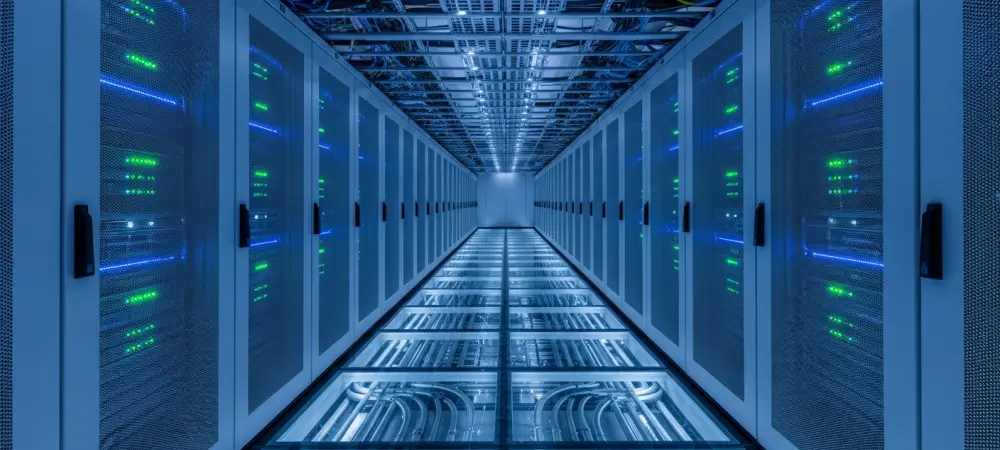
The relentless surge of the artificial intelligence revolution has propelled data centers from their traditional roles as invisible back-end utilities into the very heart of global strategic infrastructure. As processing power becomes the most valuable currency in the modern economy, the massive energy consumption required to sustain large-scale language models and complex neural networks has forced a radical rethink of facility management. Efficiency is no longer a secondary concern or a simple line item on a budget; it has become the primary metric of survival and success in an increasingly competitive digital landscape. This transformation centers on the integration of intelligent monitoring systems that transcend the basic capabilities of previous decades. By leveraging real-time data and advanced analytics, operators are now able to treat their physical assets with the same precision and agility as the software running within them.
The Evolution of Data Center Infrastructure Management
Quantifying the Shift Toward Predictive Modeling
The landscape of Data Center Infrastructure Management (DCIM) has undergone a fundamental metamorphosis, moving away from simple monitoring toward comprehensive predictive modeling. Current market projections indicate that the DCIM sector will continue its rapid expansion through 2028, driven largely by the need to manage increasingly complex power profiles. Power Usage Effectiveness (PUE) has evolved from a voluntary reporting metric into a critical performance indicator that dictates investment decisions and operational strategies. This shift is characterized by the widespread adoption of AI-driven energy analytics, which allow for a granular understanding of how every watt is utilized across the facility.
Instead of waiting for a component to fail or for an energy bill to spike, modern systems anticipate these events, allowing for proactive adjustments that maintain peak efficiency. Reports show a significant transition from reactive maintenance to automated energy analytics, where machine learning algorithms identify subtle patterns in power distribution that human operators might overlook. This evolution is essential for maintaining the high availability required by modern enterprise applications while simultaneously controlling the costs associated with the cooling and power delivery. The focus has moved from merely keeping the lights on to ensuring that every unit of energy consumed contributes directly to computational output.
Regulatory Pressure and the Green Energy Mandate
The tightening grip of global carbon regulations has accelerated the transition toward more sustainable operational frameworks within the industry. Government mandates regarding transparency in energy usage are pushing data center operators to implement monitoring platforms that provide verifiable data on their environmental footprint. Consequently, energy costs are now a dominant factor driving the adoption of real-time monitoring platforms that can pinpoint inefficiencies in the power chain.
Operational strategies are increasingly centered on the correlation between high-density workloads and the surge in cooling efficiency investments. Infrastructure professionals are utilizing reports to show how energy-intensive AI processing requires a specialized approach to thermal management. This has led to a rise in liquid cooling and immersive cooling solutions, all of which require sophisticated monitoring to ensure they operate within safe and efficient parameters. By focusing on these green energy mandates, organizations are not only complying with strict environmental laws but are also improving their bottom line by reducing the massive overhead typically associated with heat mitigation.
Real-World Implementation and Market Leadership
Integrated Ecosystems and Digital Twin Technology
The current market is defined by several dominant ecosystems where hardware and software are seamlessly integrated to provide a holistic view of the infrastructure. Schneider Electric has set a benchmark for integrated energy management through platforms that centralize power and cooling data with an AI layer. Similarly, Siemens leverages digital twin technology to create virtual replicas of data centers, allowing operators to simulate infrastructure changes in a risk-free environment. This level of simulation ensures that any physical implementation is optimized for the highest possible efficiency and minimal environmental impact before a single cable is moved.
In contrast to simulation-heavy approaches, Vertiv has distinguished itself by focusing on the predictive analysis of critical power hardware to eliminate downtime. By monitoring the health of uninterruptible power supplies and thermal management systems, they provide a safeguard against the variable loads typical of high-density clusters. On another front, Johnson Controls and Honeywell have successfully applied AI-driven automation to HVAC and environmental security. These systems use automated feedback loops to adjust airflow and temperature based on real-time server demand, representing a major leap forward in operational efficiency by preventing the over-cooling of aisles.
Niche Innovation and Vendor-Neutral Solutions
While large-scale ecosystems offer comprehensive coverage, niche innovators like Sunbird and Nlyte provide essential granular asset management and lifecycle automation. These platforms focus on the practicalities of DCIM by tracking hardware from procurement to decommissioning, ensuring that no resource sits idle or underutilized. Such precision is vital for large multi-facility portfolios where “zombie servers” can quietly drain significant amounts of power. Their solutions help organizations optimize future capacity planning through predictive analytics that bridge the gap between IT assets and physical facility management. Addressing the challenge of hardware diversity, Modius provides vendor-neutral dashboards that prevent the common problem of platform lock-in. This flexibility is vital for enterprises running a heterogeneous mix of legacy and modern equipment, offering a unified view of the entire infrastructure. For organizations expanding into edge computing, Hyperview has introduced cloud-native SaaS solutions that simplify the management of numerous, geographically dispersed small-scale sites. These vendor-neutral and cloud-native approaches allow for a scalable and adaptable monitoring strategy that can grow alongside the evolving needs of the digital enterprise.
Expert Perspectives on Operational Resilience
Industry experts emphasize that the future of operational resilience lies in the synergy between physical infrastructure and software intelligence. There is a growing consensus that the traditional silos separating IT staff from facility managers must be permanently dismantled to achieve true efficiency. The “single-pane-of-glass” philosophy—where every metric from server temperatures to grid stability is visible on one dashboard—is now considered a non-negotiable requirement for modern portfolio management. This unified view allows for faster decision-making and a more nuanced understanding of how software workloads affect hardware health.
Furthermore, the convergence of physical infrastructure monitoring and cybersecurity has become a top priority for infrastructure professionals. As data center management systems become more interconnected and reliant on cloud-based analytics, they also become potential targets for digital attacks. Experts argue that a breach in the cooling or power control systems could be just as devastating as a data leak. Consequently, modern monitoring platforms are increasingly incorporating advanced security protocols, ensuring that the systems responsible for maintaining facility uptime are themselves protected from unauthorized access or manipulation.
Future Projections: The Path Toward Autonomous Facilities
The trajectory of the industry points toward a future where autonomous facilities become the standard. In these environments, AI agents will not only monitor performance but will also possess the authority to automate energy-saving protocols and reroute workloads without human intervention. This self-optimizing capability will be essential as data centers move into new frontiers, such as orbital satellite installations and underwater facilities that leverage natural temperature gradients for cooling. Digital twins will play a crucial role in these high-stakes deployments, providing the necessary data to mitigate risks before hardware is sent to extreme or remote environments.
However, the path toward total autonomy is paved with the dual challenges of meeting unprecedented computational demand while fulfilling strict environmental responsibilities. Long-term benefits of digital twins include reducing the risks associated with high-density hardware deployment, but the initial integration requires significant investment. As facilities become more complex, the reliance on automated systems will only grow. The industry must balance this technological leap with the need for transparency and human oversight to ensure that autonomous protocols align with both corporate goals and broader societal expectations regarding energy consumption and carbon mitigation.
Conclusion: Securing a Competitive Advantage
The transition from basic monitoring to intelligent, predictive infrastructure management represented a pivotal moment in the history of digital technology. It was clearly demonstrated that efficiency served as the linchpin for both operational resilience and long-term corporate sustainability. Organizations that successfully integrated advanced DCIM platforms secured a significant competitive advantage by balancing the immense demands of the AI era with the necessity of environmental responsibility. These proactive strategies ensured that facilities remained capable of supporting the next wave of computational breakthroughs while minimizing their impact on the global energy grid.
Looking forward, the successful adoption of these platforms required a shift in mindset toward viewing infrastructure as a dynamic, living asset. Future leaders in the space began prioritizing modular, scalable software that could adapt to the rapid changes in hardware density and cooling requirements. By moving beyond reactive maintenance and embracing AI-driven automation, the industry established a foundation for a more reliable and sustainable digital world. Ultimately, the move toward autonomous, data-driven management proved to be the most effective way to safeguard the foundations of the digital economy while honoring the global commitment to a greener future.