

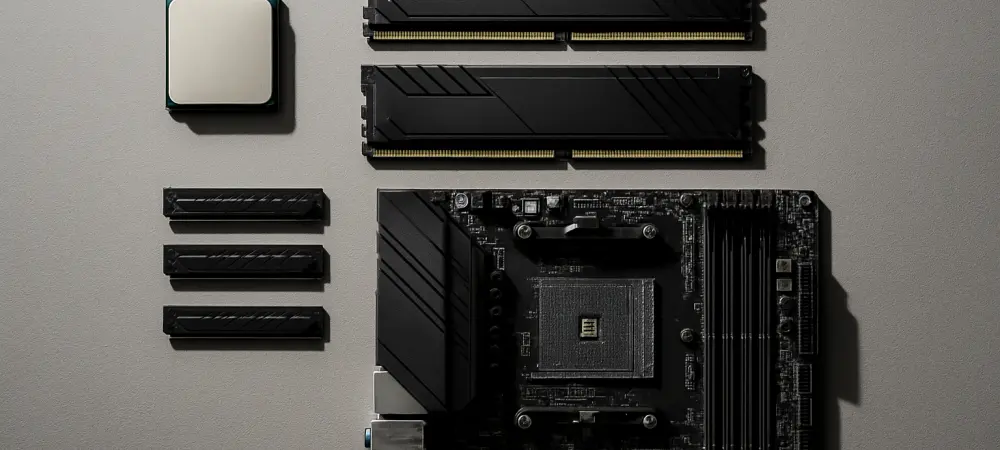
ASRock is targeting the value-oriented segment of the PC market by releasing hardware that combines legacy socket compatibility with contemporary connectivity. This strategic move highlights a broader industry trend where the AMD AM4 platform continues to defy traditional product lifecycles, maintaining a robust presence in the retail landscape. While newer architectures typically push older ones into obsolescence within two or three years, the AM4 socket has managed to sustain its relevance through a unique mixture of consumer loyalty and continuous support from component manufacturers. Enthusiasts and budget builders alike find themselves drawn to a platform that offers a stable, well-documented ecosystem without the premium costs associated with the latest hardware generations. This endurance is not merely a result of nostalgia but is driven by a practical assessment of price-to-performance ratios that remain competitive even against modern standards. By bridging the gap between old and new, companies are ensuring that the AM4 ecosystem remains a viable alternative for users.
The Technological Foundation: Engineering for the Long Term
Architectural Prowess: The Power of 3D V-Cache
The introduction of 3D V-Cache technology proved to be a pivotal moment for the AM4 platform, effectively extending its competitive lifespan by several years. When the Ryzen 7 5800X3D first hit the market, it established a performance ceiling that challenged even the most expensive contemporary processors in gaming workloads. Today, the continued availability of chips like the Ryzen 7 5700X3D ensures that users can upgrade their existing systems without needing to replace their motherboards or memory kits. This vertical stacking of L3 cache compensates for the slower clock speeds of older architectures, providing a massive boost in frame consistency and minimums that modern gamers prioritize. As software developers continue to optimize titles for large cache sizes, these older processors remain surprisingly efficient, often matching the output of mid-range AM5 components. This technological bridge has allowed the AM4 platform to remain at the center of the hardware conversation, proving that clever engineering can often triumph over raw generational iteration.
Product Diversity: Versatility Across Every Use Case
Beyond the high-end gaming segment, the sheer variety of processors available for the AM4 socket allows for an incredible level of flexibility in system building. From power-efficient quad-core units to high-performance sixteen-core monsters like the Ryzen 9 5950X, the platform caters to every conceivable niche within the consumer market. This diversity is particularly beneficial for professionals who require high multi-threaded performance for rendering or compilation but may not have the budget to transition to a completely new ecosystem. In 2026, the secondary market for these chips is thriving, with a steady supply of high-quality silicon circulating among enthusiasts. This accessibility has democratized high-performance computing, making it possible for students and researchers to assemble powerful workstations at a fraction of the cost of new-generation equivalents. The resilience of the AM4 ecosystem stems from this deep catalog of compatible parts, which ensures that no matter the specific requirement or budget constraint, a suitable solution exists within the existing infrastructure.
Market Dynamics: Economic and Environmental Factors
Financial Logic: Performance Without the Premium
A critical factor in the sustained popularity of the AM4 platform is the significant price disparity between DDR4 and DDR5 memory. While DDR5 has become the standard for the newest systems, DDR4 remains significantly cheaper and offers performance that is more than sufficient for the vast majority of consumer applications and gaming. For a budget-conscious builder, the savings realized by choosing a high-capacity DDR4 kit can be redirected toward a more powerful graphics card or larger solid-state storage, resulting in a more balanced and capable overall system. In 2026, the value proposition of AM4 has only strengthened as the platform matures and prices for high-end components continue to fall. The total cost of ownership for an AM4 system remains substantially lower than that of an AM5 or competing platform, particularly when factoring in the cost of entry-level motherboards. This makes the platform the go-to choice for emerging markets and educational institutions where budget constraints are the primary driver of procurement decisions.
Strategic Outlook: The Lasting Impact of AM4 Architecture
The enduring legacy of the AM4 platform demonstrated that consumers prioritized stability and value over the constant pursuit of incremental performance gains. While newer sockets offered higher peak speeds, the practical advantages of a mature and affordable ecosystem became clear to those who sought to maximize their investments. Analysts observed that the platform successfully bridged multiple hardware generations, proving that a well-supported architecture could remain relevant far beyond its expected lifespan. For those looking to optimize their current setups, the most effective path involved identifying specific bottlenecks and addressing them with targeted component swaps. Upgrading to a high-cache processor or expanding memory capacity provided an immediate boost that extended system utility for several years. Moving forward, buyers were encouraged to consider the total cost of ownership and the potential for future repurposing when selecting hardware. The AM4 era established a new benchmark for platform longevity that influenced purchasing decisions long after the first AM5 boards reached the market.