

Modern game engines utilize complex textures and high-resolution assets that can quickly overwhelm graphics cards equipped with less than twelve gigabytes of video memory. This shift in software requirements has forced hardware manufacturers to reconsider their memory configurations and pricing structures to remain competitive in a landscape where enthusiasts demand both performance and longevity. The ASUS Prime Radeon RX 9070 XT 16GB OC Edition has recently emerged as a significant contender in this space due to a strategic price adjustment that reshapes its value proposition. Now retailing at approximately $730, which represents a nine-percent drop from its standard $800 MSRP, this card aims to capture the interest of builders who want enthusiast-level performance without spending four figures. By offering a robust feature set and substantial memory overhead, ASUS is positioning this specific model as a bridge for gamers who find the top-tier flagship prices increasingly difficult to justify for their setups.
Architectural Design: Thermal Management and Space Efficiency
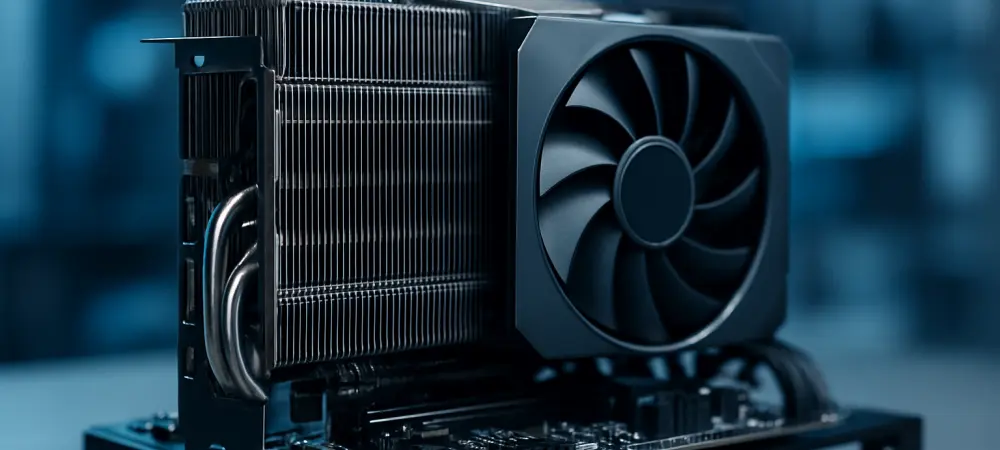
The ASUS Prime design philosophy focuses on durability and space efficiency, utilizing a 2.5-slot footprint that is noticeably more compact than the massive triple-slot designs common in the high-end segment. To maintain peak performance under heavy loads, the card features specialized Axial-tech fans designed to maximize downward air pressure while keeping noise levels to a minimum. These fans are built with dual ball bearings, which effectively double the lifespan of the cooling system compared to standard sleeve-bearing alternatives often found in more budget-oriented models. This engineering choice is particularly important for users who keep their hardware for several cycles, as fan failure is one of the most common points of hardware degradation over time. Furthermore, the vented backplate works in tandem with the refined heatsink to ensure that heat is dissipated efficiently away from the critical silicon components, preventing thermal throttling during extended sessions.
Beyond its cooling prowess, the card offers practical features for enthusiasts, such as Dual BIOS support, allowing users to toggle between a high-performance mode and a quiet acoustic mode depending on their specific needs. This flexibility is essential for builders who prioritize a silent workspace during productivity tasks but require maximum clock speeds while gaming. Furthermore, it is fully compatible with the PCIe 5.0 standard, ensuring it can utilize the maximum bandwidth available on modern motherboards. While the current generation of games rarely saturates such high bandwidth, this inclusion provides a layer of infrastructure readiness that will benefit users as data transfer requirements evolve. This blend of compact physical design and robust hardware specifications makes it a versatile choice for a wide variety of PC cases, ranging from traditional mid-towers to smaller form factor configurations that cannot accommodate the oversized triple-fan behemoths from rival manufacturers.
Performance Standards: Memory and Resolution Capability
A major selling point for the RX 9070 XT is its 16GB of VRAM, a feature that distinguishes it from several competing Nvidia mid-range offerings that still cling to lower capacities. Many of Nvidia’s similarly priced cards often ship with twelve gigabytes of memory, forcing consumers to pay a significant premium for “Ti” versions just to get comparable buffers that won’t bottleneck in modern titles. As developers push the boundaries of visual fidelity, having 16GB is rapidly becoming the gold standard for longevity, preventing the stuttering and performance drops associated with memory swap-outs. This extra headroom allows for higher texture settings and more complex lighting effects without the fear of hitting a hard ceiling. In the current market, purchasing a card with less than sixteen gigabytes for high-resolution gaming is increasingly seen as a short-sighted investment that may require an upgrade much sooner than anticipated by most enthusiasts who are building systems today. In terms of raw output, the RX 9070 XT is a powerhouse specifically optimized for 1440p gaming at high refresh rates, where it consistently delivers fluid experiences in modern titles. However, its capabilities extend comfortably into 4K territory, where it bridges the gap between mid-range and enthusiast hardware with surprising efficiency. While it may not reach the astronomical frame rates of ultra-expensive flagship cards that cost twice as much, it offers a smooth and consistent experience in Triple-A titles that many players find more than sufficient. This makes it an ideal middle-ground solution for gamers who want to move beyond 1080p without investing in the most expensive hardware on the market. The card handles demanding workloads with a level of stability that reflects its refined silicon, ensuring that frame times remain consistent even during intense sequences where multiple visual effects are being rendered simultaneously, providing a competitive edge for those who play fast-paced games.
Software Integration: Future Prospects and Market Value
The value of the RX 9070 XT is further enhanced by AMD’s software ecosystem, specifically the transition to FSR 4, which has become a cornerstone of the company’s competitive strategy. This new iteration of FidelityFX Super Resolution shifts the focus toward AI-powered upscaling and frame generation, directly challenging Nvidia’s DLSS technology in ways that previous versions could not. By using AI to reconstruct images and generate intermediate frames, FSR 4 helps the card maintain high performance in demanding scenarios that would otherwise stress the hardware to its limits. This software evolution is crucial for closing the gap in ray-tracing performance and ensuring the card remains relevant as game engines become more sophisticated. The move toward hardware-agnostic AI features means that ASUS Prime owners can benefit from a growing library of supported games, further extending the effective lifespan of the GPU while providing a visual experience that rivaling native resolutions in many implementation cases.
The decision to choose the ASUS Prime RX 9070 XT rested on a combination of thermal reliability and strategic pricing that few other models matched during this cycle. It represented a shift toward practical high-end gaming, where the focus moved from chasing theoretical benchmarks to providing a stable, high-quality experience for the average enthusiast. For those looking to build or upgrade, the focus shifted toward ensuring that the power supply and case airflow were optimized to take full advantage of the Axial-tech cooling system and PCIe 5.0 capabilities. Future considerations involved monitoring the adoption of FSR 4 across new titles, which proved to be a decisive factor in maintaining the card’s relevance. Ultimately, this GPU provided a clear path for gamers who sought to bypass the inflated costs of flagship models while securing enough memory to handle the next several years of software development. It was a choice that favored long-term stability and value over the fleeting allure of the most expensive hardware.