

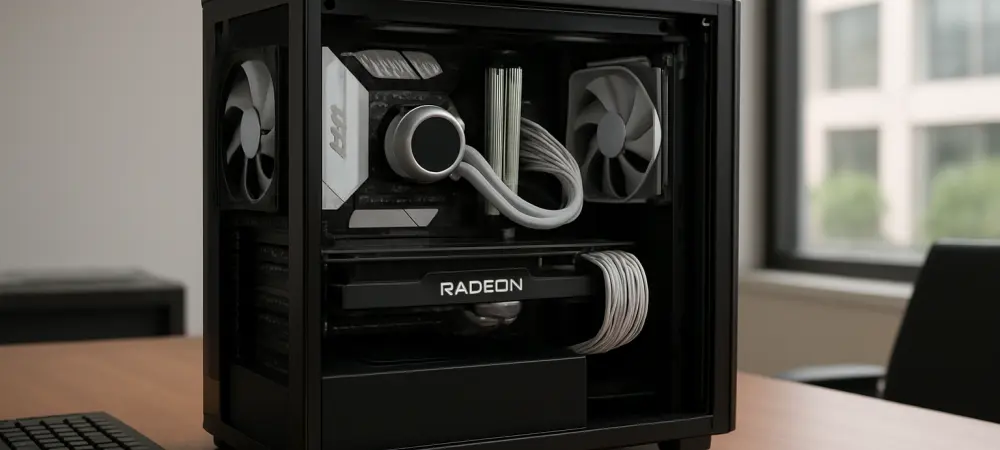
While professional workloads in Blender or machine learning still favor Nvidia’s architecture, the general gaming public finds the RX 9070 to be the best of a pricey bunch. The current graphics card market is defined by a sharp divide between the feature-heavy ecosystem of Nvidia and the focus of AMD on raw performance and cost-effectiveness. A standout in this landscape is the Asus Prime Radeon RX 9070 EVO OC Edition, which has recently seen a significant price adjustment on major retailers. While competing cards often command a premium exceeding $800, this Asus model positions itself as a strategic alternative for enthusiasts who prioritize frame rates over brand-specific software suites. At its current price point of approximately $630, it effectively bridges the gap between the official MSRP and the inflated costs typical of the modern high-end hardware market. This shift suggests a returning focus to the consumer, offering a high-performance solution that does not require a flagship-level investment for standard resolutions.
Maximizing Performance per Dollar
The primary appeal of the RX 9070 lies in its superior performance-per-dollar ratio when compared to its direct rivals in the current generation. In pure rasterization, which remains the standard method for rendering 3D scenes in the majority of modern titles, the card consistently outperforms the RTX 5070 by a margin of roughly 9% to 15%. For the average gamer who is not strictly tethered to proprietary software, this performance lead makes the substantial price gap of nearly $200 difficult to justify for competitor hardware alone. While Nvidia has traditionally led in upscaling technology, the recent refinement of AMD’s FSR 4 has significantly narrowed the visual quality gap. This progress makes the Radeon choice more compelling for those seeking high raw throughput without the steep entry price. By focusing on fundamental rendering speed, Asus has provided a card that addresses the needs of the competitive gaming community while maintaining a reasonable budget for the build.
The longevity of a graphics processing unit is often determined by its video memory, and the Asus Prime RX 9070 excels here with a robust 16GB GDDR6 VRAM buffer. This is a significant step up from many mid-range competitors that still rely on 12GB of memory in this cycle. As modern games become increasingly complex with high-resolution textures and expansive open worlds, this 16GB capacity acts as a form of critical future-proofing for the user. It allows for a smooth 1440p gaming experience at maximum settings without the micro-stuttering typically caused by memory bottlenecks in demanding titles. Furthermore, this overhead provides enough capacity to handle 4K gaming in various optimized titles, extending the useful life of the hardware beyond the typical upgrade cycle. By choosing a higher memory configuration, gamers ensure that their systems remain capable of handling the upcoming wave of engine updates and asset-heavy releases without needing an immediate replacement.
Engineering for Efficiency and Thermal Control
The Asus Prime EVO OC Edition distinguishes itself from standard reference models through specific engineering choices aimed at long-term reliability and quiet operation. It features a 2.5-slot cooling solution equipped with Axial-tech fans and dual ball fan bearings, which enhance airflow while keeping noise levels to a minimum even under heavy load. Additionally, the inclusion of a Dual BIOS switch allows users to easily toggle between a high-performance mode for overclocking and a quieter profile for daily tasks. These physical refinements ensure that the card remains thermally stable during long gaming sessions without becoming a constant distraction in the room. The structural integrity is further reinforced by a vented backplate that assists in heat dissipation while providing additional rigidity to the PCB. By investing in these custom cooling solutions, Asus has mitigated the common issues of thermal throttling, allowing the silicon to maintain its boost clocks consistently during gameplay.
From a power perspective, the non-XT variant of the RX 9070 is remarkably efficient, operating at a Total Board Power of approximately 220W. This is significantly lower than the 304W draw of the more powerful XT variant, resulting in less heat generation and lower utility costs over the lifespan of the device. This efficiency makes the card an excellent upgrade choice for users with older 600W or 650W power supplies, as it provides a massive performance boost without requiring a complete system overhaul. By avoiding the diminishing returns of high-wattage flagship models, this card offers a balanced power-to-performance profile that fits comfortably into most existing mid-range desktop configurations. It represents a pragmatic approach to hardware design, where the focus is on maximizing the utility of the silicon within a reasonable thermal and electrical envelope. This efficiency not only helps in maintaining lower temperatures but also contributes to a more sustainable gaming setup for the conscious consumer.
Balancing Gaming Needs and Professional Workloads
When identifying the ideal owner for this hardware, a clear distinction must be made between pure gaming and professional utility. For individuals focused on gaming, particularly at the popular 1440p resolution, the RX 9070 is a clear frontrunner due to its speed and efficiency in standard rendering pipelines. However, professional users who rely heavily on CUDA cores for complex 3D rendering, video encoding, or machine learning tasks may still find the competitor’s ecosystem necessary for their specific software requirements. For the general gaming public, however, the Asus Prime model avoids the price premium often associated with professional-grade features while providing a cooler and more efficient experience than the flagship models. This card bridges the gap for enthusiasts who need high-end power but do not want to subsidize features they will never utilize. It prioritizes the actual frames appearing on the screen, which remains the most important metric for the majority of the current hardware market.
The current discount on the Asus Prime RX 9070 is part of a broader shift in the hardware market toward more aggressive pricing strategies in the mid-range segment. Other options in this ecosystem, such as the RX 9070 GRE and the budget-friendly RX 9060 XT, show a commitment to maintaining high memory capacities across the entire lineup. Even as high-end enthusiast cards remain in a much higher price bracket for 4K ultra-settings, the RX 9070 stands as a pivotal product that challenges the status quo by offering premium features at a mid-range price. This trend suggests that manufacturers are becoming more aware of the price sensitivity of the average consumer who has been squeezed by years of inflation. By offering a card that balances price and performance so effectively, the industry is moving toward a more sustainable model where quality hardware is accessible to a wider audience. This shift encourages competition, which ultimately benefits the end user through better technology and more competitive retail pricing.
Strategic Considerations for Future Hardware
The Asus Prime Radeon RX 9070 EVO OC Edition represented a shift back toward value-driven consumer choices in a market that saw years of significant price inflation. By combining high rasterization performance, a robust 16GB VRAM buffer, and a sophisticated thermal design, it provided a compelling argument for gamers to look beyond the dominant market leader for their needs. As prices aligned more closely with actual hardware value, this Asus model served as a primary testament to the continued competitiveness of the architecture in the modern era of PC gaming. The card successfully addressed the thermal and noise concerns that often plagued high-performance hardware, offering a balanced solution for various chassis sizes. It established a new baseline for what enthusiasts expected from a mid-range product, proving that premium cooling and high memory capacities did not have to be exclusive to the flagship tier. This shift in market dynamics allowed more users to access high-quality gaming experiences without compromising on longevity.
Future considerations for those building systems around this hardware involved a careful assessment of the broader PC ecosystem and component compatibility. Buyers were encouraged to evaluate their specific monitor resolution and refresh rate requirements before committing to a purchase, as this card optimized the sweet spot for high-refresh 1440p gaming. For those who planned system builds, the focus remained on component synergy, ensuring that central processing units and power supplies matched the efficiency standards set by this generation. The industry moved toward prioritizing raw efficiency, suggesting that upcoming hardware cycles will likely emphasize performance-per-watt as a primary selling point for the informed enthusiast. Maintaining updated drivers and monitoring software trends became essential for extracting the most value from the 16GB buffer as game engines evolved. Ultimately, the success of this model signaled a path forward where performance and price transparency dictated consumer loyalty in an increasingly crowded technology marketplace.