

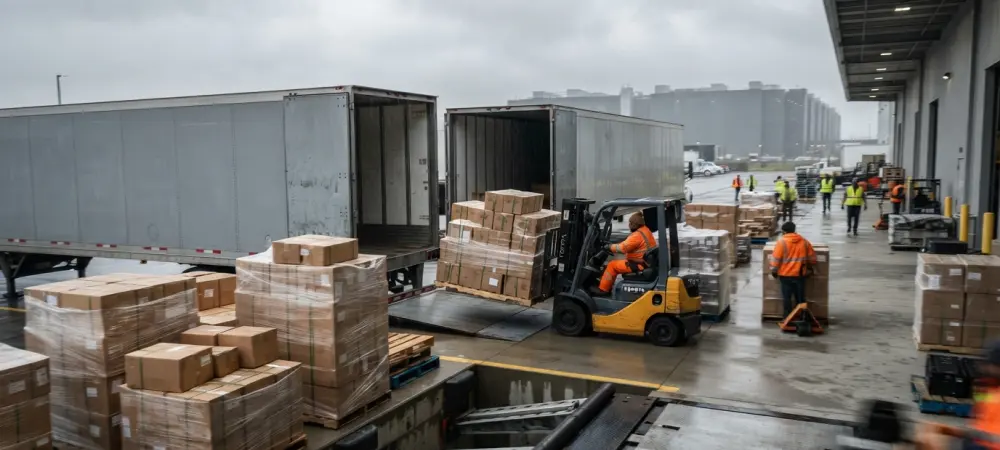
Hyperscale cloud operators and data center providers are now consuming 89% of Western Digital’s total revenue as they scramble to secure storage for AI data pipelines. This unprecedented surge in demand has forced a fundamental recalibration of how memory and mass storage are distributed across the globe, effectively leaving the retail and small business sectors in a state of precarious uncertainty. With Western Digital reporting a staggering revenue of $3.02 billion in the current fiscal cycle, a 25% increase that blew past initial projections, the industry is witnessing a clear pivot away from the general-purpose computing market. For years, hard drives were seen as a commodity, but the explosion of generative artificial intelligence has turned high-capacity storage into a strategic asset as critical as high-end processing units. Consequently, the traditional dominance of personal computing and gaming segments has withered, now representing only a combined 11% of sales for major storage manufacturers.
The Shift: How Data Centers Dominate Supply
The transformation of Western Digital from a broad-market consumer electronics supplier to a specialized provider for a handful of elite global accounts signals a permanent shift in the industry hierarchy. This structural change is driven by long-term purchase agreements that stretch from 2026 to 2028, where the top seven hyperscale clients have already locked in specific exabyte volumes at fixed price points. Such massive commitments provide manufacturers with the financial stability to ignore the volatile retail market while focusing exclusively on high-margin enterprise solutions. This pivot has essentially created a tiered access system where smaller entities cannot compete with the sheer purchasing power and forward-looking planning of cloud giants. As these elite accounts secure the lion’s share of production capacity, the storage industry is no longer optimized for unit sales but rather for the relentless expansion of deep-learning datasets.
Market Pressure: The Rising Cost of Digital Capacity
Market scarcity has triggered a dramatic and sustained rise in prices across every tier of the storage ecosystem, from standard internal drives to massive server-rack arrays. Enterprise-grade hard disk drive prices have surged between 40% and 60% within recent months, and these inflationary pressures are rapidly trickling down to consumer products like the WD Blue series, which has seen nearly a 50% price jump. Beyond the immediate financial burden, lead times for high-capacity nearline drives, specifically those in the 18TB to 22TB range, have stretched to between six and twelve months. In some extreme cases involving specialized high-density models, procurement delays now exceed two full years. The current duopoly maintained by Western Digital and Seagate allows for a disciplined market approach that prioritizes profit margins over expansion. Instead of building new fabrication plants that could lead to oversupply, manufacturers are focusing on maximizing capacity per unit.
Technical Barriers: The Struggle to Scale Media
While technological advancements like Heat-Assisted Magnetic Recording are pushing capacities toward the 40TB threshold, these innovations are not scaling quickly enough to satisfy the hunger of modern AI infrastructure. Seagate and other industry leaders are racing to implement these dense storage formats, but the manufacturing complexity associated with such precise engineering prevents immediate relief for the supply chain. Some organizations have looked toward NAND flash memory as a potential escape from the hard drive shortage, yet the cost per terabyte for solid-state storage remains prohibitively high for the massive cold-storage tiers required by AI training sets. Archival data, which must be kept accessible for retraining models, requires the cost-effectiveness of traditional spinning disks. Since flash memory prices are also facing upward pressure from mobile and server demand, buyers find themselves trapped between expensive solid-state options and unavailable magnetic media.
Strategic Planning: Adapting to the Storage Deficit
The overarching trend moved toward a complete restructuring of the global storage market, where the AI boom reached the foundational levels of hardware architecture. Because individual consumers and small businesses found themselves at the back of the line, strategic planning became the only way to navigate the supply vacuum. Moving forward, organizations should prioritize aggressive storage audits and implement tiered data management systems that maximize existing capacity. Investing in software-defined storage solutions allowed some enterprises to bridge the gap while waiting for long-term hardware arrivals. Future-proofing required a shift from just-in-time procurement to multi-year infrastructure roadmaps that accounted for the ongoing arms race between hyperscalers. By focusing on efficiency and high-density deployments, savvy operators mitigated the risks of being priced out of the market as the industry prioritized the massive requirements of large language models.