

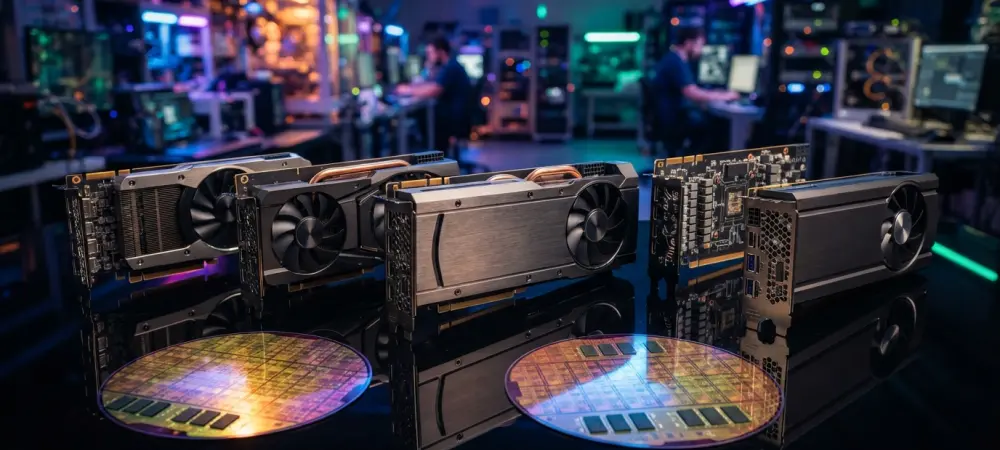
The graphics processor industry is undergoing a structural realignment as major manufacturers move away from rigid annual release cycles toward flexible launches synchronized with enterprise AI demand. This paradigm shift represents a fundamental departure from the traditional silicon treadmill that prioritized predictable yearly refreshes over radical architectural improvements. Currently, the industry is witnessing the first major ripple effects of this transformation, where the explosive growth of high-performance computing in data centers has begun to dictate the development timelines of consumer-grade gaming hardware. Consequently, the distinction between professional accelerators and enthusiast graphics cards is fading, as the underlying architecture must now serve two distinct masters. Engineering teams are increasingly forced to prioritize the high margins of the server sector, leading to a synchronization of release windows that favors enterprise readiness. This strategic recalibration ensures that new silicon can handle the massive computational requirements of modern large language models while still delivering high-fidelity gaming.
AMD’s Transition: The Unified UDNA Architecture
AMD is currently navigating a significant transition period following the rollout of the Radeon RX 9000 series, which introduced the RDNA 4 architecture in early 2025. The roadmap now points toward a more ambitious endeavor: the RDNA 5 architecture and the formal introduction of the Unified UDNA platform. This strategic move aims to eliminate the fragmentation between the gaming-focused RDNA and the data-center-focused CDNA lines, creating a singular, cohesive architecture for all AMD graphical and computational products. By streamlining development in this manner, AMD hopes to accelerate the deployment of software optimizations across its entire ecosystem, ensuring that improvements in enterprise AI performance directly translate to better gaming experiences. This unified approach is a direct response to the increasing complexity of modern software, which requires a more versatile hardware foundation. As the company moves toward the late 2027 release window, the focus remains on leveraging TSMC’s N3P process technology to achieve unprecedented levels of power efficiency.
The upcoming Radeon RX 10000 series is set to redefine the enthusiast market with a tiered product stack designed to address varying performance needs. At the top of this stack is the Radeon RX 10090 XT, based on the AT0 chip, which is projected to utilize 96 compute units and high-speed GDDR7 memory to provide a staggering 1.7 TB/s of bandwidth. Below this flagship, the RX 10070 XT will serve the high-performance segment with 68 compute units, while the RX 10060 XT will balance cost and speed by utilizing LPDDR5X memory for its 48 compute units. This diverse lineup demonstrates AMD’s commitment to providing scalable solutions that do not compromise on the core benefits of the Unified UDNA architecture. Interestingly, the company has signaled that these products will have an extended market presence, with subsequent architectures pushed into the 2029 to 2034 window. This longer lifecycle reflects the reality that modern silicon manufacturing costs necessitate a slower, more deliberate release cadence to ensure a sustainable return for both the maker and the consumer.
NVIDIThe Dawn of Generative Neural Rendering
NVIDIA’s dominance in the current landscape is anchored by the Blackwell series, but attention is rapidly shifting toward the Rubin architecture, which is expected to power the GeForce RTX 60 series in late 2027. The centerpiece of this next-generation hardware is the introduction of DLSS 5, which marks a revolutionary shift toward 3D-guided neural rendering. Unlike previous iterations that focused primarily on upscaling and frame interpolation, DLSS 5 is a generative technology that reconstructs entire scenes using neural networks to achieve photorealistic results with minimal computational overhead. This approach effectively decouples visual quality from raw rasterization performance, allowing for highly complex lighting and geometry effects that would otherwise be impossible on standard hardware. Projections suggest that the performance penalty for enabling these advanced features will be significantly lower than in previous generations, making cinematic visuals more accessible. This shift reinforces NVIDIA’s strategy of using artificial intelligence to maintain a competitive edge.
Economic challenges and supply chain complexities are expected to play a major role in the rollout of the RTX 60 series, particularly regarding the pricing of high-end components. The transition to GDDR7 memory, while providing a necessary boost in bandwidth, comes with increased production costs that will be reflected in retail prices. The flagship RTX 6090 is anticipated to enter the market at a premium price point, with some industry analysts warning that potential shortages could drive street prices even higher. Despite these financial hurdles, NVIDIA is already looking beyond the Rubin era toward the Feynman architecture. By choosing to skip certain intermediate designations, the company intends to align its product naming with significant technological leaps, ensuring that each new release cycle feels like a major generational event rather than an incremental update. This strategy is designed to justify the higher costs of ownership by providing hardware that remains at the cutting edge of the AI-driven graphics revolution through the late 2020s.
Intel: Strategic Pivots Toward AI and Integrated Solutions
Intel has undergone a series of pragmatic adjustments to its roadmap, reflecting a tactical shift toward its strengths in integrated graphics and AI-centric server hardware. While the second-generation Arc Battlemage remains the company’s primary focus for the current discrete GPU market, the subsequent Xe3 Celestial architecture has been repositioned. Rather than competing directly in the high-end enthusiast desktop space, Celestial is now being prioritized as the integrated graphics solution for the Panther Lake mobile processor family. This realignment allows Intel to leverage its dominance in the laptop and mobile computing segments, where integrated power and efficiency are paramount. The delay of the fourth-generation discrete gaming line, known as Arc Druid, until 2027 further underscores this change in priority. Intel is clearly betting on a future where graphics technology is more deeply integrated into the overall processor package, providing a more cohesive experience for the average user while leaving the most extreme enthusiast segments for later.
The reallocation of engineering resources within Intel points toward a future where artificial intelligence infrastructure takes precedence over gaming-first discrete hardware. Much of the company’s internal focus has shifted toward the development of the Jaguar Shores AI system, a platform designed to provide the massive computational power required for modern enterprise AI applications. This pivot suggests that Intel views the backend hardware necessary for the global AI boom as its most critical growth sector for the period between 2026 and 2030. By focusing on the infrastructure that powers artificial intelligence, Intel hopes to establish a sustainable long-term business model that is less susceptible to the volatility of the consumer gaming market. This strategy does not mean that gaming is being abandoned, but rather that it is being redefined. Future Intel graphics solutions will likely be designed with a heavy emphasis on AI-driven tasks, such as video enhancement and neural upscaling, which add value to both professional and consumer use cases.
Market Synthesis: The Future of Visual Computing
A comprehensive analysis of these competing roadmaps reveals several overarching trends that will define the next decade of visual computing. One of the most prominent factors is the emergence of the “AI tax,” where the rising costs of advanced memory standards and complex manufacturing processes lead to higher consumer prices. To mitigate the impact of these rising costs, manufacturers are extending the support lifecycles of their hardware, with many new GPU generations expected to remain relevant for four to six years. This ensures that the substantial investment required to purchase a high-end card today will be protected through years of software updates and driver optimizations. Furthermore, the battle for dominance has shifted away from raw rasterization power toward the efficiency of neural rendering and AI-driven frame generation. The convergence of server-grade foundations with consumer hardware means that the technologies developed for the world’s most powerful supercomputers are now making their way into the hands of everyday users.
The strategic realignments witnessed throughout this period proved that the industry was ready to embrace a more mature and deliberate release cadence. As the focus shifted toward architectural stability and AI-enhanced efficiency, consumers were encouraged to view graphics hardware as a long-term investment rather than a disposable commodity. To navigate this changing landscape, buyers needed to prioritize hardware that offered robust neural processing capabilities and extended driver support windows. Investing in platforms that emphasized software-driven performance gains became essential for maintaining a competitive edge in both creative and gaming workloads. Furthermore, staying informed about the evolving relationship between server and consumer silicon helped users anticipate future market shifts. This transformative era ultimately provided a more sustainable path forward for graphics technology, ensuring that the leaps in photorealistic rendering and computational power remained consistent even as the physical limits of silicon were pushed.