

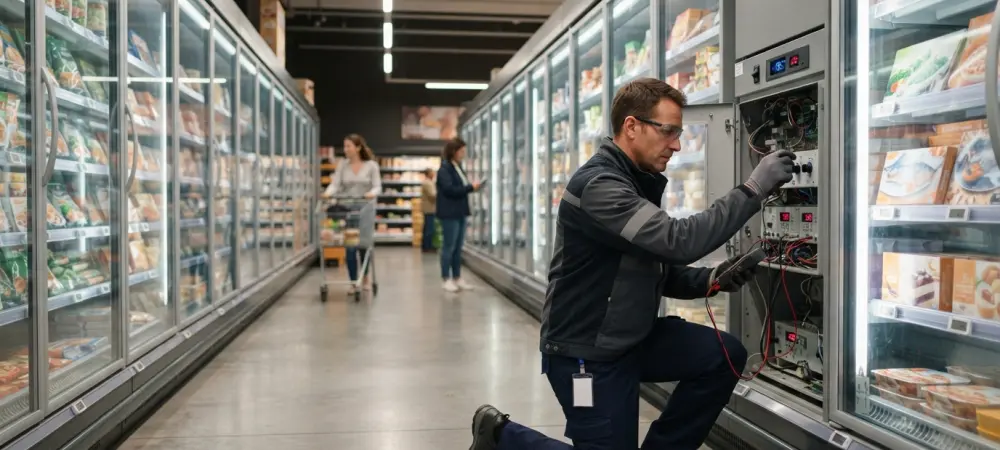
When a routine maintenance crew entered a quiet supermarket near Bordeaux, they encountered a digital phantom that was systematically turning industrial freezers into high-heat ovens by overriding every safety protocol. This alarming discovery surfaced during a standard operational check, revealing that temperature settings were not merely drifting but were being aggressively manipulated toward destructive extremes. It signaled a shift in how cyber-sabotage targets the mundane but essential components of modern life.
The incident near Bordeaux was not a localized mechanical failure but part of a broader pattern of digital intrusion. While shoppers walked the aisles, the invisible infrastructure keeping their food safe was being rewritten by automated scripts. This transition from physical management to digital vulnerability has forced the grocery industry to reconsider the security of its most basic systems.
From Sub-Zero to Scorching: The Bordeaux Supermarket Incident
The technical details of the Bordeaux breach remain a case study in malicious automation. Technicians watched in real-time as the standard holding temperature of -22°C was forcefully rewritten to a staggering 150°C. This was not the result of a malfunctioning sensor or a simple cooling gas leak; instead, the system was being bombarded with digital commands that altered settings multiple times per second. Such high-frequency updates were clearly the work of automated scripts designed to bypass the safety protocols of industrial hardware.
The specific nature of the attack overrode the mechanical safeguards intended to prevent equipment damage. By rapidly oscillating the temperature commands, the attackers forced the hardware to operate far outside its safe parameters, risking not just the food stock but the physical integrity of the cooling units. This incident served as the first clear evidence that refrigeration controllers, often overlooked in the broader scope of cybersecurity, could be weaponized with precision.
Why the Refrigeration Grid Has Become a High-Stakes Target
Modern logistics chains operate on a razor-thin margin of error where even a few hours of downtime can lead to the total loss of perishable inventory. As supermarkets consolidate their operations into sprawling, digitally connected networks, the “cold chain” has become an increasingly attractive target for those seeking to inflict maximum economic pain. These cooling grids are no longer isolated systems; they are integral nodes in the industrial internet of things.
European safety regulations require rigorous data logging and timestamped monitoring to ensure food quality, which necessitates that these systems remain online. While this connectivity allows managers to track performance and receive alarms remotely, it simultaneously opens a door for external actors. The vulnerability of these systems represents a significant threat to regional food security, as a single coordinated attack could potentially spoil the food supply for an entire metropolitan area.
The Mechanics of Industrial Sabotage and Systemic Vulnerabilities
The investigation into these cooling disruptions revealed that the problem was not limited to a single manufacturer or a specific software patch. While Danfoss equipment was initially highlighted, the scope of the breach soon expanded to include other major industry players like Dixell Electronics and Copeland. The attackers exploited common architectural flaws in how these Industrial Control Systems (ICS) communicate over the public web, targeting the very logic that governs defrost cycles and thermal limits.
By triggering unnecessary defrost cycles or altering the critical parameters required to keep food safe, the attackers effectively weaponized the equipment against its owners. These maneuvers required a nuanced understanding of industrial software interfaces, suggesting that the perpetrators were individuals with specialized knowledge of refrigeration technology. The widespread nature of the threat proved that the vulnerability was systemic, rooted in the foundational way industrial devices were exposed to the open internet.
Expert Analysis on the Collision of Compliance and Security
Cybersecurity leaders, such as Claroty CTO Amir Preminger, have pointed out a persistent misconception that continues to plague industrial operations. Many facility managers operate under the false assumption that their refrigeration hardware is naturally isolated from the wider web. However, the demand for operational convenience—such as remote troubleshooting and automated reporting—has quietly eroded these barriers, leaving high-stakes hardware accessible to anyone with the right tools.
The conflict between regulatory compliance and actual security remains a primary driver of these incidents. While logging requirements are necessary for food safety, the implementation often lacks the sophisticated encryption found in traditional IT environments. Experts noted that the attackers demonstrated a clear intent to cause economic sabotage, using their knowledge of industrial protocols to navigate complex control menus and execute damaging commands without triggering immediate alarms.
Strategies for Hardening Industrial Cooling Infrastructure
The response to these industrial breaches forced a fundamental shift toward network integrity. Organizations moved critical refrigeration controllers off the public internet and placed them behind secure corporate Virtual Private Networks (VPNs) or dedicated Access Point Name gateways. These steps created a much-needed layer of insulation between the hardware and potential attackers. Maintaining a granular hardware inventory became the standard for identifying vulnerable software versions before they could be exploited. Ultimately, the implementation of strict access controls and real-time monitoring ensured that unauthorized attempts to alter thermal parameters were neutralized before they resulted in catastrophic spoilage. This period of vulnerability acted as a catalyst for a new era of industrial hygiene. The industry discovered that the cost of a single major spoilage event far outweighed the expense of robust network segmentation, leading to a permanent change in how essential services managed the intersection of compliance and cybersecurity.