

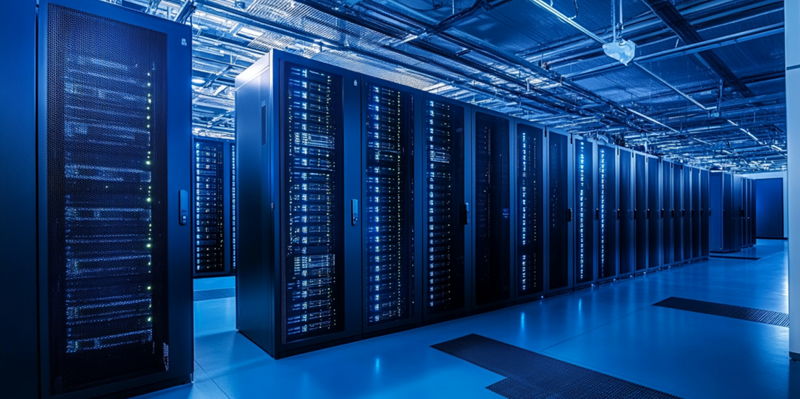
NTT Data, a prominent subsidiary of Japan’s NTT Group, has announced an ambitious plan to acquire 68.5 acres of land in Gelang Patah, Johor Bahru, Malaysia, with the aim of constructing a significant data center campus. This decision aligns with the increasing trend of setting up data centers in Malaysia to keep up with the soaring demand for infrastructure and processing power, driven by the rapid advancements in artificial intelligence (AI) and other cutting-edge technologies. NTT Data’s proposed project will encompass six buildings with a total IT load capacity of 290 megawatts (MW), with the first structure expected to be operational by April 2027, having an individual capacity of 48 MW.
Strategic Importance of Johor Bahru
Johor Bahru has been selected for this monumental investment primarily due to its strategic proximity to Singapore, an essential economic hub in the region. This proximity not only provides ease of access but also integrates Johor Bahru into a significant economic zone that is attracting global businesses. The recent memorandum signed between Malaysia and Singapore to develop the Johor-Singapore Special Economic Zone further enhances the area’s importance, making it a focal point for international trade and business expansions. By choosing Johor Bahru, NTT Data is positioning itself to take advantage of the growing economic prospects, thus ensuring that the new data center campus will be at the heart of a burgeoning commercial corridor.
The development of this new campus is a clear indication of the region’s potential to support large-scale tech infrastructure projects. The geographic and economic benefits of Johor Bahru make it an ideal location for such an investment, considering the need for robust data processing and storage capacities fueled by emerging technologies. With Johor Bahru evolving into a central hub for tech investments, NTT Data’s presence here strengthens the region’s capability to manage increased technological demands. This move also reflects a broader industry shift towards Southeast Asia, which is becoming a vital region for operational diversification, especially for companies adopting the "China plus one" strategy.
Trends in Data Center Investments
Malaysia is experiencing a remarkable surge in data center development as numerous tech companies look to expand their infrastructure capabilities to meet the growing demands of AI and other modern technologies. Market projections indicate that investments, including significant ones from tech giants like Google, are expected to double Malaysia’s data center capacity to around one gigawatt within the next two years. This growth trajectory underscores the pivotal role that Malaysia is set to play in supporting global tech advancements and the increasing necessity for efficient data processing facilities.
The drive to enhance data center capacities is propelled by the need for advanced computing power, particularly for AI applications that require substantial processing and storage capabilities. This demand is pushing companies to invest heavily in scalable and reliable infrastructure solutions. NTT Data’s venture into Johor Bahru exemplifies this trend, as it aims to equip its facility with state-of-the-art technologies such as direct liquid cooling to ensure operational efficiency and sustainability. The focus on technological advancements highlights the industry’s commitment to developing eco-friendly and energy-efficient data centers.
Global Reach and Sustainability
NTT Data, a key subsidiary of Japan’s NTT Group, has revealed an ambitious plan to purchase 68.5 acres of land in Gelang Patah, Johor Bahru, Malaysia. This land will be used to construct a major data center campus. This move follows the growing trend of establishing data centers in Malaysia to meet the increasing demand for robust infrastructure and processing power. This need is driven by rapid technological advancements, especially in artificial intelligence (AI) and other innovative tech fields. NTT Data’s proposed project will feature six buildings, delivering a combined IT load capacity of 290 megawatts (MW). The plan calls for the first of these buildings, with a capacity of 48 MW, to be operational by April 2027. This construction will significantly contribute to the technological landscape, catering to the surging need for data handling and processing resources. As AI and cutting-edge technologies evolve, this development is expected to play a critical role in supporting growth and innovation in the region.