

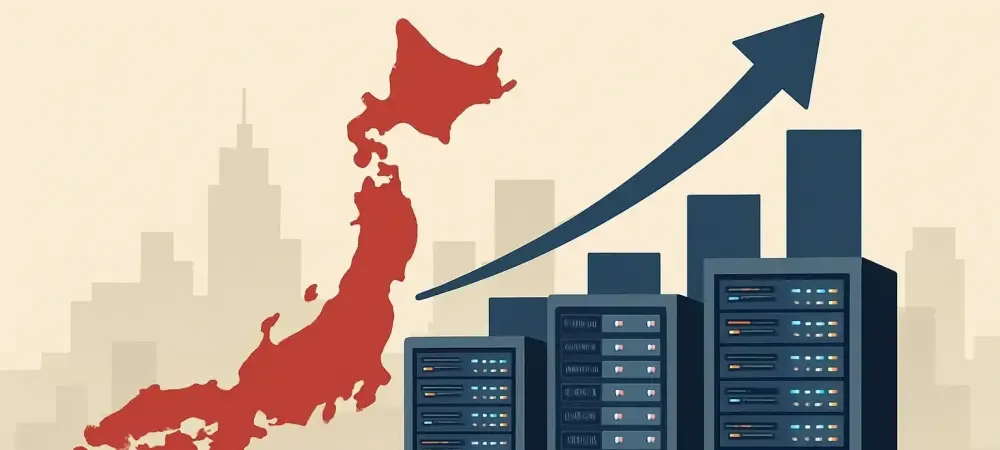
I’m thrilled to sit down with Dominic Jainy, a seasoned IT professional whose expertise in artificial intelligence, machine learning, and blockchain offers a unique perspective on the evolving landscape of digital infrastructure. With a deep interest in how emerging technologies shape industries worldwide, Dominic brings invaluable insights into Japan’s data center boom—a market experiencing rapid growth amid unique challenges and opportunities. In our conversation, we explore the driving forces behind this expansion, the hurdles of power and construction constraints, the strategic advantages Japan holds, and the role of government support in shaping the future of this critical sector.
Can you walk us through the key factors propelling Japan’s data center market to grow at such an impressive pace?
Absolutely. Japan’s data center market is booming primarily due to the surge in demand for cloud services and the rapid expansion of hyperscale operators. These large-scale players, who build massive facilities to support global tech giants, are driving much of the growth. Additionally, the country’s status as the fourth-largest economy globally naturally translates into a significant need for digital infrastructure. The push for digital transformation across both private and public sectors further fuels this demand, creating a robust market projected to hit $30 billion by 2026.
How do hyperscale operators specifically influence this growth trajectory in Japan?
Hyperscalers are a game-changer. They’re not just building their own data centers but also leasing space from colocation providers, creating a symbiotic relationship that boosts capacity. Their need for vast, high-performance facilities drives investment and innovation in the sector. In Japan, this is evident with projects like new campuses in Tokyo, where hundreds of megawatts of IT load are being planned to meet their requirements.
What are some of the most pressing challenges Japan faces in scaling up its data center infrastructure?
Japan faces several significant hurdles. Power access delays are a major issue—waiting five to ten years for grid connections in high-demand areas like Tokyo is not uncommon. There’s also a shortage of construction capacity, with contractors often backlogged for up to three years before they can even start a project. On top of that, geographic limitations near urban centers like Tokyo and Osaka restrict available land, making it tough to build close enough to meet latency needs.
Why is proximity to urban centers so critical for hyperscale data centers, and how does that complicate development?
Proximity matters because hyperscalers have strict requirements for low fiber network latency—often needing to be within about 25 miles of city centers like Tokyo to ensure fast data transmission. This limits where facilities can be built, as suitable land near these hubs is scarce and expensive. Developers can sometimes work around this with indirect fiber routes, but it adds complexity and cost to projects.
Despite these obstacles, Japan is known for its reliable data center operations. What contributes to this reputation?
Japan’s data centers are indeed renowned for precision and stability. A big part of this is the meticulous approach to daily operations and the rarity of construction delays once projects are underway. The country’s high standards for infrastructure—think reliable electricity, telecommunications, and even water supply—play a crucial role. There’s also a cultural emphasis on detail and consistency that ensures everything runs like clockwork.
What unique strengths does Japan offer that make it a standout in the global data center market?
Japan has several advantages. Its core infrastructure is incredibly stable, which is essential for uninterrupted data center operations. The country also prioritizes safety and security, both in terms of data protection and physical facilities, which attracts international investment. Geographically, Japan’s position in the Asia-Pacific region makes it a potential hub for international connectivity, especially as a landing point for fiber connections from the US.
How is the Japanese government stepping in to support this booming industry?
The government has recognized the strategic importance of data centers and is actively working to remove barriers. They’re streamlining land use policies, for instance, by speeding up the rezoning of agricultural land for industrial use—a process that used to take years. They’re also collaborating with utility providers to reinforce power transmission lines, particularly to connect rural and urban areas, ensuring better access to electricity for new facilities.
What is your forecast for the future of Japan’s data center market over the next decade?
I’m optimistic about Japan’s trajectory. With a projected 20% year-over-year growth for the next five years, the market is set for stable expansion. The increasing adoption of AI and ongoing digitalization will only heighten demand. While challenges like power delays and construction bottlenecks persist, government initiatives and Japan’s inherent strengths—stability, safety, and strategic location—position it as a leader in the Asia-Pacific region. I believe Japan could become a cornerstone for global digital infrastructure if these efforts continue to align with industry needs.