

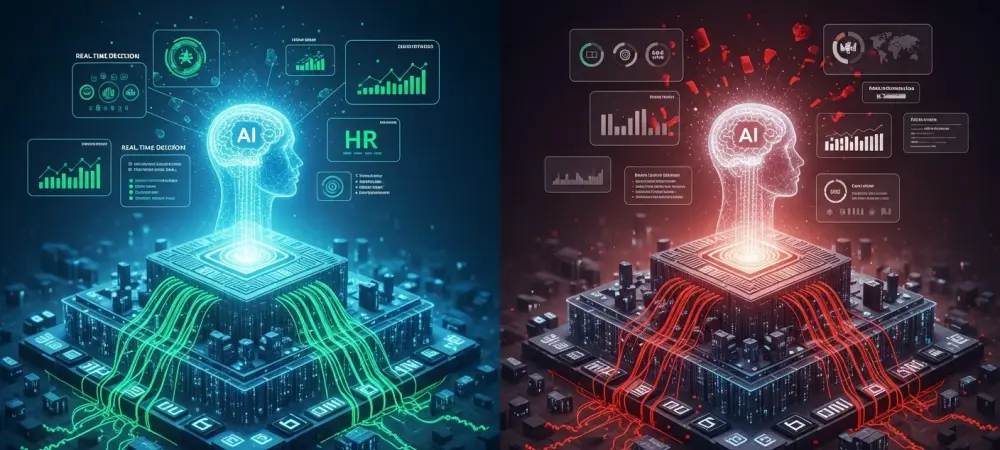
A high-performance enterprise resource planning system acts as the cognitive nervous system for modern business operations, ensuring that every autonomous decision made by artificial intelligence is grounded in speed and precision. In the Microsoft Dynamics 365 ecosystem, autonomous agents are often throttled by the very systems they were meant to improve. High latency prevents AI from providing the real-time value that justifies its existence.
An AI agent functions like an executive who cannot work if the filing system is in disarray. When processing becomes inefficient, the agent does not just work slower; it fails to act autonomously. Reliability in the agentic era requires a responsive foundation to prevent workflow stagnation and ensure that automation delivers on its promise of efficiency.
The Invisible Anchor: Why Even the Smartest AI Stumbles on Slow Systems
A high-functioning AI agent requires immediate access to data to execute complex tasks without human intervention. If an ERP system suffers from high latency, the agent remains stuck in a queue, unable to process the variables necessary for autonomous logic. This bottleneck transforms a cutting-edge tool into a source of frustration, as the speed of thought in AI is limited by the speed of the database.
Furthermore, slow systems lead to time-outs that disrupt the continuity of automated workflows. When an agentic solution attempts to communicate with a sluggish ERP, the connection often breaks before the task is complete. This results in fragmented data and failed processes, proving that even the most intelligent AI is only as capable as the infrastructure supporting it.
The Performance-First Evolution: Moving Beyond Reactive Troubleshooting
The industry is seeing a massive shift toward a performance-first philosophy rather than relying on reactive maintenance. Historically, businesses addressed bottlenecks only after they hindered operations, often blaming the platform itself for sluggishness. Analysis reveals that performance issues usually stem from poorly scaled per-tenant extensions and outdated customizations that drain system resources.
These inefficiencies are no longer minor annoyances; they are significant barriers to digital transformation. Moving beyond reactive troubleshooting allows businesses to eliminate the friction that stops autonomous automation from reaching its potential. A commitment to constant optimization ensures that the ERP system evolves alongside the intelligence it hosts, maintaining a predictable environment for growth.
Inherited Flaws: How AI Reliability Mirrors Underlying ERP Integrity
AI agents function as a layer on top of existing data, meaning they inherently adopt the flaws of their host ERP. The Renewal Assistant Agent, for example, requires instant data processing in Business Central to interpret customer responses and update contracts. Without human oversight, any lag in the system prevents the agent from maintaining the continuity required for automated lifecycle management.
Similarly, the AI Quote Agent pulls live data to validate pricing and inventory. If ERP performance lags, the agent pulls stale data, resulting in inaccurate quotes and lost revenue. These cases illustrate that AI reliability directly mirrors the integrity of the underlying system, making a healthy ERP the primary prerequisite for any successful autonomous deployment.
Validating Efficiency: Strategic Insights from the OptimAL Performance Initiative
Success in the agentic era requires more than just software; it requires rigorous infrastructure standards like those found in the OptimAL Performance Initiative. This collaboration between Microsoft, Ciellos, and Binary Stream highlights the necessity of a “measure, optimize, and re-measure” cycle. System predictability is now the baseline for any high-functioning automation to operate at scale. Expert analysis proves that high-performance code is the fundamental requirement for sophisticated automation. By modernizing development skills, partners ensure that agents execute complex tasks with the speed and reliability users expect. Prioritizing these standards allows the digital environment to scale alongside increasing AI workloads without compromising the user experience.
Preparing for the Agentic ErA Framework for Robust ERP Foundations
To ensure AI agents delivered on their promise, organizations implemented a structured approach to ERP health. This began with thorough audits of customizations and the removal of inefficient code that drained system resources. Development frameworks prioritized scalability, ensuring the ERP remained responsive as the volume of AI-driven tasks increased significantly over time.
Meticulous maintenance and modern development practices built a digital environment ready for the autonomous future. By focusing on these foundations, businesses successfully turned their ERP systems into high-performance engines for automation. This transition ensured that digital transformation remained sustainable and reliable, allowing AI to function with the precision required for long-term operational success.